

Maddy summaryHR 4335, the VA Loan Informed Disclosure Act of 2023, requires mortgage lenders to include specific information about VA home loan programs in standard mortgage disclosures. The bill amends the National Housing Act to mandate that lenders provide details on VA loans (guaranteed under Title 38) alongside other loan options, including assumptions about prevailing interest rates. This change directly affects lenders processing VA-guaranteed mortgages, ensuring borrowers receive clearer comparisons between VA loans and other financing. The law does not require lenders to verify borrower eligibility for VA loans, only to include the specified disclosure language.
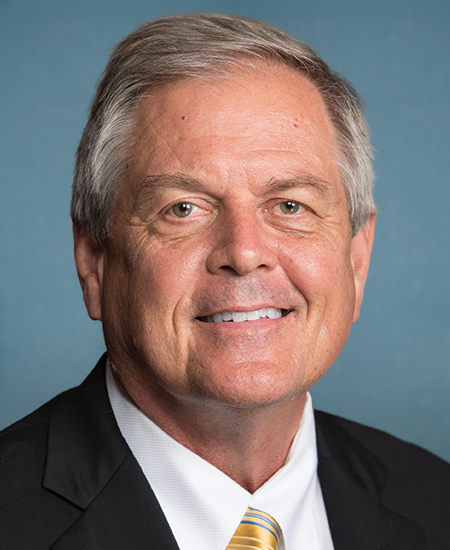
Rep. Ralph Norman
Sponsored bills
Maddy summaryHJRES 44 is a congressional resolution seeking to block a 2021 rule by the Bureau of Alcohol, Tobacco, Firearms, and Explosives (ATF). The rule classified firearms with stabilizing braces as "short-barreled rifles," which would have required additional licensing and regulation. This resolution uses a specific legal process (under Title 5, U.S. Code) to formally disapprove the ATF rule, meaning the rule would no longer be in effect. It directly affects firearm owners, manufacturers, and dealers who would have been subject to the rule’s requirements.
Maddy summaryHRES 536 is a ceremonial resolution designating the week of June 18-24, 2023, as "National Women's Sports Week." It celebrates the anniversary of Title IX (passed June 23, 1972), which prohibits sex discrimination in education and athletics. The resolution urges the House to observe this week through programs highlighting female athletes, coaches, and parents, while emphasizing equal athletic opportunities for women. It does not create new laws or alter existing policies - it is a symbolic gesture to recognize Title IX's impact on women's sports participation.
Maddy summaryHR 4298, the Keep our Kids Safe Act of 2023, prohibits public elementary and secondary schools receiving federal education funds from using those funds for "sexualized performances" or classroom instruction about human sexuality that is not age-appropriate for students. It directly affects schools receiving federal funds under programs covered by the General Education Provisions Act, restricting how such funds can be used for topics like human sexual behavior. Key provisions ban funding for performances emphasizing secondary sexual characteristics or simulating sexual activities, and require all sexuality-related instruction to be developmentally appropriate for students from pre-kindergarten through grade 12. The bill does not ban all sex education but limits federal funding for specific types of instruction or performances deemed inappropriate for students' age groups.
Maddy summaryHJRES 45 is a congressional disapproval resolution targeting a specific Department of Education rule about federal student loans. It seeks to block the rule implementing "One-Time Federal Student Loan Debt Relief" (including modifications to Perkins, FFEL, and Direct Loan programs) by invoking the Congressional Review Act. If passed, this resolution would nullify the rule, preventing the Department of Education from using it to modify or waive student loan obligations. The bill directly affects borrowers who might have qualified for debt relief under the targeted rule.
Maddy summaryHRES 521 is a formal resolution censuring Representative Adam Schiff (D-CA, 30th District) for conduct deemed "unbecoming" of a House member. The resolution alleges Schiff repeatedly made false claims about Trump-Russia collusion, including spreading Steele Dossier information and releasing a flawed FISA memo, and misled the public during impeachment proceedings. If passed, it would require Schiff to appear in the House chamber for a public reading of the censure resolution. The resolution also directs the House Ethics Committee to investigate Schiff's "falsehoods and misrepresentations." This is a symbolic procedural action, not a law changing policy or affecting constituents.
Maddy summaryHR 4245, the "Enforce the Caps Act," sets specific annual spending limits for discretionary federal programs from fiscal years 2026 through 2029. It establishes new budget authority caps at $1.622 trillion for 2026, increasing to $1.671 trillion for 2029. The bill directly affects how Congress allocates funds for non-mandatory programs like education, transportation, and defense by legally binding these spending levels. This is a procedural adjustment to existing budget control law, not a new policy affecting specific groups or creating new programs.
Maddy summaryHR 277 would require Congress to approve major federal regulations before they take effect. Major rules are defined as those with significant economic impact ($100 million+ annually), major cost increases for consumers or industries, or significant adverse effects on competition, employment, or innovation. Agencies must submit detailed information about these rules to Congress, including cost-benefit analyses, before they can take effect. Congress would have 70 session days to approve the rule with a joint resolution; if they don't act within that timeframe, the rule would not take effect. This would increase congressional oversight of federal regulations and require more detailed information about proposed rules before they become law.
Maddy summaryHR 1640, the Save Our Gas Stoves Act, prevents the Department of Energy from implementing energy efficiency standards for gas stoves that would make them unavailable in the U.S. market. It amends federal law to require that any new standard for gas stoves must not result in the unavailability of gas stove types, directly affecting gas stove manufacturers and consumers who rely on these appliances. The bill specifically blocks the implementation of the 2023 proposed rule (Energy Conservation Program: Energy Conservation Standards for Consumer Conventional Cooking Products) and any similar rule. This is a policy change focused on maintaining the availability of gas stoves by altering the criteria for energy standard approval.
Maddy summaryThis resolution formally censures Rep. Adam Schiff (CA-30) for alleged misconduct related to his role on the House Intelligence Committee. It demands he appear before the House for a public censure and directs the Ethics Committee to investigate claims that he made false statements and misused classified information during investigations into the Trump-Russia matter. The resolution does not create new laws or policies but is a procedural action expressing the House's disapproval. It directly affects Rep. Schiff as the named recipient of the censure.