

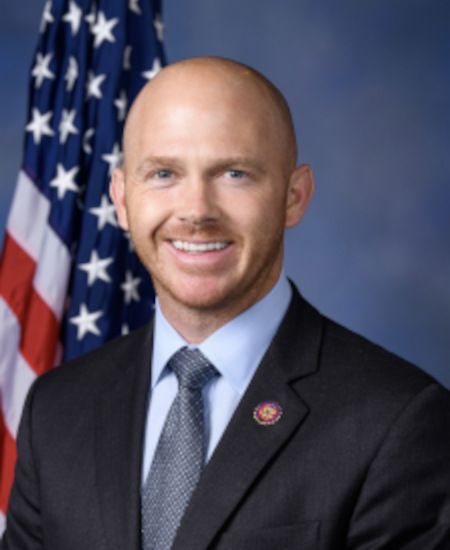
Photo of William R. Timmons IV
R United States House · District 4 · South Carolina On the 2026 ballot

Rep. William R. Timmons IV

Compare
Total votes
2,837
all sessions
Attendance
99%
23 missed
Near the chamber average
With party
95%
of cast votes
Near the chamber average
Bipartisan score
3%
crosses aisle rarely
Near the chamber average
Sponsored
800
bills & resolutions
Lower than 80% of chamber peers
Committees
7
assignments
800 bills and resolutions

Sponsored bills

Total
800
Primary
35
Co-sponsor
765
This page
800
matching current filters
Co-sponsor HR 2968
In committee · United States House · Co-sponsor
COST Act of 2023

Maddy summaryHR 2968, the COST Act of 2023, requires federal agencies and recipients of federal funds (including states, local governments, and research grantees) to publicly disclose specific funding details in program descriptions. It mandates stating the percentage and dollar amount of federal funding, plus the percentage and dollar amount from non-government sources in press releases, requests for proposals, and similar documents (excluding short social media posts). Agencies must also certify compliance in progress reports, and the Office of Management and Budget will annually review compliance and publish findings. The bill establishes a public reporting mechanism for non-compliant communications.

In committee Apr 27, 2023 1 co-sponsor
Co-sponsor HJRES 59
In committee · United States House · Co-sponsor
Providing for congressional disapproval under chapter 8 of title 5, United States Code, of the rule submitted by the Department of Labor relating to "Adverse Effect Wage Rate Methodology for the Temporary Employment of H-2A Nonimmigrants in Non-Range Occupations in the United States".

This joint resolution nullifies a Department of Labor final rule entitled Adverse Effect Wage Rate Methodology for the Temporary Employment of H-2A Nonimmigrants in Non-Range Occupations in the United States and published on February 28, 2023. This rule makes changes to the methodology used to set adverse effect wage rates for H-2A workers (temporary agricultural workers), including by using Bureau of Labor Statistics wage surveys in certain instances. (Generally, the minimum wage for an H-2A worker is the highest of the adverse effect wage rate, the applicable minimum wage, the prevailing wage for that occupation in that area, or any agreed-upon collective bargaining wage.)

In committee Apr 25, 2023 1 co-sponsor
Co-sponsor HR 2826
In committee · United States House · Co-sponsor
Save Local Business Act

Maddy summaryHR 2826, the Save Local Business Act, clarifies when multiple businesses can be held jointly responsible for labor laws. It amends the National Labor Relations Act and Fair Labor Standards Act to state that a business is only a joint employer if it directly controls key employment terms like hiring, pay, schedules, or discipline for another business's workers. This directly affects franchisors, contractors, and similar business models that might previously have been deemed joint employers under broader interpretations. The bill aims to limit joint employer liability to cases where one business has clear, day-to-day control over essential worker conditions.

In committee Apr 25, 2023 1 co-sponsor
Co-sponsor HR 734
Passed · United States House · Co-sponsor
Protection of Women and Girls in Sports Act of 2023

Maddy summaryHR 734, the Protection of Women and Girls in Sports Act of 2023, amends Title IX to prohibit federally funded schools and athletic programs from allowing individuals assigned male at birth to participate in women's or girls' sports teams. The bill defines "sex" for this purpose as "reproductive biology and genetics at birth," making it a violation of federal law to permit such participation in designated women's or girls' programs. It allows males to train with women's teams only if no female is deprived of a roster spot, competition opportunity, scholarship, or other benefit tied to the team. This law directly affects public and private schools receiving federal financial assistance that operate athletic programs.

Passed Apr 25, 2023 1 co-sponsor
Primary HR 2790
In committee · United States House · Lead sponsor
Improving Capital Allocation for Newcomers Act of 2021

Maddy summaryThis bill amends the Investment Company Act of 1940 to make it easier for venture capital funds to raise capital. It increases the maximum number of investors allowed under the 3(c)(1) exemption from 250 to 2,000 people and raises the asset threshold from $10 million to $150 million. These changes directly affect qualifying venture capital funds seeking to operate under this exemption. The result is that such funds can now manage larger investments and attract more investors while remaining exempt from certain registration requirements.

In committee Apr 20, 2023 0 co-sponsors
Co-sponsor HR 2771
In committee · United States House · Co-sponsor
Portal for Appraisal Licensing Act of 2023

Maddy summaryHR 2771, the Portal for Appraisal Licensing Act of 2023, creates a central online system called the "Portal for Appraiser Credentialing and AMC Registration Information" to streamline licensing for appraisers and appraisal management companies (AMCs). The portal will handle license applications, renewals, background checks (via FBI access), fee payments, and education course tracking, connecting state licensing agencies with appraisers and AMCs. It directly affects appraisers, AMCs, and state licensing agencies by replacing fragmented state processes with a single, standardized system. The bill ensures states retain final authority over licensing decisions while using the portal for data sharing and administrative efficiency.

In committee Apr 20, 2023 1 co-sponsor
Co-sponsor HR 2737
In committee · United States House · Co-sponsor
Stop the Invasion Act

Stop the Invasion Act This bill requires the President to bar the entry of certain non-U.S. nationals (aliens under federal law) into the United States if U.S. Customs and Border Protection (CBP) encounters a certain number of inadmissible non-U.S. nationals. Specifically, this bar shall apply if CBP detains or finds on average more than 30,000 such inadmissible individuals each month over the most recent 12-month period. The bar shall cease when the average drops below 30,000 encounters. Such encounters shall include non-U.S. nationals who seek entry into the United States when the President has suspended entry to prevent the spread of a communicable disease. While this bar is in effect, the President must prohibit the entry of non-U.S. nationals who are inadmissible for specified reasons related to illegal entry, violation of immigration law, or lack of documentation.

In committee Apr 20, 2023 1 co-sponsor
Co-sponsor HR 2743
In committee · United States House · Co-sponsor
Fair Access to Banking Act

Maddy summaryHR 2743 prohibits large financial institutions (over $100 billion in assets) from denying banking services to lawful businesses based on subjective political reasons, industry type, or reputational concerns. It requires these institutions to use objective, risk-based assessments for service decisions and provide written justifications for denials. The law applies to banks, credit unions, and payment networks, with civil penalties for violations including fines up to $10,000 per incident. It specifically ensures businesses operating legally under federal law receive fair access to financial services without discrimination. The bill mandates that denials be based on documented risk factors, not political bias or category-based exclusion.

In committee Apr 20, 2023 1 co-sponsor
Co-sponsor HR 2712
In committee · United States House · Co-sponsor
Work Not Woke Act

Maddy summaryHR 2712, the Work Not Woke Act, prohibits federal agencies, contractors, and grant recipients from using workplace training that promotes specific "divisive concepts," such as claiming inherent superiority of a race or sex, blaming individuals for historical actions, or suggesting meritocracy is racist. It directly affects federal contractors (requiring contract clauses banning such training), federal agencies (mandating review of diversity training), and grant recipients (requiring certification against using federal funds for prohibited training). Key mechanisms include a Department of Labor hotline for complaints, mandatory contract provisions for contractors, and a ban on using federal funds for three executive orders focused on racial equity. The law permits diversity efforts that do not promote the banned concepts and requires agencies to certify compliance with its provisions.

In committee Apr 19, 2023 1 co-sponsor
Co-sponsor HRES 276
In committee · United States House · Co-sponsor
Expressing support for the designation of April 5, 2023, as "Barth Syndrome Awareness Day".

Maddy summaryThis resolution expresses congressional support for designating April 5, 2023, as "Barth Syndrome Awareness Day" in the United States. It does not create new laws, allocate funding, or change policies - it solely recognizes the importance of raising public awareness about Barth syndrome, a rare genetic disorder affecting primarily males. The resolution highlights the condition's severity (with high infant mortality and limited treatment options) and emphasizes the need for improved diagnosis, research, and patient support. It directly affects individuals with Barth syndrome, their families, and advocacy groups like the Barth Syndrome Foundation, which organizes this awareness day. The resolution serves as a symbolic gesture to promote understanding of this ultrarare condition.

In committee Apr 14, 2023 1 co-sponsor
Showing 381 to 390 of 800 bills
Previous 1 … 38 39 40 … 80 Next