

Maddy summaryHR 661, "Sarah’s Law," requires U.S. immigration authorities to detain certain immigrants charged with crimes causing death or serious injury. It applies to immigrants who entered without proper inspection, held revoked temporary visas, or fall under specific deportation categories, and who face charges for violent crimes. The bill mandates that immigration officials notify victims or their families (like parents or spouses) about the immigrant’s identity, immigration status, custody details, and removal efforts. This law does not change existing victim rights but adds specific notification requirements for these cases.
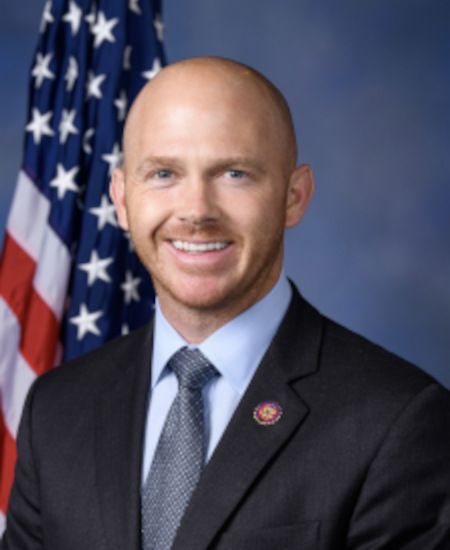
Rep. William R. Timmons IV
Sponsored bills
Maddy summaryHR 7845 would rename Washington Dulles International Airport in Virginia as "Donald J. Trump International Airport" upon enactment. The bill requires all federal laws, regulations, maps, and official documents to reference the airport by its new name. This is a purely procedural designation affecting the airport's official title and federal record-keeping, with no associated policy changes or funding. The bill directly impacts how the airport is identified in government communications and records.
Maddy summaryHR 7783 would prevent the Equal Employment Opportunity Commission (EEOC) from using two specific guidance documents: a 2023 enforcement guidance on workplace harassment and a 2021 fact sheet explaining protections against discrimination based on sexual orientation or gender identity. The bill would make these documents legally ineffective and prohibit the EEOC from issuing similar guidance in the future. This does not change existing anti-discrimination laws but would limit how the EEOC communicates its interpretation of those laws to employers and workers. The bill directly affects the EEOC’s ability to issue policy guidance and could influence how workplace discrimination claims are handled under current law.
Maddy summaryThis bill establishes new eligibility rules for women's and girls' amateur sports by defining "female" and "male" based on biological sex at birth. It prohibits individuals designated as male under these definitions from participating in athletic competitions designated for females, women, or girls. The law amends existing U.S. Code provisions to add this requirement, directly affecting athletes and organizations managing female-designated teams. The key change is a clear ban on male-identified participants in female sports, replacing previous eligibility standards with biological sex criteria.
Maddy summaryHR 7725 would block federal funding for graduate medical schools that require students or staff to adopt specific statements about race, gender, or identity (like claiming systemic racism or collective guilt), use race-based distinctions in admissions or programs, maintain DEI offices, or mandate "diversity statements" for admission. It directly affects graduate medical schools at colleges/universities receiving federal financial aid, including student loans. The bill exempts medical education about race-related health needs, demographic data collection for reporting, and religious institutions from adhering to policies conflicting with their beliefs. Schools violating these rules would lose eligibility for federal funds, though they could still comply with anti-discrimination laws and provide general academic instruction.
Maddy summaryThe Laken Riley Act (HR 7511) would require federal authorities to detain non-citizens charged with or convicted of burglary, theft, larceny, or shoplifting offenses. It also creates new legal standing for state attorneys general to sue federal immigration officials in federal court if they believe immigration enforcement decisions (like releasing aliens or granting parole) cause financial harm exceeding $100 to the state or its residents. The bill amends immigration laws to expand detention requirements for certain property crimes and allows states to seek court orders to enforce immigration policies. It does not create new criminal penalties but modifies existing immigration enforcement procedures. The bill’s findings and political language about the Laken Riley case are not part of its policy provisions.
Maddy summaryHJRES 118 proposes a constitutional amendment requiring House Representatives to submit a list of at least five qualified backup candidates before taking office. If a Representative dies, the state governor must select one from that list within 10 days, and the House Speaker immediately fills the vacancy. The temporary appointee serves until a special election is held to permanently fill the seat. This process aims to maintain House operations without delays during vacancies.
Maddy summaryHR 7523 establishes a new Office of Executive Councils within the General Services Administration (GSA) to provide administrative support to six federal councils that coordinate cross-agency efforts on issues like acquisitions, data, finance, and performance. The bill requires each council to maintain a public website with details about their mission and priorities, develop an annual charter, and update a strategic plan every two years. It also redesignates leadership roles (e.g., naming the GSA Administrator as Vice Chair for some councils) and mandates annual reports to Congress on the Office’s activities for seven years, after which the Office will sunset. This reform aims to improve transparency and coordination among federal councils without altering their core policy responsibilities.
Maddy summaryThe Secure Payments Act of 2024 requires the Federal Reserve to study the impacts of the proposed "Reg II" rule (which would cap debit card interchange fees) on consumers, merchants, and small banks. Specifically, it mandates a study of how fee changes affect access to low-cost bank accounts, merchant costs, fraud mitigation, and the affordability of banking products in underserved communities. The Fed must also conduct a quantitative analysis of the rule's effects on small banks' capital and earnings. The Federal Reserve cannot finalize the Reg II rule until after it completes this study, issues a report to Congress, and considers the findings - including whether fee caps benefit low- and moderate-income customers. This bill delays the final rule to ensure the impacts are fully assessed before implementation.
Maddy summaryHRES 1031 is a non-binding House resolution declaring the U.S. southern border situation an "invasion," citing three specific claims: over 8 million migrant crossings since 2021, a 1,000% rise in watchlist entries, and drug-related deaths. It does not create new laws or affect individuals, as resolutions like this only express legislative sentiment. The bill formally states the House's viewpoint through these cited statistics without proposing policy changes. As a symbolic gesture, it has no legal force or impact on border policy.