

Maddy summary# Summary of Proposed Higher Education Act Amendments This document outlines significant proposed amendments to the Higher Education Act of 1965, primarily as part of the "College Cost Reduction Act." The key elements include: ## Accreditation Reform - Major overhaul of accreditation standards, requiring accrediting agencies to demonstrate independence from trade associations - New requirements for accrediting agencies to assess student achievement outcomes, including median value-added earnings relative to median total price charged - Introduction of an "Alternative Quality Assurance Experimental Site Initiative" to test non-accredited institutions - Protections for religious institutions, including a new process for appealing accreditation decisions related to religious mission - Removal of "litmus tests" that would require institutions to support specific political viewpoints ## Student Success Initiatives - Establishment of "Postsecondary Student Success Grants" to increase participation, retention, and completion rates for high-need students - Focus on evidence-based practices, with tiered requirements (tier 1, 2, and 3 reforms) - Mandatory inclusion of high-need student populations (low-income, first-generation, military-connected, etc.) - Requirements for institutions to report on completion rates, retention rates, and student demographics ## Regulatory Changes - Repeal of numerous existing regulations including: * Closed school discharges * Borrower defense to repayment * Pre-dispute arbitration * False certification requirements * Ability-to-benefit rules * Financial responsibility regulations - New restrictions on incentive compensation for recruiters - Changes to third-party servicer definitions and regulations ## Transfer and Credit Policies - New requirement that institutions cannot deny transfer credit based solely on the source of accreditation - Requirements for transparent transfer policies - Changes to reverse transfer policies ## Other Key Provisions - Modifications to the National Advisory Committee on Institutional Quality and Integrity (NACIQI) - New definitions for "total price" and "value-added earnings" - Changes to the process for institutions to change accrediting agencies - New requirements for institutions to report on student outcomes The overall focus of these proposed amendments is to reduce regulatory burden on institutions, promote transparency, improve student outcomes (particularly for high-need students), modernize accreditation processes, and protect religious institutions' rights in accreditation decisions.
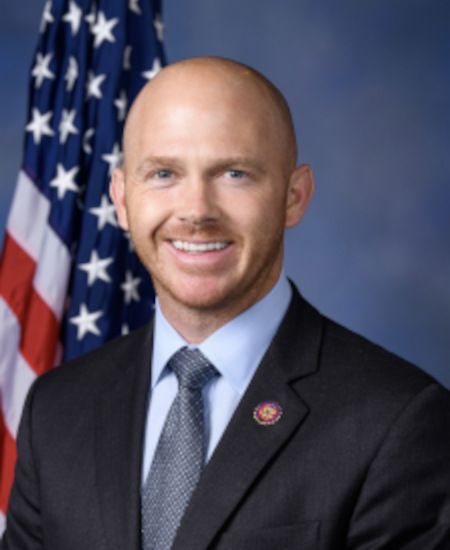
Rep. William R. Timmons IV
Sponsored bills
Maddy summaryHRES 1574 is a non-binding House resolution calling for the immediate removal of Federal Deposit Insurance Corporation (FDIC) Chairman Martin J. Gruenberg. It cites concerns about his leadership, including alleged mistreatment of staff, a "toxic workplace," staffing shortages, and failures in bank supervision that contributed to financial institution failures. The resolution does not change law or remove Gruenberg (as the President appoints FDIC leaders), but formally demands his removal. It was introduced by 25 Republican representatives and referred to the Financial Services Committee.
Maddy summaryThe Sunshine Protection Act of 2023 would end the practice of changing clocks twice a year for daylight saving time (DST) by making DST permanent nationwide, unless a state chooses to remain on standard time. It repeals the requirement to switch clocks back to standard time in the fall, directly affecting all U.S. states and territories that currently observe DST. The bill allows states that previously opted out of DST under the Uniform Time Act (like Arizona and Hawaii) to maintain their current time zone choices without further action. Key provisions include adjusting time zone offset language in existing law and granting states the authority to select either permanent DST or standard time based on their current arrangements. This change would eliminate seasonal time changes for most Americans, though states could still choose to stay on standard time if they prefer.
Maddy summaryThe Preventing Political Violence Act establishes a federal task force to coordinate prevention efforts across multiple agencies addressing political and hate-motivated violence. The task force, composed of officials from 21 federal agencies (including Justice, Homeland Security, and Education) and three White House staff, will develop recommendations and submit six-month reports to Congress for two years. It requires agencies to adjust programs and budgets to support prevention, consult with civil society groups, and publish findings publicly. The task force will terminate after two years with a final report on progress and legislative recommendations.
Maddy summaryHR 4587, the Red Snapper Act, prevents the National Oceanic and Atmospheric Administration (NOAA) from implementing fishing area closures in the South Atlantic for red snapper until two data requirements are met. Specifically, NOAA cannot issue rules with area closures until the South Atlantic Great Red Snapper Count study is complete and its data is integrated into the official stock assessment. This bill directly affects NOAA’s rulemaking authority and recreational and commercial fishermen in the South Atlantic region who rely on red snapper fishing. The legislation aims to ensure management decisions are based on the latest scientific data before restricting fishing areas.
Maddy summaryHR 736, the PROTECT Kids Act, requires elementary and middle schools receiving federal funding to obtain parental consent before changing a minor student's gender markers, pronouns, or preferred name on school forms, or allowing changes to sex-based accommodations like bathrooms or locker rooms. The bill directly affects public schools that receive federal education funds, mandating parental involvement in these specific educational decisions. Key provisions establish this consent requirement as a condition for continued federal funding. The legislation aims to ensure parents are informed about their child's educational and care-related accommodations, without specifying outcomes or commenting on the cited school practices.
Maddy summaryHJRES 136 is a resolution seeking to block an Environmental Protection Agency (EPA) rule that would have set new emissions standards for light and medium-duty vehicles sold in 2027 and later model years. The EPA rule, published in April 2024, aimed to require vehicle manufacturers to meet stricter pollution limits for these vehicles. If passed, this resolution would cancel the rule, preventing the EPA from enforcing the new standards. It uses a congressional process that allows Congress to reject agency rules with a simple majority vote.
Maddy summaryHRES 1489 is a symbolic House resolution designating the week of September 23-27, 2024, as "National Clean Energy Week." It expresses congressional support for recognizing clean energy's role in economic growth (citing 8.35 million jobs in the sector) and encourages voluntary actions like public awareness, investment in clean energy technologies, and supporting local clean energy jobs. The resolution does not create new laws, funding, or obligations - it only formally endorses the week-long observance to highlight clean energy’s economic and environmental benefits. It directly affects no specific group but aims to raise national awareness of the clean energy sector.
Maddy summaryHJRES 144 is a congressional disapproval resolution targeting a specific rule issued by the Bureau of Alcohol, Tobacco, Firearms, and Explosives (ATF) on April 19, 2024. The resolution seeks to block the ATF's rule that redefined the term "engaged in the business" for firearm dealers, which would have affected how federal licensing requirements apply to certain sellers. If enacted, this resolution would nullify the rule, preventing it from taking effect under procedures in Title 5 of the U.S. Code. The bill directly impacts firearm dealers operating under the current regulatory framework and the ATF's enforcement authority.
Maddy summaryHR 6319 (the 911 SAVES Act of 2023) requires the Office of Management and Budget to reclassify public safety telecommunicators as "Protective Service Occupations" within 30 days of enactment. This change corrects their current misclassification in the federal Standard Occupational Classification (SOC) system, which is used for statistical data on jobs. The bill directly affects how these professionals - critical in emergency calls involving missing children, active threats, and officer safety - are officially categorized in government workforce data. It does not create new benefits or funding but aims to better recognize their lifesaving role through accurate federal job classification.