

Mobilizing Against Sanctuary Cities Act This bill imposes penalties on certain state and local governments that do not assist federal immigration enforcement actions. Specifically, a state or local government shall be ineligible for federal financial assistance for at least one year if it restricts or prohibits an agency or official from (1) communicating with the responsible federal immigration agency regarding an individual's citizenship or immigration status, or (2) maintaining or exchanging information about an individual's status. Such governmental entities are sometimes referred to as sanctuary cities or jurisdictions. The bill restores assistance eligibility upon a Department of Justice (DOJ) determination that the jurisdiction no longer takes such actions. DOJ shall determine each year which state or local jurisdictions are not in compliance with immigration requirements and report such determination to Congress.
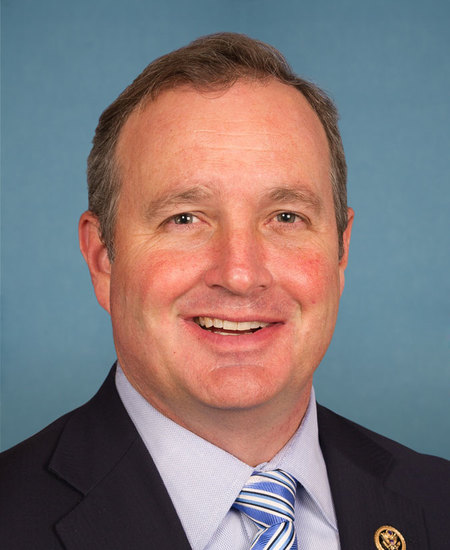
Rep. Jeff Duncan
Sponsored bills
Legal Workforce Act This bill directs the Department of Homeland Security (DHS) to create an electronic employment eligibility confirmation system modeled after and to replace the E-Verify system, which allows employers and recruiters to verify the immigration status of individuals. The bill also mandates the use of such a system, where currently only some employers, such as those with federal contracts, are required to use E-Verify. The bill specifies documents that can establish an individual's identity and employment authorization. During the period starting when a job offer is made until three business days after hiring, the individual must attest to his or her employment authorization, and the employer or recruiter must attest that it has examined the individual's required documents. Employers shall reverify certain types of employees who were not previously verified using E-verify. The Social Security Administration shall notify employees if their Social Security number has been used multiple times in an unusual manner. DHS shall establish programs for blocking and suspending misused numbers. Employers that are required to use the verification system shall not be liable for any employment-related action based on a good-faith reliance on the information from the system. The bill establishes a phased-in participation deadline for different categories of employers, including agricultural employers. The bill increases civil penalties related to hiring individuals without work authorization. It also preempts state laws relating to hiring and employment eligibility verification, but states may use their authority of business licensing to penalize employers for failing to comply with the bill's provisions.
Concealed Carry Reciprocity Act This bill establishes a federal statutory framework to regulate the carry or possession of concealed firearms across state lines. Specifically, an individual who is eligible to carry a concealed firearm in one state may carry or possess a concealed handgun (other than a machine gun or destructive device) in another state that allows its residents to carry concealed firearms. It sets forth requirements for the lawful concealed carry across state lines. The bill preempts most state and local laws related to concealed carry and establishes a private right of action for a person adversely affected by interference with a concealed-carry right established by this bill.
Reassuring that the United States Has Wide And Scrupulous Rhetorical Insight to Garnish Honest Thought Act of 2021 or the RUSH WAS RIGHT Act of 2021 This bill prohibits the Federal Communications Commission from reinstating in any manner the requirement that broadcasters present opposing viewpoints on controversial issues of public importance.
Safety and Opportunity for Girls Act of 2021 This bill addresses protections related to sex and sex-segregated spaces. Sex is defined as sex determined solely by a person's reproductive biology and genetics at birth. The bill prohibits construing the provisions of title IX of the Education Amendments of 1972 in a manner that would require forgoing the maintenance of sex-segregated spaces (such as bathrooms) and of sex-segregated athletic or academic programs by educational institutions.
Keystone XL Pipeline Construction and Jobs Preservation Act This bill authorizes the TransCanada Keystone Pipeline to construct, connect, operate, and maintain the pipeline facilities in Phillips County, Montana, for the import of oil from Canada to the United States.
National Right-to-Work Act This bill repeals those provisions of the National Labor Relations Act and the Railway Labor Act that permit employers to make an agreement with a labor union to require employees to join such union as a condition of employment. Currently, at least 27 states have enacted laws prohibiting employers from compelling employees to become members of a union as a condition of employment.
Fair and Open Competition Act or the FOCA Act This bill prohibits federal construction contracts or controlling documents for federally supported construction projects from requiring or prohibiting project labor agreements. Such documents also may not discriminate against or give preference to a bidder or contractor who signs or refuses to sign a project labor agreement. An agency may exempt a project from this prohibition to avert an imminent threat to public health or safety or to serve the national security.
Protecting Our Wealth of Energy Resources Act or the POWER Act This bill requires the President and federal agencies to obtain the approval of Congress before prohibiting or substantially delaying certain new energy or mineral leases or permits on federal lands, including oil and gas leases, coal leases, hard rock leases, or critical minerals leases. In addition, the President and agencies must obtain the approval of Congress before withdrawing certain federal lands from mineral and geothermal leasing activities.
Eliminate Agency Excess Space Act This bill modifies requirements with respect to the disposal of surplus and excess property by federal agencies. Among other things, the bill repeals provisions that require federal agencies to report excess property to the General Services Administration (GSA). Additionally, the GSA must issue regulations that allow federal agencies to dispose of surplus and excess property without first making the property available to other agencies or state or local governments. The bill also requires the GSA to survey all unused or underutilized office spaces held by federal agencies, make recommendations to reduce agency real estate assets, and report on costs associated with property disposal.