

Born-Alive Abortion Survivors Protection Act This bill establishes requirements for the degree of care a health care practitioner must provide in the case of a child born alive following an abortion or attempted abortion. Specifically, a health care practitioner who is present must (1) exercise the same degree of care as would reasonably be provided to any other child born alive at the same gestational age, and (2) ensure the child is immediately admitted to a hospital. Additionally, a health care practitioner or other employee who has knowledge of a failure to comply with the degree-of-care requirements must immediately report such failure to law enforcement. A health care practitioner who fails to provide the required degree of care, or a health care practitioner or other employee who fails to report such failure, is subject to criminal penalties—a fine, up to five years in prison, or both. An individual who intentionally kills or attempts to kill a child born alive is subject to prosecution for murder. The bill bars the criminal prosecution of a mother of a child born alive under this bill and allows her to bring a civil action against a health care practitioner or other employee for violations.
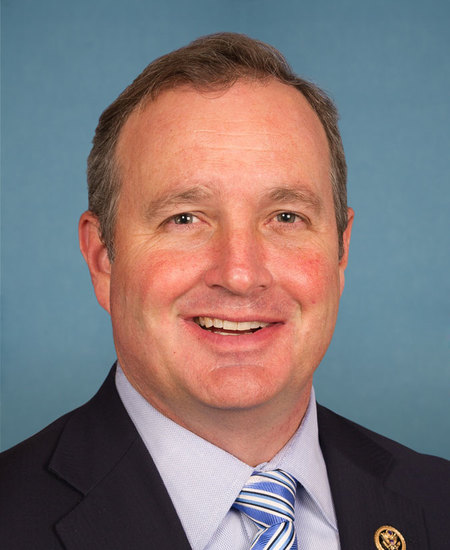
Rep. Jeff Duncan
Sponsored bills
Finding Federal Savings Committee Resolution This resolution establishes the House Committee on the Elimination of Nonessential Federal Programs to analyze underperforming or nonessential federal programs and recommend actions to modify or eliminate those programs. The resolution also establishes expedited procedures for legislation reported by the committee to eliminate programs or rescind funding. The committee shall cease to exist at the end of the 119th Congress.
This resolution urges the U.S. Capitol Police Board to direct the Architect of the Capitol to remove the fencing installed around the perimeter of the U.S. Capitol complex in response to the attacks of January 6, 2021, and it recommends the end of the National Guard's mission in the District of Columbia in response to those attacks.
This resolution removes Representative Eric Swalwell from the House Permanent Select Committee on Intelligence.
Protecting American Jobs Act This bill limits the authority of the National Labor Relations Board. Specifically, it repeals the authority of the General Counsel ofthe board to issue, and prosecute before the board, complaints of unfair labor practices. The bill also limits the board's rulemaking authority to rules concerning the internal functions of the board and prohibits the board from promulgating regulations affecting the substantive or procedural rights of any person, employer, employee, or labor organization, including rules concerning unfair labor practices and representation elections. Not later than six months after this bill is enacted, the board must review existing regulations and revise or rescind such regulations as necessary to implement these modifications to the board's rulemaking authority. In addition, the bill repeals the board's authority to issue orders preventing unfair labor practices, replacing it with a more limited authority to investigate allegations of such practices. Finally, it repeals the board's authority to petition courts for enforcement of its orders, seek injunctions, or hold hearings on jurisdictional strikes.
Let States Cut Taxes Act This bill removes a prohibition on states and territories using COVID-19 (i.e., coronavirus disease 2019) relief funding under the American Rescue Plan Act of 2021 to offset a reduction in revenue resulting from a reduction in taxes or a delay in the imposition of a tax or tax increase.
Unauthorized Spending Accountability Act of 2021 This bill establishes a three-year budgetary level reduction schedule for unauthorized programs funded through the annual appropriations process. Under the bill, a budgetary level is an allocation provided to the congressional appropriations committees under Section 302(a) of the Congressional Budget Act of 1974 by a congressional budget resolution or a deeming resolution. The schedule applies to programs included in the Congressional Budget Office's annual report listing programs that are funded through the appropriations process and have an authorization of appropriations that has either expired or will expire during the year. For the first year after a program's authorization has expired, the bill requires the budgetary level to be reduced by 10% of the funds appropriated for the program in the expiring fiscal year. The bill then requires reductions of 15% in the second and third years before terminating the program at the end of the third unauthorized year. Programs that are reauthorized during the three-year period are exempt from the budgetary level reductions if the reauthorization contains a sunset provision limiting the authorization of appropriations period to no more than three years. The bill establishes the Spending and Accountability Commission to review all mandatory spending programs and submit to Congress a legislative proposal to establish an authorization cycle for discretionary spending programs. The commission may recommend legislation to replace the budgetary level reductions required by this bill with reductions in mandatory spending. The commission's reauthorization schedule must limit reauthorizations to three years, include the budgetary level reductions established by this bill, and establish a mechanism for replacing the budgetary level reductions with reductions to mandatory spending programs. The House of Representatives must consider the commission's proposal using specified expedited legislative procedures.
Do Your Job Act of 2021 This bill eliminates the use of official time by federal employees. Official time is paid time off from assigned duties to perform labor-management relations activities.
Report and Educate About Campus Hazing Act or the REACH Act This bill requires institutions of higher education (IHEs) that participate in federal student-aid programs to report hazing incidents and distribute policies on hazing. Specifically, the bill requires each IHE to disclose hazing incidents that were reported to campus security authorities or local police agencies in its annual security report. The bill defines the term hazing to mean any intentional, knowing, or reckless act committed by a student, or a former student, of an IHE against another student (regardless of that student's willingness to participate), that (1) is connected with an initiation into, an affiliation with, or the maintenance of membership in an organization that is affiliated with the IHE (e.g., an athletic team); and (2) contributes to a substantial risk of physical injury, mental harm, or degradation or causes physical injury, mental harm, or personal degradation. In addition, each IHE must distribute to enrolled and prospective students its policies on hazing, including information on education programs that promote hazing awareness.
This resolution expresses the sense of the House of Representatives that the global COVID-19 (i.e., coronavirus disease 2019) outbreak is a direct result of China's human rights abuses and propaganda campaign and that China should be held accountable for its handling of the outbreak.