

The Pioneering Antimicrobial Subscriptions To End Up surging Resistance Act of 2021 or the PASTEUR Act of 2021 This bill authorizes the Department of Health and Human Services (HHS) to enter into subscription contracts for critical-need antimicrobial drugs, provides $11 billion in appropriations for activities under the bill, and contains other related provisions. A manufacturer of a Food and Drug Administration-approved antimicrobial drug may apply to HHS to have the drug designated as a critical-need antimicrobial, and HHS may enter into a subscription contract for such a critical-need antimicrobial. The bill imposes certain requirements related to such contracts, including a mechanism to lower payments under the contract in certain instances to limit the manufacturer's revenue from the drug. Furthermore, HHS and the Centers for Disease Control and Prevention (CDC) shall award grants to support efforts to encourage the appropriate use of antimicrobial drugs and efforts to combat antimicrobial resistance. The CDC shall also track and assess data relating to antibacterial resistance and human antibiotic use and make such data publicly available. HHS shall also establish a Committee on Critical Need Antimicrobials. The committee shall develop a list of prioritized infections for which new antimicrobial drug development is needed, among other duties. Within six years of the bill's enactment, the Government Accountability Office shall report to Congress a study on the bill's effectiveness in developing priority antimicrobial drugs.
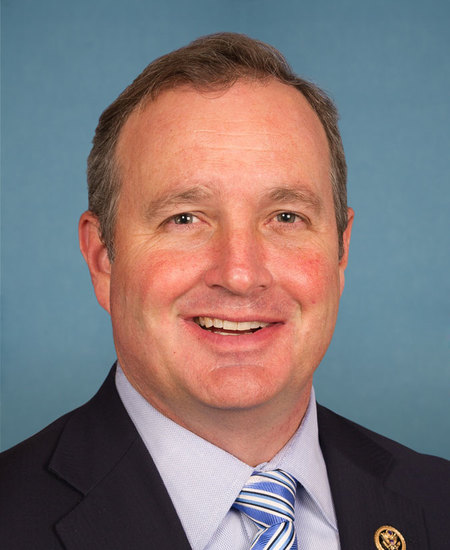
Rep. Jeff Duncan
Sponsored bills
American Energy First Act This bill addresses the onshore and offshore production of traditional (e.g., oil and gas) and alternative (e.g., solar and wind) energy resources and establishes requirements for distributing revenues generated from energy production, including revenues to states and territories for conservation efforts. For example, the bill limits the President's authority to (1) withdraw areas of the Outer Continental Shelf (OCS) from oil and gas leasing, and (2) declare new marine national monuments. In addition, the Department of the Interior must obtain congressional approval before declaring a moratorium on issuing leases on federal lands or waters for oil, gas, or coal. Further, the bill requires Interior to defer to state regulations, guidance, and permit requirements for all activities regarding hydraulic fracturing (i.e., fracking) relating to oil, gas, or geothermal production activities on federal land. Interior may delegate decisions about issuing oil and gas drill permits on federal land to states. Interior must also establish certain federal land as geothermal, solar, and wind energy leasing priority areas. The bill also allows Interior to conduct certain lease sales, such as offshore wind lease sales on the OCS in the U.S. Exclusive Economic Zone adjacent to U.S. territories, and establishes requirements for distributing revenues from such leases to the Treasury, the Coral Reef Conservation Fund established by this bill, and U.S. territories.
Alexander Lofgren Veterans in Parks (VIP) Act This bill makes the America the Beautiful-National Parks and Federal Recreational Lands Pass available, without charge, to members of the Armed Forces, veterans, and Gold Star Families. The pass covers the entrance fee and standard amenity recreation fee for all federal recreational lands and waters.
Seniors' Chronic Care Management Improvement Act of 2021 This bill eliminates cost-sharing for chronic care management services under Medicare.
Don't Knock on My Door Act of 2021 This bill prohibits the use of federal funds for door-to-door outreach activities related to COVID-19 vaccines.
Helping Every American Link To Healthcare Act of 2021 or the HEALTH Act of 2021 This bill requires the Department of Health and Human Services (HHS) to continue allowing providers to use certain communication products when furnishing telehealth services after the COVID-19 emergency ends. Generally, providers must use communication products that comply with applicable federal privacy and security standards; however, HHS issued a notification stating that it would not enforce penalties against providers who, in good faith, use noncompliant communication products during the COVID-19 emergency. The bill requires HHS to revise applicable privacy and security regulations to allow providers to use noncompliant products for seven years after the COVID-19 emergency ends. HHS may elect to extend this period following a review of telehealth services furnished over those seven years.
No CRT for our Military Kids Act This bill prohibits funding for the Department of Defense Education Activity from being used to (1) teach critical race theory in any school operated by the activity, or (2) develop or distribute any curriculum that incorporates critical race theory.
This concurrent resolution expresses the sense of Congress that government entities should consider using a portion of proceeds from litigation against opioid manufacturers and distributors for drug take-back programs.
Securing Our Border States Act This bill requires the Department of the Treasury to provide grants to states for building barriers and related infrastructure along the U.S.-Mexico border. Within 30 days of receiving a certification from a border state that it intends to use such grant funding for constructing a border barrier, Treasury must disburse funds to the state, with the amount based on the number of miles of border in that state that currently does not have a border barrier. The bill provides $22 billion of funding for this grant program and permanently rescinds $22 billion from funds made available for various assistance programs related to COVID-19.
This resolution denounces socialism and opposes the implementation of socialist policies in the United States.