

Maddy summaryHR 279, the Pharmacist Conscience Protection Act, protects pharmacists, pharmacy technicians, and pharmacy owners who refuse to dispense medications approved for abortion or that they believe may be used for abortion, based on moral, religious, or medical objections. The bill prohibits federal agencies and entities receiving federal funds (including state/local governments) from discriminating against, penalizing, or retaliating against these providers for such refusals. It does not require pharmacists to dispense these medications and explicitly preserves stronger state conscience protections. This law directly affects pharmacists and pharmacies seeking to align their practice with personal or religious beliefs regarding abortion-related medications.
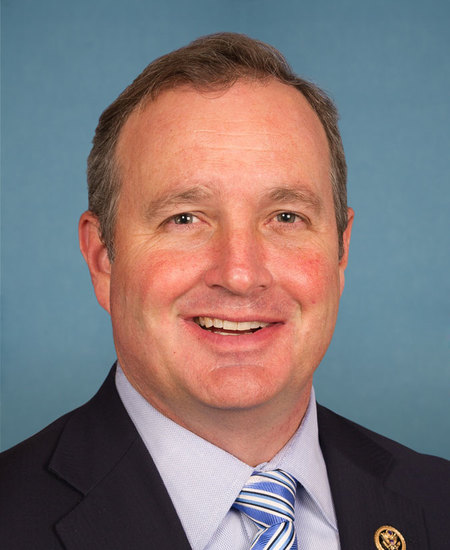
Rep. Jeff Duncan
Sponsored bills
Maddy summaryHR 128, the Defund Planned Parenthood Act of 2023, blocks federal funding to Planned Parenthood Federation of America and its affiliates for one year unless they certify they will not perform or fund abortions (except in cases of rape, incest, or life-threatening conditions for the patient). This directly affects Planned Parenthood clinics and their federal funding streams. The bill redirects $235 million to community health centers under the Public Health Service Act to continue providing women’s health services like contraception, cancer screenings, and prenatal care. It requires repayment of funds if Planned Parenthood violates the certification and explicitly states the law won’t reduce overall federal funding for women’s health services.
Maddy summaryHR 167 allows pharmacies to compound drugs for urgent hospital use without a specific patient prescription under strict conditions. It requires hospitals to certify they couldn’t obtain FDA-approved or outsourcing-facility alternatives for the same active ingredient and route of administration. Compounded drugs must be labeled with a beyond-use date, marked for urgent use only, and hospitals must track patient administration within 7 days while reporting adverse events to the FDA within 15 days. This directly affects hospitals, pharmacists, and physicians during drug shortages, enabling faster access to necessary medications while maintaining safety and tracking requirements.
Maddy summaryHR 145, the "RUSH WAS RIGHT Act of 2023," prohibits the Federal Communications Commission (FCC) from ever reinstating the Fairness Doctrine. The bill amends the Communications Act to explicitly block the FCC from creating rules requiring broadcasters to present opposing viewpoints on controversial issues - a requirement that was repealed in 1985. This directly affects radio and television broadcasters by preventing the FCC from imposing such a policy. The key provision is a new section (303A) stating the FCC lacks authority to revive this doctrine, regardless of future rulemaking efforts.
Maddy summaryHR 391, the Safe Bases Act of 2023, allows eligible active-duty U.S. military members to carry concealed firearms on military installations. The bill requires the Secretary of Defense to create a single Department of Defense office to issue permits for this purpose within one year of the law's enactment. It applies only to active-duty service members who are legally permitted to own firearms under federal law (18 U.S.C. § 922). The law establishes a standardized permit process but does not change existing firearm ownership rules for military personnel.
Maddy summaryHR 392, the Religious Insignia on Dog Tags Act, requires the Department of Defense to update military ID policies within 90 days to allow religious symbols to be combined with official military trademarks on commercial dog tags sold by licensed vendors. This directly affects military personnel who wear dog tags and the companies authorized to produce and sell them under military trademark licenses. The bill mandates that the Department of Defense revise Directive 5535.12 to permit religious insignia on these tags, effective retroactively from September 13, 2013. The change formalizes an existing practice without altering military ID standards or requiring new equipment.
Maddy summaryHRES 32 is a resolution supporting the current legal standard for "materiality" in securities disclosures, which requires public companies to share information investors reasonably deem important for decision-making. It opposes new disclosure mandates - particularly related to environmental, social, and governance (ESG) issues - that fall outside the Securities and Exchange Commission's (SEC) core mission of protecting investors and maintaining fair markets. The resolution emphasizes that the SEC's existing materiality standard, established since 1976 and reinforced by Supreme Court precedent, already requires climate-related risks to be disclosed if they impact a company's financials. It argues that expanding disclosure requirements beyond this standard would create unnecessary compliance costs and confuse investors without aligning with the SEC's statutory purpose.
Maddy summaryHR 311, the Cost Estimates Improvement Act, requires the Congressional Budget Office (CBO) and Joint Committee on Taxation (JCT) to include debt servicing costs in their budget estimates where practicable and to list duplicative federal programs covered by legislation. The bill mandates that all CBO and JCT cost estimates must identify overlapping or redundant agency programs, initiatives, or activities within the proposed legislation. This change aims to improve transparency in federal budget analysis by providing clearer data on long-term debt impacts and program efficiency for lawmakers. The bill directly affects the CBO and JCT as they prepare budget estimates for Congress.
No Taxpayer Funding for the World Health Organization Act This bill prohibits the United States from providing any assessed or voluntary contributions to the World Health Organization.
Securing America's Land from Foreign Interference Act This bill requires the President to take actions as necessary to prohibit members of the Chinese Communist Party (and entities owned, controlled, or influenced by the party) from purchasing real estate located in the United States.