

Maddy summaryThe Build the Wall Now Act requires the Department of Homeland Security to immediately resume construction of physical barriers (such as reinforced fencing and levee walls), tactical infrastructure (including access gates and lighting), and border surveillance technology along the US-Mexico border that was underway or planned before January 20, 2021. It prohibits canceling existing contracts for border barrier projects and mandates using funds appropriated for border construction since October 2016. The bill grants the Secretary of Homeland Security new authority to waive numerous environmental, historic preservation, and land management laws to expedite construction, including exemptions from the Clean Air Act, Endangered Species Act, and National Environmental Policy Act. It also prohibits using federal funds to implement or enforce Presidential Proclamation 10142 from January 2021.
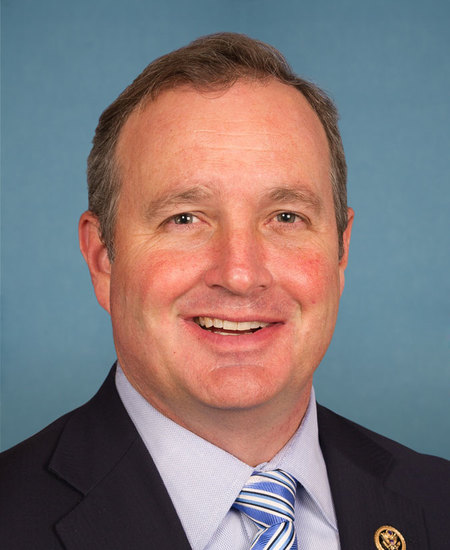
Rep. Jeff Duncan
Sponsored bills
Safe Responsible Ethical Scientific Endeavors Assuring Research for Compassionate Healthcare Act or the Safe RESEARCH Act This bill prohibits the National Institutes of Health (NIH) from conducting or supporting research on human fetal tissue obtained from an abortion procedure. It also imposes other restrictions on human fetal tissue research. Under the bill, the NIH may conduct or support research on human fetal tissue only if it was obtained from a stillbirth. Current law allows research on tissue from stillbirths or from spontaneous or induced abortions. The bill also applies informed consent and other requirements applicable to research on the transplantation of human fetal tissue for therapeutic purposes to all research with human fetal tissue. This includes research on stem cells and other human fetal tissue alternatives. Additionally, human fetal tissue used for this research must be obtained in accordance with state anatomical gift laws. These laws govern organ and tissue donation for therapeutic, research, and other purposes. Some states already apply anatomical gift laws to human fetal tissue donation. Currently, executive branch officials may not prohibit the NIH from conducting or supporting research on the transplantation of human fetal tissue for therapeutic purposes. The bill repeals this limitation on executive branch officials. It also repeals a requirement that the NIH fund certain proposals for this research.
No Federal Funds for Abortion Travel Expenses Act of 2023 This bill prohibits the use of federal funds to support interstate travel to obtain an abortion.
Protecting American Sovereignty Act This bill prohibits the federal government from implementing any obligations upon the United States that may be contained in a draft report by a World Health Organization (WHO) working group on strengthening the WHO's preparedness and response to health emergencies. This prohibition shall also apply to any related or successor reports and recommendations regarding pandemics.
No taxpayer funding for United Nations Human Rights Council Act This bill requires the Department of State to withhold from the U.S. contribution to the United Nations (U.N.) the amount that would be allocated to the U.N. Human Rights Council. Such withheld funds must be rescinded and must not be considered arrears to be repaid to the United Nations. The bill also prohibits the State Department from making voluntary contributions to the U.N. Human Rights Council.
Maddy summaryThe Unauthorized Spending Accountability Act of 2023 establishes a process for handling federal programs that have expired authorizations (unauthorized programs). It requires a 10% budget reduction in the first year after authorization expires, followed by 15% reductions in the second and third years. If a program remains unauthorized for three years, it must be terminated unless Congress reauthorizes it with a 3-year sunset provision. The bill creates a Spending and Accountability Commission to review direct spending programs and propose spending reductions that could prevent these budget cuts from taking effect.
Maddy summaryHR 1492, the CBO Show Your Work Act, requires the Congressional Budget Office (CBO) to publicly publish its fiscal models, data, and detailed methodologies used when estimating the costs and effects of legislation. Specifically, the bill mandates that the CBO make available all models, data preparation routines, and the specific assumptions and computations behind its cost estimates - enabling independent verification by non-CBO staff. This applies to all estimates prepared under the law, with limited exceptions for data protected by other statutes (requiring only descriptive statistics and access details for such data). The changes take effect six months after the bill becomes law. The bill directly affects the CBO’s internal processes and transparency practices, not the legislative content itself.
Maddy summaryHR 742, the TELL Act, requires U.S.-based websites and mobile apps that store user data in China to clearly inform users that their data is stored there and whether the Chinese government or state entities have access to it. The bill mandates two specific disclosures in plain language at the point of use, aiming to increase transparency about data handling. Violations would be treated as deceptive practices under the Federal Trade Commission Act, allowing the FTC to enforce the law using existing authority. This directly affects companies operating in the U.S. that store user data in China, giving users clearer information about data location and access.
Maddy summaryHR 1469 prohibits the Secretary of Defense from requiring mask-wearing on U.S. military installations to prevent COVID-19 spread. This bill directly affects military personnel, contractors, and visitors on all military bases within the United States. The key provision explicitly blocks the Department of Defense from implementing mask mandates for COVID-19 prevention on these installations. It does not address other public health measures or apply to civilian areas.
Maddy summaryHR 1143 prohibits the President from declaring any federal emergency (under the National Emergencies Act, Public Health Service Act, or Stafford Act) for two specific purposes: promoting abortion access or taking action against states that restrict abortion. The bill amends three federal laws to add these explicit restrictions, directly affecting the President's emergency declaration authority. It defines "abortion" as intentionally terminating a pregnancy except for medical reasons like increasing live birth chances or removing a dead fetus. This is a procedural change that limits how emergencies can be used regarding abortion policy, not a direct regulation of abortion services.