

Stop the Invasion Act This bill requires the President to bar the entry of certain non-U.S. nationals (aliens under federal law) into the United States if U.S. Customs and Border Protection (CBP) encounters a certain number of inadmissible non-U.S. nationals. Specifically, this bar shall apply if CBP detains or finds on average more than 30,000 such inadmissible individuals each month over the most recent 12-month period. The bar shall cease when the average drops below 30,000 encounters. Such encounters shall include non-U.S. nationals who seek entry into the United States when the President has suspended entry to prevent the spread of a communicable disease. While this bar is in effect, the President must prohibit the entry of non-U.S. nationals who are inadmissible for specified reasons related to illegal entry, violation of immigration law, or lack of documentation.
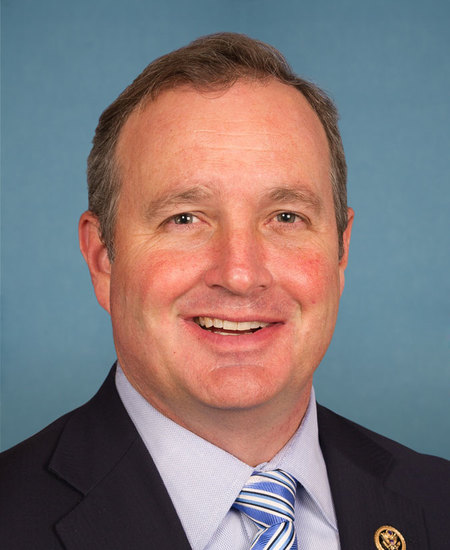
Rep. Jeff Duncan
Sponsored bills
Maddy summaryHR 2743 prohibits large financial institutions (over $100 billion in assets) from denying banking services to lawful businesses based on subjective political reasons, industry type, or reputational concerns. It requires these institutions to use objective, risk-based assessments for service decisions and provide written justifications for denials. The law applies to banks, credit unions, and payment networks, with civil penalties for violations including fines up to $10,000 per incident. It specifically ensures businesses operating legally under federal law receive fair access to financial services without discrimination. The bill mandates that denials be based on documented risk factors, not political bias or category-based exclusion.
American Innovation and R&D Competitiveness Act of 2023 This bill eliminates the five-year amortization requirement for research and experimental expenditures, thus allowing continued expensing of such expenditures in the taxable years in which they are incurred.
Maddy summaryHR 2712, the Work Not Woke Act, prohibits federal agencies, contractors, and grant recipients from using workplace training that promotes specific "divisive concepts," such as claiming inherent superiority of a race or sex, blaming individuals for historical actions, or suggesting meritocracy is racist. It directly affects federal contractors (requiring contract clauses banning such training), federal agencies (mandating review of diversity training), and grant recipients (requiring certification against using federal funds for prohibited training). Key mechanisms include a Department of Labor hotline for complaints, mandatory contract provisions for contractors, and a ban on using federal funds for three executive orders focused on racial equity. The law permits diversity efforts that do not promote the banned concepts and requires agencies to certify compliance with its provisions.
Maddy summaryHJRES 27 is a congressional resolution seeking to block a federal rule that redefined which waterways fall under the Clean Water Act's protections. It targets a rule submitted by the Army Corps of Engineers, Department of Defense, and Environmental Protection Agency (EPA) on January 18, 2023, which aimed to revise the "Waters of the United States" definition. The resolution would formally disapprove this rule under a specific federal procedure (Chapter 8 of Title 5), preventing it from taking effect. This would directly affect how federal agencies regulate pollution and development near water bodies, including wetlands and smaller streams.
Maddy summaryThe VA Same-Day Scheduling Act of 2023 requires the Department of Veterans Affairs to schedule appointments for enrolled veterans during the same phone call when they request care. This applies to veterans enrolled in the VA healthcare system who contact the VA by phone to request appointments. The law mandates that the VA must complete the scheduling during the call - without delay or future scheduling - regardless of the appointment date. The requirement takes effect 120 days after the bill is enacted.
Maddy summaryHR 2380, the Cellphone Jamming Reform Act of 2023, allows state and federal correctional facilities (like prisons and jails) to operate cellphone jamming systems to block wireless signals from contraband devices or communications involving individuals held in the facility. The bill restricts the Federal Communications Commission (FCC) from blocking such jamming systems, but requires facilities to limit jamming only to housing areas, have state facilities cover all costs, and consult with local law enforcement before implementation. It defines "jamming systems" broadly to include all necessary equipment and installation details. This bill directly affects correctional facilities seeking to prevent cell phone use by inmates, particularly for security purposes related to contraband. The law does not create new restrictions on cellphone use but changes how facilities can deploy jamming technology.
Maddy summaryThe Safe Students Act (HR 2502) repeals the Gun-Free School Zones Act of 1990, which had prohibited possessing firearms in federally designated school zones under federal law. It also amends related sections of Title 18 (U.S. Code) to remove references to the repealed law and adjust section numbering. This bill does not establish a new federal rule for school zones; it solely eliminates the existing federal prohibition on firearms in school zones. The repeal means the federal government would no longer enforce this specific ban, though state laws may continue to regulate firearms in schools.
Maddy summaryThis bill, HR 2451 (Freedom of Association in Higher Education Act of 2023), prevents colleges receiving federal funds from punishing students or single-sex social organizations (like fraternities/sororities) solely because of their single-sex membership policies. It prohibits actions such as denying housing, scholarships, or leadership roles, or forcing students to waive these protections as a condition of enrollment. The law does not require colleges to recognize such groups, nor does it block disciplinary action for misconduct unrelated to membership (e.g., academic issues). It directly affects students in single-sex organizations and institutions participating in federal student aid programs under Title IV.
Maddy summary# Summary of the TAPP American Resources Act This comprehensive legislation, titled the "TAPP American Resources Act" (or "Transparency, Accountability, and Permitting Process for American Resources Act"), is a major overhaul of federal energy and natural resource permitting processes. The key provisions include: 1. **Streamlined Permitting Processes**: - Creates a 50-year term limit for pipeline rights-of-way - Allows oil and gas exploration on non-Federal surface estate without Federal permits - Reduces royalty rates for oil and gas leases from 16.67% to 12.5% - Limits judicial review of permits to cases involving "imminent and substantial environmental harm" 2. **NEPA Reforms**: - Expands categorical exclusions for certain energy projects - Allows use of previously completed environmental assessments for similar projects - Limits environmental reviews to areas directly affected by the proposed action - Reduces consideration of downstream effects of oil and gas consumption 3. **Mining and Mineral Development**: - Designates mining as a "covered sector" for permitting improvement - Creates a memorandum of agreement process for mining projects - Requires mineral resource assessments before land withdrawals - Ensures uranium is considered a critical mineral 4. **Revenue Sharing**: - Changes distribution of Gulf of Mexico revenue to states (37.5% to Gulf states, 62.5% to general fund) - Creates parity in offshore wind revenue sharing with offshore oil and gas - Eliminates administrative fees under the Mineral Leasing Act 5. **Water Quality Certification**: - Limits certification requirements to specific provisions of Clean Water Act sections - Requires states to publish certification requirements within 30 days - Sets 90-day timeline for states to identify additional materials needed The legislation represents a significant shift toward expediting domestic energy production while reducing regulatory burdens, with a focus on oil, gas, and mineral development on federal lands. It includes numerous amendments to existing laws including the National Environmental Policy Act, Mineral Leasing Act, Outer Continental Shelf Lands Act, and Clean Water Act.