

Maddy summaryHR 8407, "Domenic and Ed's Law," amends the Higher Education Act to allow parents who took out federal student loans for their children to have those loans forgiven if their child becomes permanently disabled or dies. The bill expands existing loan forgiveness provisions to include these two specific circumstances, directly affecting parents with outstanding federal education loans. Key provisions require the child's disability to be determined as permanent and total by the Secretary or the child's death, with no requirement that the disability or death occurred after the loan was taken out. This change applies to all parent loans, regardless of when the loan was received or when the disability or death occurred.
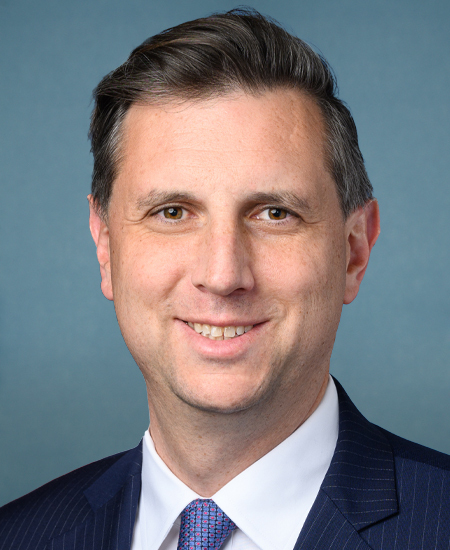
Rep. Seth Magaziner
Sponsored bills
Maddy summaryThe Rights for the TSA Workforce Act of 2024 would transition Transportation Security Administration (TSA) employees, particularly screening agents, from TSA-specific personnel rules to the standard federal government personnel system under Title 5 of the U.S. Code by December 31, 2024. The bill prohibits changes to current personnel policies for covered employees until the transition date and ensures no reduction in pay or benefits during the conversion process. It preserves certain benefits like law enforcement availability pay for Federal air marshals and maintains collective bargaining rights for screening agents. The bill also requires various reports to Congress on recruitment, implementation, diversity, and workplace safety to be submitted within specified timeframes.
Maddy summaryThe Captive Primate Safety Act prohibits the import, export, sale, transport, breeding, or possession of certain nonhuman primates - including chimpanzees, gorillas, monkeys, and their hybrids - in interstate or foreign commerce. It directly affects private owners, breeders, and commercial traders of these animals, with limited exceptions for pre-enactment animals (requiring registration with the U.S. Fish and Wildlife Service and restrictions on breeding/sale) and registered research facilities. The law amends the Lacey Act to add these primates to prohibited species lists, effective upon enactment, with regulations to be issued within 180 days. Enforcement remains active even if regulations are delayed, ensuring immediate prohibitions on commercial trade and possession.
Maddy summaryThis bill establishes a 5-year pilot program to improve transition support for servicemembers leaving the military, directly affecting those separating from active duty. It requires the Department of Defense and Veterans Affairs to jointly implement a program including: (1) a group education module covering transition risks (like isolation, PTSD, homelessness, and suicide risk factors), (2) one-on-one counseling before discharge to assess VA care needs, and (3) coordination to connect veterans with VA services in their intended communities. The pilot will operate at 10+ military locations serving 300+ annually, with participants sharing medical records with VA and receiving tailored service referrals. Reports will track demographics, program activities, and outcomes to assess whether the approach reduces suicide risk among transitioning veterans.
Maddy summaryHR 8141, the Azerbaijan Sanctions Review Act of 2024, requires the President to review whether 44 specific Azerbaijani officials meet criteria for U.S. sanctions under the Global Magnitsky Act and related laws. The bill targets military commanders, judges, prosecutors, and security officials linked to alleged human rights violations, including torture of prisoners of war and suppression of political dissent. Within 180 days of enactment, the President must submit a detailed determination to Congress on whether sanctions should be imposed on these individuals. The review is based on findings of Azerbaijan’s alleged war crimes, arbitrary detentions, and failures to uphold international legal obligations. This bill focuses on procedural review, not immediate sanctions.
Maddy summaryHR 8103 establishes a new Office for Civil Rights and Civil Liberties within the Department of Homeland Security (DHS), creating a dedicated "Officer for Civil Rights and Civil Liberties" position that reports directly to the DHS Secretary. This office oversees compliance with civil rights and civil liberties standards across all DHS policies, programs, and activities, reviews complaints of abuses (like profiling), and integrates protections into decision-making. Key mechanisms include requiring DHS components to consult the Officer before policy changes, mandating investigations of complaints within 30 days, and requiring annual public reports to Congress on civil rights implementation. The bill directly affects DHS employees and the public impacted by DHS operations, ensuring accountability through structured oversight and transparency.
Maddy summaryHR 8098, the Judicial Ethics Enforcement Act of 2024, creates an independent Office of Inspector General (IG) for the federal judicial branch (excluding the Supreme Court) to investigate misconduct complaints against judges and court staff. The IG would conduct audits, prevent fraud, and report findings to the Chief Justice and Congress, but cannot investigate court decisions or discipline judges. Key provisions include the IG’s authority to subpoena records and require testimony, while explicitly prohibiting oversight of case merits or judicial punishment. The bill establishes strict limits on the IG’s scope to ensure judicial independence, with the Chief Justice appointing the IG after congressional consultation.
Maddy summaryHR 8023, the Protecting Seniors from Emergency Scams Act, requires the Federal Trade Commission (FTC) to include specific data on scams targeting seniors during emergencies in its annual reports. The bill mandates the FTC to describe the number and types of these scams, its policy recommendations to prevent them, and enforcement actions taken. It also requires the FTC to update its online portal with searchable scam information by region and type, and to partner with media and law enforcement to share this information directly with seniors and their caregivers. This law directly affects the FTC's reporting duties and aims to improve awareness and response to scams that disproportionately impact seniors during crises.
Maddy summaryHouse Resolution 1158 recognizes the 82nd anniversary of the establishment of the U.S. Naval Construction Force (Seabees) on March 5, 2024. It honors their dual role in building military infrastructure and fighting in combat since World War II, as well as their global humanitarian efforts including disaster relief and community projects. The resolution expresses gratitude for their service, sacrifices, and contributions to U.S. military operations and international goodwill. As a symbolic measure, it does not create new policies or obligations.
Maddy summaryHR 8061, the Crime Victims Fund Stabilization Act of 2024, ensures stable funding for the Crime Victims Fund by directing certain False Claims Act collections into it from 2024 through 2029. Specifically, it adds a provision requiring that amounts collected under the False Claims Act (excluding whistleblower rewards and government reimbursement for damages) be deposited into the fund during this period. This directly affects crime victims who rely on the fund for services like counseling and emergency aid, as it prevents potential shortfalls in funding. The bill makes a concrete policy change by redirecting specific federal civil penalties into the fund, rather than altering the fund's existing purposes or eligibility rules.