

Maddy summaryThe FAIR Act of 2025 would prohibit companies from requiring pre-dispute arbitration agreements or waivers that prevent individuals from joining class or collective lawsuits in employment, consumer, antitrust, or civil rights cases. This directly affects workers, consumers, and small businesses who currently face forced arbitration for issues like workplace discrimination, product defects, or unfair business practices. The bill makes such agreements unenforceable while allowing voluntary arbitration after disputes arise and leaving collective bargaining agreements unaffected. It applies to all disputes occurring after the law takes effect, without changing how voluntary arbitration works post-dispute.
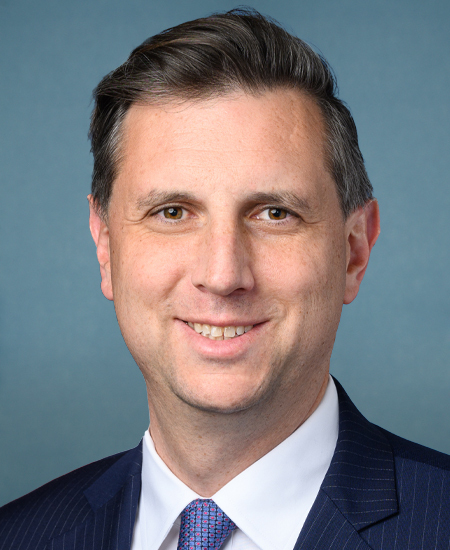
Rep. Seth Magaziner
Sponsored bills
Maddy summaryHJRES 121 proposes a constitutional amendment to allow Congress and states to set reasonable limits on money raised or spent to influence elections. It would permit regulations distinguishing between natural persons (individuals) and corporations or other artificial entities, potentially restricting corporate spending in elections. The amendment explicitly states that such regulations cannot abridge press freedom. This is a proposed constitutional change requiring ratification by three-fourths of state legislatures, not yet law.
Maddy summaryHJRES 120 proposes a constitutional amendment to limit consecutive terms for members of Congress. It would restrict Senators to serving two consecutive terms and Representatives to five consecutive terms, with both requiring a one-year waiting period before re-election. The amendment excludes terms filled by short-term vacancies (less than three years for Senators, less than one year for Representatives) from counting toward the limit, and does not apply to terms served before ratification. This proposal requires ratification by three-fourths of state legislatures within seven years to become part of the Constitution.
Maddy summaryThis bill establishes advance funding for key tribal programs starting in fiscal year 2026. It requires the Department of the Interior and Indian Health Service to include in each year's budget request sufficient funding for the *next* fiscal year's operations, specifically for accounts like "Operation of Indian Programs," "Contract Support Costs," and "Indian Health Services." The bill mandates annual reports by July 31 each year, assessing resource sufficiency and including workload estimates for the following fiscal year. These changes directly affect tribal programs administered by the Bureau of Indian Affairs, Bureau of Indian Education, and Indian Health Service, ensuring funding for future needs is planned and requested in advance.
Maddy summaryThis bill requires pension plan administrators to locate and notify beneficiaries of unclaimed retirement funds ($50 or more) before transferring them to state unclaimed property programs. Administrators must first attempt to update contact information through databases and send a clear notice explaining the transfer process, unless no updated contact can be found. It establishes a national clearinghouse for states to manage these transfers and mandates regular reports to the Labor Secretary about unclaimed funds, including beneficiary details. The law protects administrators from liability if they follow these procedures, ensuring forgotten retirement savings can be recovered by rightful owners through state programs.
Maddy summaryThe Healthcare Workforce Resilience Act (HR 5283) increases U.S. immigration visas for healthcare workers by recapturing unused employment-based visas from 1992-2024. It directly affects foreign nurses and physicians who filed petitions before 2027 (three years after enactment), reserving 25,000 visas for nurses and 15,000 for physicians. Key provisions include exempting these visas from country caps, requiring labor attestations to ensure no U.S. worker displacement, and establishing fee-free premium processing for applications. The bill aims to address healthcare staffing shortages by making these visas immediately available to qualifying professionals and their families.
Maddy summaryHR 5252, the HOPE Act, amends the 21st Century Cures Act to allow states and tribes using federal grant funds to purchase and distribute public access opioid overdose reversal kits. These kits contain opioid reversal medication and clear instructions for use. The bill specifically permits grant funds previously designated for prevention to also cover acquiring, making available, and maintaining these kits. It directly affects state and tribal health agencies administering the relevant federal grants.
Maddy summaryThis bill modifies the Family and Medical Leave Act (FMLA) to extend eligibility to school support staff, including paraprofessionals, cafeteria workers, bus drivers, and clerical staff. It allows these employees to qualify for FMLA leave if they work 60% of their expected monthly hours (instead of the standard 1,250 hours), based on their school’s assigned schedule. Employers must maintain records of expected hours for each staff member. The change directly benefits part-time and seasonal education support staff who previously faced barriers to FMLA coverage.
Maddy summaryThe Empowering Striking Workers Act of 2025 would expand unemployment insurance eligibility to workers unable to work due to labor disputes, including strikes or lockouts. It sets a 14-day waiting period (or earlier if replacements are hired, a lockout starts, or the dispute ends) before benefits begin, treating these workers as "unemployed" under federal law. The bill also removes the standard requirement for these workers to actively seek other employment to qualify for benefits. This directly affects workers involved in labor disputes, such as those on strike or unable to work due to employer lockouts.
Maddy summaryThis resolution (HRES 677) is a formal statement by the House of Representatives affirming the Federal Reserve's independence from political influence. It specifically supports Chairman Jerome Powell and the Board of Governors in making monetary policy decisions based on economic data, not political pressure. The resolution urges the President and executive branch to respect the Fed's statutory independence and avoid actions or rhetoric that could undermine its credibility. It emphasizes that maintaining this independence is critical for economic stability, price control, and global confidence in U.S. financial markets.