

CISA Cyber Exercise Act This bill establishes the National Cyber Exercise Program to evaluate the National Cyber Incident Response Plan and related plans and strategies. (The National Cyber Incident Response Plan outlines the roles and responsibilities, capabilities, and coordinating structures that support how the United States responds to and recovers from significant cyber incidents posing risks to critical infrastructure.) Based on current risk assessments, the exercise program shall be designed to (1) simulate partial or complete incapacitation of a government or critical infrastructure network resulting from a cyber incident, (2) provide for the systematic evaluation of cyber readiness and enhance operational understanding of the cyber incident response system and relevant information sharing agreements, and (3) develop after-action reports and plans that can incorporate lessons learned into future operations.
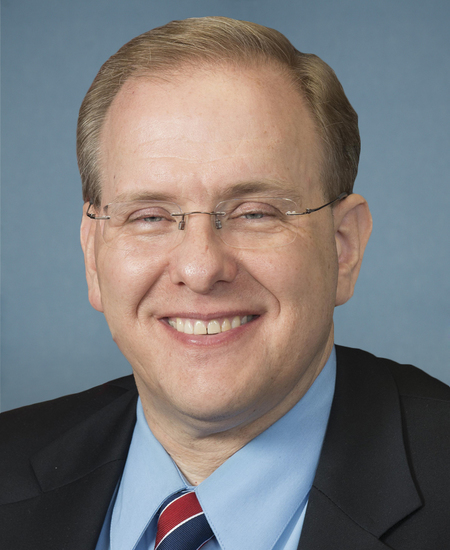
Rep. James R. Langevin
Sponsored bills
DHS Industrial Control Systems Capabilities Enhancement Act of 2021 This bill requires the Cybersecurity and Infrastructure Security Agency (CISA) to maintain certain capabilities to identify and address threats to industrial control systems. Specifically, the bill requires CISA's National Cybersecurity and Communications Integration Center to ensure that its activities address the security of both information and operational technology, including industrial control systems. Additionally, CISA must maintain capabilities to identify and address threats and vulnerabilities to products and technologies intended for use in the automated control of critical infrastructure processes by (1) leading efforts to identify and mitigate cybersecurity threats to industrial control systems; (2) maintaining threat hunting and incident response capabilities to respond to cybersecurity risks and incidents; (3) providing cybersecurity technical assistance to stakeholders; and (4) collecting, coordinating, and providing vulnerability information to the industrial control systems community. CISA shall provide to the homeland security committees a briefing on its industrial control systems capabilities at specified intervals. The Government Accountability Office must review and report on implementation of the bill's requirements.
Daniel J. Harvey Jr. and Adam Lambert Improving Servicemember Transition to Reduce Veteran Suicide Act This bill requires the Department of Defense (DOD) and the Department of Veterans Affairs (VA) to jointly implement a five-year pilot program to assess the feasibility and advisability of providing specified counseling and services as part of the Transition Assistance Program for members of the Armed Forces as a means of reducing the incidence of suicide among veterans. Specifically, the pilot program would involve a three-hour counseling module and the provision of contact information for a counseling or similar facility in the locality where the veteran intends to reside. Additionally, the participating veterans must submit medical records in connection with their service in the Armed Forces, regardless of whether they intend to file a claim for benefits for a service-connected disability. Under the program, a social worker or behavioral health coordinator from the VA must contact the veteran within 90 days after the member is discharged or released from service to schedule a follow-up appointment. At least 10 DOD Transition Assistance Centers must be jointly selected to carry out the pilot program.
Access to Assistive Technology and Devices for Americans Study Act or the Triple A Study Act This bill directs the Government Accountability Office (GAO) to study issues related to health insurance and other coverage for assistive technologies, such as prosthetic devices and custom orthoses, for those who experience amputations or live with a limb difference. In conducting this study, the GAO must include comparisons of claims and other data from Medicare, the Department of Veterans Affairs, and commercial health insurers.
Pipeline Security Act This bill revises the duties of the Transportation Security Administration (TSA) to include securing pipelines and pipeline facilities against cybersecurity threats, acts of terrorism, and other acts that jeopardize the physical security or cybersecurity of the pipelines or facilities. Specifically, the bill (1) establishes a pipeline security section within the TSA, (2) directs the TSA to develop a personnel strategy for enhancing operations within such section, and (3) requires the TSA to publish updated pipeline security guidelines. The TSA must also convene not less than two industry days to engage with relevant pipeline transportation and pipeline facilities stakeholders on matters related to the security of pipeline transportation and pipeline facilities.
Preserving Rules Ordered for The Entities Covered Through 340B Act of 2021 or the PROTECT 340B Act of 2021 This bill prohibits pharmacy benefit managers (PBMs) and health insurance plans from discriminating against health providers participating in the 340B drug pricing program, including pharmacies contracted with such providers to dispense 340B drugs. The 340B program allows certain providers to receive covered outpatient drugs at reduced prices from manufacturers. Specifically, PBMs and insurance plans may not reimburse 340B participants at a lower rate than other entities not participating in the program; impose differing terms (such as fees, charge-backs, or audits) on 340B participants; interfere with an individual's choice to receive drugs from a 340B participant; require 340B participants to identify which drugs fall within the program; or refuse to contract with a 340B participant on the basis that they utilize the program. Violations of this bill are subject to a civil penalty of not more than $5,000 per violation per day. These prohibitions also apply to prescription drug (Part D) sponsors under Medicare. The bill also provides for a process to prevent duplicate 340B drug discounts to states under Medicaid.
Global Health Security Act of 2021 This bill directs the United States to implement a strategy to strengthen global health security, including by requiring the President to create the Global Health Security Agenda Interagency Review Council to implement the Global Health Security Agenda. The agenda is an initiative launched by nearly 30 nations to address global infectious disease threats. The council's responsibilities include (1) providing policy recommendations on agenda-related goals, objectives, implementation, and other international efforts to strengthen pandemic preparedness and response; (2) helping federal agencies with implementation; and (3) reviewing the progress and challenges in achieving U.S. commitments, including assistance to help other countries meet agenda targets. The bill also directs the federal agencies involved with the agenda to prioritize its implementation and to take certain steps to achieve that goal. The President shall coordinate a strategy for responding to global health security emergencies and submit a report on the implementation of this strategy. Additionally, the Department of State should seek to enter into negotiations with donors, relevant United Nations agencies, and other multilateral stakeholders to establish a Fund for Global Health Security and Pandemic Preparedness that (1) closes gaps in global health security and pandemic preparedness; and (2) builds capacity in eligible partner countries related to global health security, infectious disease control, and pandemic preparedness. The fund should provide grants, technical assistance, and innovative funding mechanisms to achieve its purposes.
Safe Schools Improvement Act of 2021 This bill requires states to direct their local educational agencies (LEAs) to establish policies that prevent and prohibit bullying and harassment of elementary and secondary school students. In particular, these policies must prohibit bullying and harassment based on race, color, national origin, sex, sexual orientation, gender identity, disability, or religion. Further, LEAs must provide (1) students, parents, and educational professionals with annual notice of the conduct prohibited in their disciplinary policies; (2) students and parents with grievance procedures that target such conduct; and (3) the public with annual data on the incidence and frequency of that conduct at the school and LEA level. The Department of Education must conduct and report on an independent biennial evaluation of programs and policies to combat bullying and harassment in elementary and secondary schools. The National Center for Education Statistics must collect state data to determine the incidence and frequency of the conduct prohibited by LEA disciplinary policies.
Protecting Sibling Relationships in Foster Care Act This bill requires the Administration for Children and Families to establish a competitive pilot grant program for foster care agencies to increase the placement of siblings together in foster care.
Department of Homeland Security Reform Act of 2021 or the DHS Reform Act of 2021 This bill makes extensive changes to the structure of the Department of Homeland Security (DHS) and to the responsibilities of DHS components. Specifically, the bill, among other things creates a new Associate Secretary responsible for overseeing DHS's law enforcement functions; modifies the responsibilities of the Office for Civil Rights and Civil Liberties, including to require engagement with individuals and communities whose civil rights and liberties may be affected by DHS programs and activities; establishes within DHS's Office of Intelligence and Analysis an analytic unit to serve as a focal point for intelligence and analysis of domestic terrorism threats; directs DHS to establish an employee engagement steering committee to identify factors that have a negative impact on employee engagement, morale, and communications within DHS; establishes within DHS a school security coordinating council; directs DHS to develop and disseminate a strategy with respect to biometric technology and identity management enterprise pilot programs and programs; requires DHS to develop, disseminate, and implement a DHS-wide directive to update or replace the strategic framework relating to countering terrorism and targeted violence; requires that DHS's use-of-force policy be updated to emphasize de-escalation; and requires DHS to issue a DHS-wide strategy to enhance partnerships with historically Black colleges and universities and minority-serving institutes that includes yearly goals.