

The Pioneering Antimicrobial Subscriptions To End Up surging Resistance Act of 2021 or the PASTEUR Act of 2021 This bill authorizes the Department of Health and Human Services (HHS) to enter into subscription contracts for critical-need antimicrobial drugs, provides $11 billion in appropriations for activities under the bill, and contains other related provisions. A manufacturer of a Food and Drug Administration-approved antimicrobial drug may apply to HHS to have the drug designated as a critical-need antimicrobial, and HHS may enter into a subscription contract for such a critical-need antimicrobial. The bill imposes certain requirements related to such contracts, including a mechanism to lower payments under the contract in certain instances to limit the manufacturer's revenue from the drug. Furthermore, HHS and the Centers for Disease Control and Prevention (CDC) shall award grants to support efforts to encourage the appropriate use of antimicrobial drugs and efforts to combat antimicrobial resistance. The CDC shall also track and assess data relating to antibacterial resistance and human antibiotic use and make such data publicly available. HHS shall also establish a Committee on Critical Need Antimicrobials. The committee shall develop a list of prioritized infections for which new antimicrobial drug development is needed, among other duties. Within six years of the bill's enactment, the Government Accountability Office shall report to Congress a study on the bill's effectiveness in developing priority antimicrobial drugs.
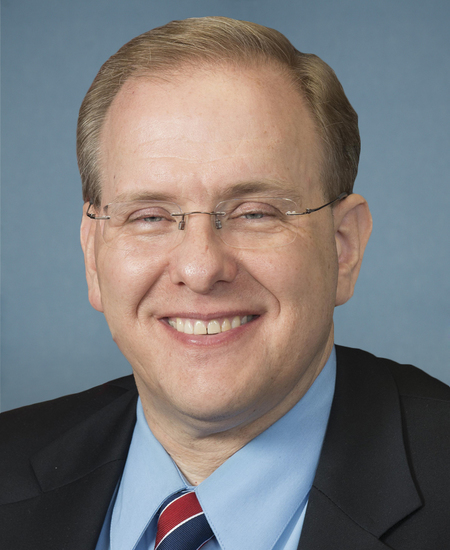
Rep. James R. Langevin
Sponsored bills
Medical Device Nonvisual Accessibility Act of 2021 This bill requires certain medical devices with a digital interface to meet nonvisual accessibility standards established by the Food and Drug Administration (FDA). Specifically, the FDA must establish regulations to require a Class II or Class III medical device with a digital interface to provide a blind or low-vision user access to the same services and information, and generally the same ease of use, as provided to a user who is not low-vision or blind. (The FDA classifies medical devices in three classes. Class I devices are low-risk, Class II devices are moderate-risk, and Class III devices are high-risk.) A Class II or Class III medical device that does not meet the nonvisual accessibility standards established under this bill may not be sold.
Affordable EVs for Working Families Act This bill allows an income-based tax credit for the purchase of a previously-owned qualified plug-in electric drive motor vehicle. The credit is limited to 30% of the sales price of such a vehicle. The bill defines previously-owned qualified plug-in electric drive motor vehicle to mean a motor vehicle the model year of which is at least two years earlier than the calendar year in which the vehicle is acquired and that meets certain requirements under the Clean Air Act.
Respond, Innovate, Succeed, and Empower Act of 2021 or the RISE Act of 2021 This bill establishes requirements for institutions of higher education (IHEs) concerning students with disabilities. Specifically, the bill requires IHEs to allow students to use certain documents, such as individualized education programs, to establish their disabilities. In addition, IHEs must make the process for determining the eligibility for accommodations transparent. Finally, IHEs must submit key data related to their undergraduate students with disabilities for inclusion in federal postsecondary institution data collection efforts.
Captive Primate Safety Act This bill limits the trade and possession of nonhuman primates. For example, the bill prohibits most individuals from owning a nonhuman primate as a pet.
Critically Endangered Animals Conservation Act of 2021 This bill provides statutory authority for the Critically Endangered Animals Conservation Fund, which finances a grant program to protect critically endangered species. Specifically, the bill requires the Department of the Interior to establish the fund as a separate account in the Multinational Species Conservation Fund. Critically endangered species means any animal species categorized on the International Union for Conservation of Nature (IUCN) Red List of Threatened Species as either endangered or critically endangered. The term also means any other animals species categorized on such list as data deficient or under a threat category lower than endangered if Interior determines that (1) the most recent IUCN Red List assessment indicates that the population is decreasing, or (2) such species is facing new or emerging threats.
Closing the Meal Gap Act of 202 1 This bill revises the requirements for calculating Supplemental Nutrition Assistance Program (SNAP) benefits. The bill increases the minimum SNAP benefit and requires benefits to be calculated using the value of a low-cost food plan. The Department of Agriculture (USDA) must determine the requirements for the low-cost food plan, which is the diet required to feed a family of four, consisting of a man and a woman 19-50 years of age, a child 6-8 years of age, and a child 9-11 years of age. USDA must (1) reevaluate and publish the market baskets of the plan by January 1, 2027, and every five years thereafter, based on current food prices, food composition data, consumption patterns, and dietary guidance; and (2) make adjustments to the plan to account for household size, changes in the cost of the diet, and the costs of food in specified areas. The bill modifies the requirements for calculating household income to determine SNAP eligibility by (1) authorizing a standard medical expense deduction for households containing an elderly or disabled member, and (2) eliminating the cap on the excess shelter expense deduction. The bill eliminates certain work requirements for SNAP. The requirements apply to able-bodied adults who are ages 18-49 and have no dependent children. The bill allows Puerto Rico, American Samoa, and the Northern Mariana Islands to participate in SNAP. Currently, the three territories receive block grants instead of participating in SNAP.
Eleanor Smith Inclusive Home Design Act of 2021 This bill requires certain newly constructed, federally assisted housing, including single-family homes and town houses, to contain at least one level that complies with specified minimum standards of accessibility for individuals with disabilities. An aggrieved person may commence a civil action with respect to a violation of this requirement.
American Workforce Investment in Next Generation of Students Act This bill directs the Secretary of Education to award grants to eligible entities to carry out a program for students to enroll in and complete science, technology, engineering, and mathematics (STEM) courses, STEM-focused career and technical education courses, and other career pathway courses during grades 11 and 12 at a secondary school served by a local educational agency (LEA) partner; enroll in a course of study related to such a career pathway or in a youth apprenticeship program at a partner community college upon graduating from the secondary school; enroll, for a two-year period, in the youth apprenticeship program or the joint-labor management training program upon receiving an associate's degree from a partner community college; receive assistance from a student career workforce navigator; and receive work training and job placement through a workforce development consortium employer established under the bill. An eligible entity is a partnership (1) among at least one LEA, at least one community college, and at least one youth apprenticeship program or joint labor-management training program; and (2) that works with an employer in a state-identified high-skill, high-wage, or in-demand industry sector or occupation that is serving, or seeking to expand its capacity to serve, youth apprenticeship programs.
VOCA Fix to Sustain the Crime Victims Fund Act of 2021 This bill adds a new source of revenue for the Crime Victims Fund and makes changes to formula grants supported by the fund. Specifically, the bill directs revenues collected from deferred prosecution and non-prosecution agreements to be deposited into the Crime Victims Fund. Currently, such revenues are deposited into the general fund of the Treasury. Additionally, the bill increases the percentage—from 60% to 75%—of state compensation payments to crime victims in the prior fiscal year used to calculate formula grants for state victim compensation programs. Finally, the bill directs states to waive the matching requirement for recipients of state victim assistance formula grants during and for one year after a pandemic-related national emergency. It also allows states to waive the matching requirement pursuant to a policy established by the state.