Maddy summaryHR 5252, the HOPE Act, amends the 21st Century Cures Act to allow states and tribes using federal grant funds to purchase and distribute public access opioid overdose reversal kits. These kits contain opioid reversal medication and clear instructions for use. The bill specifically permits grant funds previously designated for prevention to also cover acquiring, making available, and maintaining these kits. It directly affects state and tribal health agencies administering the relevant federal grants.
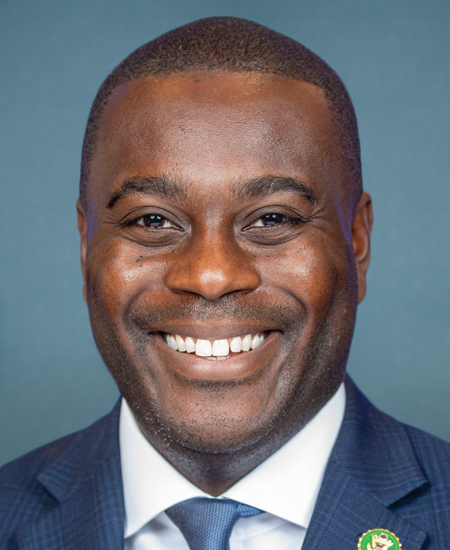
Rep. Gabe Amo
Sponsored bills
Maddy summary# Summary of the Weather Act Reauthorization Act of 2025 This comprehensive legislation reauthorizes and modernizes the National Oceanic and Atmospheric Administration's (NOAA) weather and climate programs through 2030, with several key focuses: ## Core Program Reauthorizations - **Commercial Data Program** ($100M annually): Establishes a formal program to acquire weather/environmental data from private sector entities, including standards, prioritization, and data assimilation practices - **Commercial Data Pilot Program** (15% of Commercial Data Program funds): Tests and evaluates private sector data for use in NOAA operations - **Advanced Weather Interactive Processing System**: Requires transition to cloud-based operations by 2030 to enable more flexible workforce ## Hazard Communication Improvements - **Hazardous Weather Risk Communication Program**: Focuses on simplifying and improving communication of weather hazards through social, behavioral, and risk science research - **Post-Storm Surveys**: Requires systematic surveys after significant weather events, with emphasis on vulnerable populations - **NOAA Weather Radio Modernization**: Expands coverage, enhances reliability, and transitions to internet protocol-based communications ## Operational Modernization - **National Weather Service Workforce**: Includes hiring assessments, health/morale evaluations, and designation of service hydrologists - **Aviation Weather Program**: Enhances turbulence forecasting, data acquisition, and coordination with the Federal Aviation Administration - **Data Management**: Establishes consistent data standards, infrastructure, and sharing practices across NOAA ## Specialized Programs - **Atmospheric Rivers Forecast Improvement Program**: Focuses on improving forecasts of atmospheric rivers that impact the western U.S. - **Coastal Flooding and Storm Surge Program**: Improves coastal inundation forecasting and warning systems - **National Integrated Drought Information System**: Enhances drought monitoring and forecasting capabilities - **National Mesonet Program**: Expands environmental observation networks across the U.S., with 15% of funds for financial assistance to state/local entities - **National Coordinated Soil Moisture Monitoring Network**: Supports soil moisture monitoring for agricultural and drought management - **Precipitation Forecast Improvement Program**: Aims to improve precipitation forecasting across all timescales ## Funding The bill authorizes significant funding across these programs, with annual appropriations ranging from $10M to $70M depending on the program, for fiscal years 2026-2030. The legislation represents a major effort to modernize NOAA's infrastructure, improve weather communication to the public, and better integrate commercial data sources while maintaining NOAA's leadership in weather and climate science.

Maddy summaryHR 5220, the Congressional Power of the Purse Act, strengthens Congress's authority over federal spending by preventing the executive branch from withholding appropriated funds. The bill requires federal agencies to report on budget management, adds penalties for failing to comply with congressional oversight requirements, and establishes new procedures for congressional review of national emergencies. It directly affects federal agencies, the executive branch, and the balance of power between Congress and the President regarding budget authority. The law aims to increase transparency and accountability in how government funds are managed and spent.
Maddy summaryThis bill extends preferential U.S. trade benefits for Haitian exports until 2037 (previously ending in 2025) under the Caribbean Basin Economic Recovery Act. It requires Haitian producers to comply with core labor standards and Haitian labor laws related to minimum wages, working hours, and safe conditions to maintain these benefits. The bill also creates a new technical assistance program where the U.S. Trade Representative will work with Haitian government agencies, businesses, labor groups, and trade support institutions to boost exports - focusing on agricultural processing, apparel sector competitiveness, and export strategy development. These changes directly affect Haitian exporters seeking U.S. trade preferences and U.S. agencies administering trade programs.
Maddy summaryHR 2808, the Homebuyers Privacy Protection Act, restricts how consumer reporting agencies share credit reports during mortgage applications. It prevents agencies from sending these reports to third parties unless the request is tied to a firm credit offer and the recipient has either the homebuyer’s explicit written consent or is directly involved in the mortgage (like the lender, loan servicer, or the homebuyer’s bank holding an active account). This directly affects homebuyers applying for residential mortgages by limiting unsolicited sharing of their credit information. The law amends the Fair Credit Reporting Act to strengthen privacy protections around mortgage-related credit data.
Maddy summaryHR 5161 would create a new Office of Young Americans within the Executive Office of the President to coordinate federal efforts on issues affecting U.S. citizens and legal residents aged 18-40. The Office’s Director would identify key challenges like employment, education, mental health, housing, and climate change for this age group, advise the President, and coordinate federal agency actions to address them. The bill requires the Director to submit annual reports to Congress detailing priority issues and resource needs for young Americans, with the first report due within one year of enactment. This is a structural change focused on interagency coordination, not direct service provision.
Maddy summaryThis bill prohibits Members of Congress, their spouses, and dependent children from owning or trading certain investments, including stocks, commodities, and derivatives (referred to as "covered investments"). It requires affected individuals to divest these investments within 90-180 days, with specific exemptions for Treasury bonds, diversified mutual funds, small business interests, and family trusts meeting strict conditions. Violations incur penalties of 10% of the investment's value plus disgorgement of profits, paid directly to the U.S. Treasury. The law applies to all covered individuals during federal service, with exceptions for investments acquired through inheritance or occupational trading (e.g., a spouse’s finance job).
Maddy summaryThe ARMOR Act streamlines defense trade processes among the U.S., U.K., and Australia by expanding an expedited review system for military exports and transfers within these nations. It requires the President to submit annual reports detailing licenses issued, applicants, and defense items covered, and mandates an annual review of the "Excluded Technologies List" to ensure only necessary items require licensing. The bill directly affects defense companies, government agencies, and military contractors handling cross-border defense articles and services. Key changes include broadening licensing rules to cover reexports, retransfers, and temporary imports, while clarifying congressional notification requirements for defense transfers. These provisions aim to reduce administrative delays in defense cooperation without altering existing security policies.
Maddy summaryThis bill is a congressional resolution expressing U.S. policy priorities regarding Xinjiang. It urges China to open Xinjiang to international access, cease repression of Uyghurs and other minorities, release specific detained individuals (including Ekper Asat, Dr. Gulshan Abbas, and Kamile Wayit), and stop transnational repression against Uyghur families abroad. The bill directs the State Department to coordinate U.S. policy on Uyghur issues, prioritize support for Uyghur communities, establish reporting mechanisms for transnational repression, and develop strategies to pressure China on detention facilities. It also requires U.S. diplomatic posts in China to have Uyghur-language capabilities and directs U.S. advocacy at the United Nations to address human rights concerns.
Maddy summaryThe SAFES Act creates a federal tax credit allowing individuals to deduct 90% of the cost of purchasing new gun safes, with a yearly limit of $500 ($1,000 for joint returns). It requires the Health and Human Services Secretary to publish a report within 5 years identifying gun safe types proven effective at preventing unauthorized access, which will determine eligibility for the credit after 2030. The credit applies only to new safes (not used ones) and prohibits requiring taxpayers to disclose firearm ownership details to claim the benefit. This policy directly affects individual firearm owners purchasing qualifying new safes for tax savings.