

Preventing Opportunities for Teen E-Cigarette and Tobacco Addiction Act or the PROTECT Act This bill requires the Centers for Disease Control and Prevention (CDC) to develop a strategy and carry out a specific initiative to prevent and reduce the use of electronic cigarettes and emerging tobacco products among youth and young adults. As part of the initiative, the CDC must conduct research and surveillance on types of products, patterns of use, health impacts, and other aspects of the use of such products by youth and young adults; evaluate prevention and intervention strategies and develop guidance for intervening and treating youth and young adults who use such products; identify effective messaging and communication efforts and implement a national public education campaign concerning the use of such products; and continue to fund grants for tobacco control programs in health departments, including efforts to prevent and reduce the use of such products by youth and young adults.
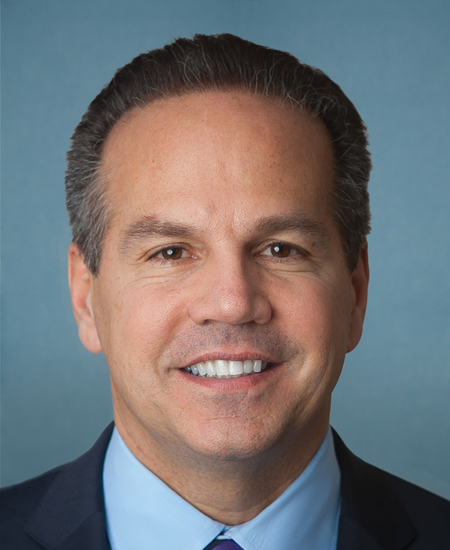
Rep. David N. Cicilline
Sponsored bills
This resolution urges the people of the United States to acknowledge an Italian and Italian-American Heritage Month in recognition of the contributions Italians and Italian Americans have made to this country and the world.
Supporting Older Workers Act This bill allows states to use allocated Workforce Innovation and Opportunity Act (WIOA) funds for statewide training activities to support older workers. Specifically, the bill authorizes training activities that coordinate with existing programs for older workers, support the development of activities that enhance the skills of older individuals, or enhance economic choices available to older individuals. The bill also requires the Department of Labor to award grants to states and local areas to hire WIOA coordinators for older worker and establishes the Older Workers Bureau. The Government Accountability Office must study how well existing state and local performance accountability measures under WIOA measure the success of older individuals.
Animal Freedom from Testing, Experiments, and Research Act of 2021 or the AFTER Act of 2021 This bill requires federal research facilities to facilitate the adoption or nonlaboratory placement of certain warm-blooded animals (e.g., dogs, cats, monkeys, guinea pigs, hamsters, and rabbits) with animal rescue organizations, animal sanctuaries, animal shelters, or individuals. In order to be adopted or placed, the animals must (1) no longer be needed for research; (2) be suitable for release; (3) not be birds, rats, or mice.
Kids Internet Design and Safety Act or the KIDS Act This bill prohibits operators of commercial online platforms that are directed to children from engaging in certain practices, including implementing features that encourage additional engagement with the platform, promoting certain types of content, and using certain advertising methods.
This bill requires the Department of Defense (DOD) to conduct outreach to build awareness among former members of the Armed Forces of the process established for the review of discharge characterizations related to sexual orientation (i.e., on the basis of Don't Ask, Don't Tell or a similar policy). DOD must also provide for specified relief for former members of the Armed Forces who were impacted by the discharge characterizations and ensure that DOD oral historians review related facts and receive testimony from affected individuals.
Stop Stalling Access to Affordable Medications This bill makes it an unfair method of competition to submit an objectively baseless petition to the Food and Drug Administration (FDA) in an attempt to interfere with a competitor's application for market approval of a drug. The bill authorizes the Federal Trade Commission to sue an individual or entity that submits such a petition to the FDA. A party found liable in such a lawsuit shall be subject to civil penalties, such as a fine of up to $50,000 for each day that the FDA spent reviewing the baseless petition.
Affordable Prescriptions for Patients Through Promoting Competition Act of 2021 This bill prohibits product hopping by drug manufacturers and authorizes the Federal Trade Commission to sue in court or institute administrative proceedings to enforce this prohibition. Generally, product-hopping describes a situation where, when the patents on a reference drug (or biological product) expire, the manufacturer switches to a follow-on product that is covered by a later-expiring patent. Under this bill, a follow-on product is a changed, modified, or reformulated version of the reference drug that shares an indication (what the drug is used for) with the reference drug. The bill presumes product hopping has occurred when a reference drug manufacturer engages in a hard switch or a soft switch . A hard switch occurs when, after receiving notice of an application for Food and Drug Administration (FDA) approval to market a generic (or biosimilar) version of the reference drug, the manufacturer markets a follow-on product and (1) the FDA withdraws approval of the reference drug at the manufacturer's request, or (2) the manufacturer announces the withdrawal or discontinuance of the reference drug or destroys the drug's inventory in a manner that impedes generic competitors. Furthermore, the bill presumes that a soft switch occurred if a reference drug manufacturer (1) markets a follow-on product, and (2) takes actions that disadvantage the reference drug relative to that follow-on product in a way that impedes competition from a generic drug. A drug manufacturer may rebut these presumptions by demonstrating that its conduct was not intended to limit competition.
Preserve Access to Affordable Generics and Biosimilars Act This bill authorizes the Federal Trade Commission (FTC) to initiate proceedings against parties to any agreement resolving or settling a patent infringement claim in connection with the sale of a drug or biological product. Such an agreement is presumed to have anticompetitive effects and is a violation of this bill if the filer of the generic drug or biosimilar application receives anything of value and agrees to limit or forego research, development, manufacturing, marketing, or sales of the generic drug or biosimilar. An agreement is exempted if the only consideration granted to the generic manufacturer is (1) the right to market its product prior to the expiration of any statutory exclusivity, (2) a payment for reasonable litigation expenses, or (3) a covenant not to sue on any claim that the generic drug or biosimilar infringes a patent. An agreement is also exempt if the agreement's pro-competitive benefits outweigh the anticompetitive effects. When a generic or biosimilar drug manufacturer enters into an agreement with another drug manufacturer related to the manufacturing, marketing, or sale of a drug, the manufacturers must certify that the material they have given the FTC concerning the agreement contains the complete agreement and any agreements related to that main agreement, including descriptions of any oral agreements or representations. The bill imposes penalties for violations of this bill, including the forfeiture of the 180-day marketing exclusivity period for a generic drug.
Eliminating a Quantifiably Unjust Application of the Law Act of 2021 or the EQUAL Act of 2021 This bill eliminates the federal sentencing disparity between drug offenses involving crack cocaine and powder cocaine. Currently, different threshold quantities of crack cocaine and powder cocaine (e.g., 28 grams of crack cocaine and 500 grams of powder cocaine) trigger the same statutory criminal penalties. This bill eliminates the lower quantity thresholds for crack cocaine offenses. Under the bill, the same threshold quantities of crack cocaine and powder cocaine trigger the same statutory criminal penalties. The change applies to future cases and cases pending on the date of enactment. With respect to past cases, the bill authorizes a sentencing court to impose a reduced sentence on a defendant who was convicted or sentenced for a specified crack cocaine offense before this bill's enactment. A defendant does not have to be present at the sentence reduction hearing. Finally, the bill prohibits the reduction of a sentence that was previously reduced.