

Stop shielding Assets from Corporate Known Liability by Eliminating non-debtor Releases Act or the SACKLER Act This bill prohibits a bankruptcy court from releasing claims against non-debtors brought by states, tribes, municipalities, or the federal government. However, the bankruptcy court may issue a stay not exceeding 90 days regarding such a claim. Complex bankruptcies may involve creditor claims against non-debtors associated with the debtor, such as the debtor's officers, directors, or employees. Currently, in carrying out a bankruptcy plan, certain courts may release non-debtors from liability (there is a circuit split regarding this practice).
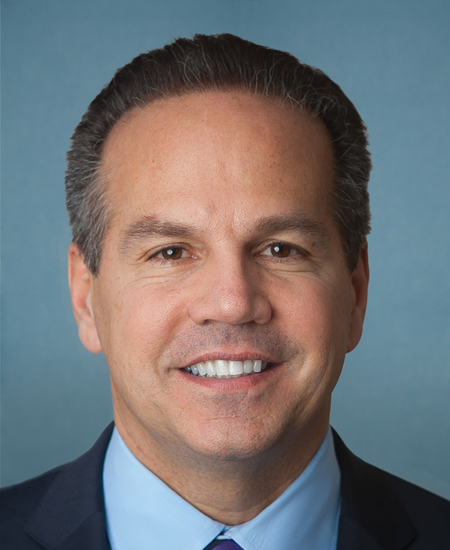
Rep. David N. Cicilline
Sponsored bills
Help Extract Animals from Red Tape Act of 2021 or the HEART Act of 2021 This bill modifies notice requirements in a civil forfeiture proceeding that involves the seizure of an animal involved in animal fighting. Specifically, the government must notify interested parties of an animal's seizure within 30 days (currently, 60 days). The notice period may be extended only if a delay is warranted after considering certain factors, including the cost to the government of providing shelter for the animal, the health of the animal and the effect of a delay on its rehabilitation, any increased risk that a delay could necessitate the euthanasia of the animal, and any psychological harm incurred by the animal's owner due to the delay in disposition. Additionally, the bill authorizes amounts in the Department of Justice Assets Forfeiture Fund to be used to pay for costs associated with a seized animal, including transportation, shelter, care, veterinary services, and humane euthanasia.
Medication Access and Training Expansion Act of 2021 or the MATE Act of 2021 This bill requires health care providers, as a condition of receiving or renewing a registration to prescribe potentially addictive drugs, to complete a one-time training on managing patients with substance use disorders. In addition, the Department of Health and Human Services must award grants to health professional associations and education programs for integrating substance use disorder training into relevant curricula.
PrEP Assistance Program Act This bill establishes a grant program to provide pre-exposure prophylaxis (PrEP) and related services to individuals at no cost. PrEP is medication given to individuals at risk of HIV to reduce their likelihood of contracting the virus. The Department of Health and Human Services must award the grants to state, tribal, and local governments; certain health clinics; and community-based organizations.
Cybersecurity Opportunity Act This bill requires the Department of Homeland Security to establish a grant program to promote cybersecurity training and education at institutions of higher education with an enrollment of needy students, historically Black colleges and universities, and minority-serving institutions.
Arts Education for All Act This bill expands arts education and programming for children in early education, K-12 students, and juveniles and adults in the criminal justice system. Specifically, the bill allows Child Care and Development Block Grant funding to be used for additional activities, including arts programming. Additionally, the bill addresses arts programming in elementary and secondary schools by directing each state educational agency to include information on arts programming in its state plan, including how it will integrate arts education instruction into the curriculum and increase the number of arts teachers in schools; requiring state report cards to include information on arts courses; requiring local educational agency (LEA) plans to describe how the LEA will encourage the use of arts education to improve student achievement; and allowing certain funds to be used for professional development for arts teachers. The bill directs the National Center for Education Research to carry out research on the use of arts and arts education in elementary and secondary schools, including in low-performing schools. Further, the National Center for Education Statistics must compile data on arts education. The National Assessment of Educational Progress must include a specified arts assessment. The bill requires a state's juvenile justice and delinquency plan to describe how the state will coordinate services and activities for juvenile justice and delinquency prevention with arts agencies and arts organizations. Additionally, grants for adult offender reentry demonstration projects may be used for facilitating arts education.
Reconciliation in Place Names Act This bill directs the Department of the Interior to establish the Advisory Committee on Reconciliation in Place Names to advise the Board on Geographic Names with regard to renaming geographic features with offensive place names. The board shall rename a geographic feature with an offensive name in accordance with a recommendation of the committee unless the board determines that (1) there is a compelling reason and substantial public interest in rejecting the recommendation, or (2) approving the recommendation would violate federal law. The board shall accept or reject a recommendation within three years of receiving the recommendation.
This concurrent resolution objects to the slowdown in mail delivery instituted by the Postmaster General and urges that the decisions to slow down mail and increase postage rates be halted immediately pending further investigation and full substantiation by the Postmaster General to Congress.
This resolution honors Gibraltar's contribution to advancing U.S. security interests in the Mediterranean region and expresses support for the people of Gibraltar.
This resolution condemns Belarusian authorities' assault on freedom of expression and human rights in Belarus since the August 2020 presidential election. The resolution also calls for the immediate release of journalists, cultural figures, and dissidents currently held as political prisoners in Belarus. Furthermore, the resolution calls on the Biden Administration to support initiatives to assist survivors of torture and other human rights violations from Belarus, including by working with allies in the region to grant them protection and providing avenues for them and their families to access safety in the United States; examine all available accountability options for violators of human rights and fundamental freedoms; and demand that Belarus cooperate fully with international partners and organizations, including the United Nations High Commissioner for Human Rights. Finally, the resolution supports the aspirations of the Belarusian people in their struggle for freedom and human rights.