Daniel Anderl Judicial Security and Privacy Act of 2021 This bill generally prohibits federal agencies and private businesses from publicly posting the personally identifiable information (e.g., home addresses) of federal judges and their immediate family members. It also (1) requires information to be removed upon written request from the federal judge concerned, (2) prohibits data brokers from purchasing or selling such information, and (3) establishes programs to protect such information at the state and local level and to enhance security for judges.
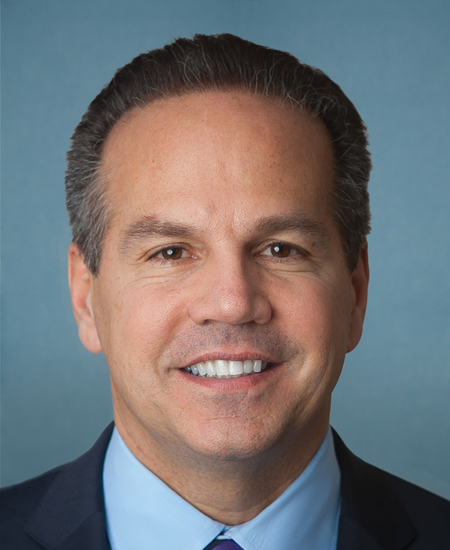
Rep. David N. Cicilline
Sponsored bills
Ending Homelessness Act of 2021 This bill expands the housing choice voucher program and provides assistance to homeless individuals and families. Specifically, the bill provides FY2022-2025 funding for the expansion of the housing choice voucher program for certain extremely low income families. Furthermore, beginning in FY2026, the bill creates and funds an entitlement to housing choice vouchers for certain extremely low income families. Eligibility for the entitlement expands annually, extending to low-income families by FY2030. The bill also reduces the geographic area used to calculate an area's fair market rent for purposes of voucher payment standards and prohibits the use of criminal history in determining eligibility for certain housing assistance. Additionally, the bill prohibits housing discrimination on the basis of a renter's source of income or a renter's veteran status. The bill also provides additional FY2022-FY2026 funding for the Department of Housing and Urban Development (HUD) to assist the homeless, including to award emergency relief grants in jurisdictions with the highest need and award grants to provide outreach and coordinate services. Furthermore, the bill provides additional FY2022-FY2026 funding for the Housing Trust Fund, which provides affordable housing for extremely low-income and very low-income families. While this additional funding is available, HUD must ensure that priority for occupancy in assisted units is given to individuals and families who are homeless. Finally, the bill permanently reauthorizes certain homeless assistance grants and makes permanent the U.S. Interagency Council on Homelessness.
Housing is Infrastructure Act of 2021 This bill generally addresses housing affordability and infrastructure. The bill authorizes the Department of Housing and Urban Development (HUD) to provide grants, programs, and other support related to public housing, affordable housing preservation and construction, and mortgage access. The bill also establishes and funds the National Investment Authority (NIA) which must design, finance, and implement a strategy of long-term national economic growth and development. The NIA must select projects that coordinate investment of public and private capital in equitable, inclusive, and sustainable growth of the economy. Furthermore, the bill establishes the National Infrastructure Bank (NIB) to implement the strategy by engaging in credit market activities that support public and private investment in critical public infrastructure projects. The bill gives the NIA bond issuing authority and authorizes the Board of Governors of the Federal Reserve System to purchase these bonds. The Federal Reserve must lend funds on a short-term basis upon the request of the NIB and other subsidiaries. Additionally, the Department of the Treasury must provide for a line of credit not to exceed 100% of the NIA's total assets. Finally, the bill (1) authorizes HUD to provide support for fair housing organizations, and (2) requires consultation with a fair housing enforcement organization as part of an application for certain housing grants or funds.
Cameras in the Courtroom Act This bill requires the Supreme Court to permit television coverage of all open sessions of the Court unless it decides by majority vote that allowing such coverage in a particular case would violate the due process rights of any of the parties involved.
Hong Kong People's Freedom and Choice Act of 2021 This bill provides for temporary protected status (TPS) for qualifying Hong Kong residents and contains other immigration-related provisions. Hong Kong shall be treated as a TPS-designated territory for 18 months starting from this bill's enactment. (Qualifying nationals of a TPS-designated territory or country may not be removed from the United States and shall have employment authorization while the designation is in effect.) Furthermore, Hong Kong shall be treated as separate from China for the purposes of various numerical limitations on immigrant visas. (In the treaty that transferred sovereignty of Hong Kong to China, China pledged that Hong Kong "will enjoy a high degree of autonomy.") The bill also establishes Priority Hong Kong Resident status for qualified individuals. To obtain such status, an individual must meet certain requirements, such as having resided in Hong Kong for at least ten years as of the day of this bill's enactment and not having citizenship in any jurisdiction other than China, Hong Kong, or Macau. For seeking refugee status or asylum, a Priority Hong Kong Resident may establish a well-founded fear of persecution based on various factors, such as fear based on the individual's significant role in certain protests against China's encroachment into Hong Kong's autonomy. The Department of Homeland Security (DHS) or the Department of State may provide special immigrant status to an eligible Priority Hong Kong Resident with a bachelor's or graduate degree if DHS determines that doing so would provide a significant benefit to the United States.
Amend the Code for Marriage Equality Act of 2021 This bill amends the Internal Revenue Code, the Social Security Act (SSAct), and other federal laws to replace (1) references to wife or husband with references to spouse , and (2) references to husband and wife or husband or wife with references to married couple or married person. For purposes of federal laws or regulations, marriage is defined as a legal union between two people as spouses. The bill eliminates a definition of spouse that refers only to a person of the opposite sex who is a husband or a wife. Requirements concerning compensation to a surviving wife after the disability or death of a person employed at a military, air, or naval base outside the United States are revised to make surviving spouses eligible for such compensation. The bill makes similar revisions to the Family and Medical Leave Act of 1993 and the Federal Mine Safety and Health Act of 1977. The bill revises title II (Old Age, Survivors and Disability Insurance) of the SSAct to consolidate separate provisions for a wife's insurance benefits and a husband's insurance benefits into a single standard for a spouse's insurance benefits. Criminal penalties that currently apply to persons who threaten to kill, kidnap, or inflict bodily harm upon a former President's wife or widow are revised to apply to threats made to a former President's spouse or surviving spouse.

Corey Jones Act This bill establishes a new certification requirement for applicants for grant funds under the Community Oriented Policing Services (COPS) program. Specifically, an applicant for grant funds under the COPS program must certify that no law enforcement agency receiving such funds allows officers to conduct routine traffic stops while wearing plainclothes or while wearing plainclothes and in an unmarked police vehicle.
Justice for Exonerees Act This bill increases the maximum amount of damages that an individual who was unjustly convicted and incarcerated may be awarded and requires that this amount be adjusted annually for inflation.
Disarm Hate Act The bill expands the categories of persons who are prohibited from receiving or possessing a firearm. Specifically, it prohibits firearm sale or transfer to and receipt, possession, shipment, or transport by a person (1) who has been convicted of a misdemeanor hate crime, or (2) who has received an enhanced hate crime misdemeanor sentence.
This bill declares that Congress apologizes on behalf of the nation for violations of the civil liberties and constitutional rights of Italian Americans during World War II.