

Fostering Overseas Rule of law and Environmentally Sound Trade Act of 2021 or the FOREST Act of 2021 This bill restricts certain commodities produced on illegally deforested land from accessing the U.S. market. Specifically, the bill prohibits the importation of any product made wholly or in part of a covered commodity produced from illegally deforested land. The bill outlines requirements for import declarations of covered commodities. The U.S. Trade Representative (USTR) must, within 30 days, publish (1) an initial list of covered commodities that consists of palm oil, soybeans, cocoa, cattle, rubber, and wood pulp; and (2) an initial list of covered products that are defined by the bill in accordance with the Harmonized Tariff Schedule. These lists must be updated at least on an annual basis. Further, the USTR must identify foreign countries without adequate and effective protection against illegal deforestation caused by the production of commodities that are likely to enter the United States. The USTR must develop an action plan that includes benchmarks for each identified country. Additionally, the bill creates an interagency working group to provide advice and recommendations to the USTR, U.S. Customs and Border Protection, and other relevant agencies. The bill provides funding to assist foreign governments in combating illegal deforestation. The bill also includes illegal deforestation as a specified unlawful activity under a federal financial crime statute. The bill establishes a federal procurement preference for commodities that are not produced from land subject to deforestation.
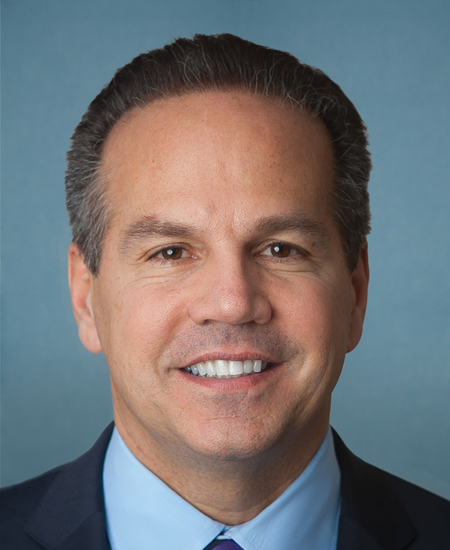
Rep. David N. Cicilline
Sponsored bills
Welcoming Evacuees Coming from Overseas to Mitigate Effects of Displacement Act of 2021 or the WELCOMED Act of 2021 This bill makes certain individuals from Afghanistan eligible for any benefit that is available to a refugee, such as resettlement assistance. Specifically, this bill shall apply to a national of Afghanistan (or an individual with no nationality who last habitually resided in Afghanistan) who is temporarily paroled into the United States for urgent humanitarian reasons or significant public benefit during the four-year period beginning on July 1, 2021.
This bill revises post-employment lobbying restrictions on former Members of Congress. Specifically, it makes permanent the post-employment lobbying ban on a former Member of the Senate (currently, two years) or a former Member of the House of Representatives (currently, one year).
Hold Accountable and Lend Transparency on Campus Sexual Violence Act of 2021 or the HALT Campus Sexual Violence Act of 2021 This bill addresses dating violence, domestic violence, sexual assault, or stalking incidents on college campuses, including by expanding requirements governing the disclosure of such incidents and efforts to prevent them. Specifically, the bill requires the Department of Education (ED) to make available an online survey tool regarding student experiences with domestic violence, dating violence, sexual assault, harassment, and stalking. ED must publish a biennial report that includes campus-level data for each institution of higher education (IHE). The bill permits ED to impose civil penalties on IHEs that have violated a law under the jurisdiction of its Office for Civil Rights. In addition, the bill directs ED, the Department of Health and Human Services, and the Department of Justice to create a task force on sex-based harassment and violence in education.
District Court Judgeships Act of 2021 This bill requires the appointment of additional U.S. district court judges and converts certain temporary district court judgeships into permanent judgeships. Specifically, the bill requires the appointment of 203 district court judges in specified judicial districts in Arkansas, Arizona, California, Colorado, Delaware, Florida, Georgia, Idaho, Illinois, Indiana, Louisiana, Maryland, Michigan, Minnesota, Missouri, North Carolina, Nebraska, Nevada, New Jersey, New Mexico, New York, Ohio, Oregon, Pennsylvania, South Carolina, Tennessee, Texas, Utah, Virginia, Washington, Wisconsin, and West Virginia. Additionally, the bill converts certain temporary district court judgeships to permanent judgeships in specified judicial districts in Alabama, Arizona, California, Florida, Kansas, Missouri, New Mexico, North Carolina, and Texas.
Journalist Protection Act This bill establishes new criminal offenses for intentional acts (or attempts to commit acts) that cause bodily injury to a journalist.
Restoring Justice for Workers Act This bill prohibits predispute arbitration agreements that require arbitration of an employment dispute. It allows a postdispute arbitration agreement if the employee enters into it voluntarily without coercion and is informed in writing of rights and protections under such agreement. An employer may not retaliate against an employee for refusing to enter into an agreement for arbitrating an employment dispute.
Unlawful Gun Buyer Alert Act This bill establishes a notification requirement following a firearms-related background check that results in a denial. Specifically, the bill requires the national instant criminal background check system to notify federal, state, and local law enforcement agencies if a firearms-related background check determines that an individual is ineligible to receive or possess a firearm. The notification requirement applies even if more than three business days have elapsed since the background check was initiated, and a firearm has already been transferred to the individual.
Supreme Court Ethics Act This bill establishes a new statutory requirement for the Judicial Conference of the United States to issue a judicial code of conduct for judges and justices of U.S. courts, including Justices of the Supreme Court. Currently, the Judicial Conference issues a code of conduct for judges of U.S. courts (but not for Justices of the Supreme Court).
Disabled Access Credit Expansion Act of 2021 This bill modifies the tax credit allowed to eligible small businesses for expenditures to provide access to disabled individuals to increase (1) the maximum allowable amount of such credit to $20,500, and (2) the limitation on the gross receipts of such businesses to $2.5 million for purposes of determining eligibility for the credit. The bill directs the Department of Justice (DOD) to carry out an ADA (Americans with Disabilities Act) Mediation Program to facilitate voluntary mediation to resolve disputes arising under the ADA and to provide training for mediators. DOD must report to Congress on its ADA Information Line (a toll-free line to provide information and materials to the public about ADA requirements).