

Maddy summaryHR 9692, the STOP MADURO Act, authorizes a $100 million reward for information leading to the arrest and conviction of Venezuela's President Nicolás Maduro Moros. The reward would be funded exclusively by assets already frozen from Maduro and his regime under existing U.S. sanctions, including those from the Foreign Narcotics Kingpin Designation Act. The bill specifically targets Maduro based on U.S. criminal charges related to drug trafficking and narco-terrorism conspiracy. It modifies the State Department's rewards program without creating new sanctions or funding sources.
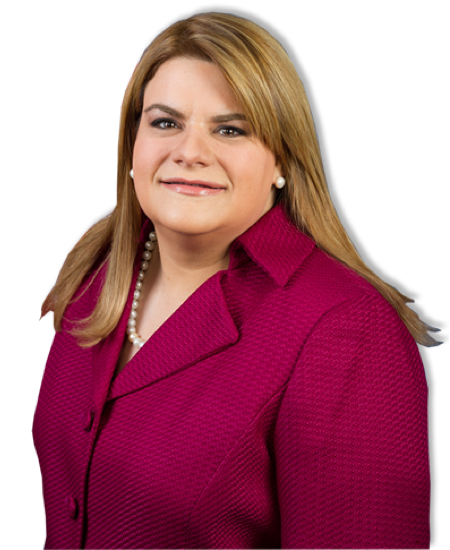
Rep. Jenniffer González-Colón
Sponsored bills
Maddy summaryThis bill modifies Medicaid and CHIP rules to let eligible out-of-state healthcare providers enroll without extra state screening. It applies to providers already in Medicare or their home state program, with low fraud risk, serving children under 21 with complex medical conditions. Providers would receive 5 years of enrollment under this streamlined process, eliminating state-level barriers. The change directly affects children seeking specialized care across state lines and the providers who serve them.
Maddy summaryHR 1605 establishes a new federal program to assist states and Indian Tribes with unmet recovery needs after major disasters declared under the Stafford Act. It requires the President to coordinate with agencies like the Small Business Administration to collect and publicly release detailed data on disaster impacts, spending, and recovery gaps within 90 days. Funds are allocated based on verified unmet needs (not just damage), with states using up to 13% for administrative costs and mandated debris removal. Unused funds after 6 years (extendable by 4 years) are transferred to a reserve fund for future recovery capacity building.
Maddy summaryThis bill adds the Secretary of Agriculture to the Committee on Foreign Investment in the U.S. (CFIUS) for transactions involving agricultural land, biotechnology, or agriculture-related infrastructure (like transportation, storage, or processing). It requires the Secretary to notify CFIUS about transactions where a foreign person from China, North Korea, Russia, or Iran acquires U.S. agricultural assets, as defined by existing law. CFIUS then decides whether to review such transactions or take other action. The provisions apply only to transactions involving those four countries and sunset once they are removed from the official list of "foreign adversaries" in federal regulations.
Maddy summaryHRES 1437 is a ceremonial resolution designating the week beginning September 9, 2024, as "National Hispanic-Serving Institutions Week." It recognizes Hispanic-serving institutions (HSIs) - colleges and universities with at least 25% Hispanic enrollment - and their role in educating low-income students, advancing economic mobility, and serving 31.7% of all undergraduate students. The resolution calls for the public and organizations to observe this week with ceremonies and activities during Hispanic Heritage Month. It does not create new laws, allocate funding, or change existing policies - it is purely a symbolic gesture of recognition.
Maddy summaryThis symbolic resolution expresses congressional support for designating September 29, 2024, as "Veterans of Foreign Wars of the United States Day" to honor the organization's 125th anniversary. It requests the President issue a proclamation encouraging government agencies and the public to observe the day with ceremonies, though it creates no new laws or policy changes. The resolution recognizes the VFW's historical service to veterans but does not directly affect any individuals or programs.
Maddy summaryHR 7159, the Pacific Partnership Act, mandates the U.S. government to develop a comprehensive strategy for engagement with Pacific Island nations. It requires the President, by January 1, 2026, and every four years thereafter, to submit a detailed strategy to Congress outlining U.S. diplomatic, defense, and economic goals in the region, including assessments of threats like natural disasters, illegal fishing, and foreign military activity. The strategy must detail plans to address these threats, coordinate with Pacific Island governments and regional organizations like the Pacific Islands Forum, and outline required resources and staffing. This bill directly affects U.S. foreign policy operations and shapes how the federal government engages with Pacific Island nations on shared security, economic, and environmental priorities.
Maddy summaryThis resolution symbolically designates March 2024 as Endometriosis Awareness Month to highlight a condition affecting approximately 1 in 10 women of reproductive age. It encourages public awareness and education about endometriosis, which causes chronic pain, long diagnosis delays (3-11 years), and significant healthcare costs ($13,000+ annually per patient). The resolution has no funding or policy changes; it is purely a symbolic gesture urging the public to observe the month through educational activities and recognizing the need for more research and culturally competent care. It directly affects women living with endometriosis and their healthcare experiences.
Maddy summaryHR 9374, the Stand with Israel Act, prohibits U.S. federal funds from being used to support the United Nations or its entities if they restrict Israel's full participation as a member state. The bill specifically blocks funding for any UN body that expels, downgrades, or suspends Israel's membership or limits its ability to participate equally with other nations. This affects U.S. government contributions to the UN, requiring the Department of State and other agencies to halt funding for such UN actions. The key mechanism is a new provision in the UN Participation Act that mandates this funding restriction whenever Israel's UN participation is impaired.
Maddy summaryHRES 1409 is a symbolic House resolution condemning Nicolás Maduro's regime for alleged election fraud in Venezuela's July 28, 2024 presidential election. It recognizes opposition candidate Edmundo González Urrutia as the president-elect based on observed vote tallies showing his decisive victory, and condemns the regime's refusal to release transparent results. The resolution calls for new sanctions against Maduro and his allies, demands respect for the election outcome, and urges diplomatic pressure to support Venezuela's democratic transition. This resolution directly addresses the Maduro regime's actions and expresses U.S. solidarity with Venezuelan voters and the opposition.