

Born-Alive Abortion Survivors Protection Act This bill establishes requirements for the degree of care a health care practitioner must provide in the case of a child born alive following an abortion or attempted abortion. Specifically, a health care practitioner who is present must (1) exercise the same degree of care as would reasonably be provided to any other child born alive at the same gestational age, and (2) ensure the child is immediately admitted to a hospital. Additionally, a health care practitioner or other employee who has knowledge of a failure to comply with the degree-of-care requirements must immediately report such failure to law enforcement. A health care practitioner who fails to provide the required degree of care, or a health care practitioner or other employee who fails to report such failure, is subject to criminal penalties—a fine, up to five years in prison, or both. An individual who intentionally kills or attempts to kill a child born alive is subject to prosecution for murder. The bill bars the criminal prosecution of a mother of a child born alive under this bill and allows her to bring a civil action against a health care practitioner or other employee for violations.
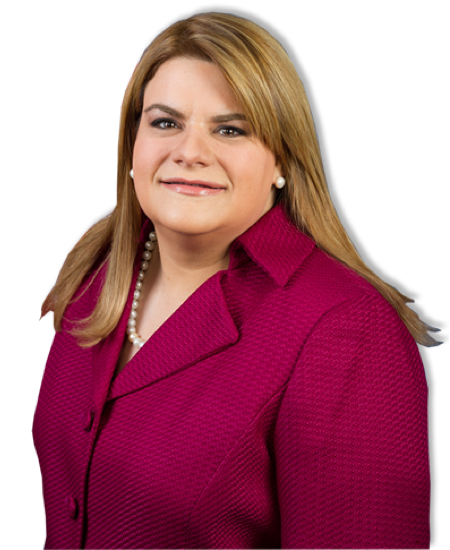
Rep. Jenniffer González-Colón
Sponsored bills
Eliminating the Provider Relief Fund Tax Penalties Act of 2021 This bill excludes from gross income, for income tax purposes, any grant or other assistance provided by the CARES Act Provider Relief Fund under the Coronavirus Aid, Relief, and Economic Security Act or the CARES Act.
Student Loan Disclosure Transparency Act of 2021 This bill requires lenders disbursing federal student loans to disclose additional information to borrowers and increase the frequency of such disclosures. Specifically, prior to disbursement, the lender making a loan must disclose (1) the principal amount, interest rate, and number of required monthly payments to be made on the loan; (2) the estimated balance owed by the borrower; and (3) the estimated aggregate amount the borrower will pay. Prior to repayment, the lender must disclose the projected total of interest charges that the borrower will pay on the loan, as well as projections of the borrower's monthly repayment amount. The bill also requires certain disclosures for the life of the loan. In particular, lenders must disclose information about loans on a monthly, rather than periodic, basis. Lenders must also provide borrowers who are not in a repayment status (e.g., a borrower who is in school or in a deferment period) with a monthly statement. The Department of Education must obtain feedback from borrowers and report on the usefulness and effectiveness of such disclosures.
This bill waives Buy American requirements (requirements for the use of goods mined, produced, or manufactured in the United States) in the case of an emergency declaration, with respect to purchases made or contracts issued by Puerto Rico, the District of Columbia, American Samoa, or the U.S. Virgin Islands.
This bill modifies certain requirements to assist Puerto Rico and the U.S. Virgin Islands in recovering from specified incidents relating to Hurricanes Irma and Maria. Specifically, the bill directs the Federal Emergency Management Agency (FEMA), in providing assistance for critical services for the duration of the recovery for such incidents, to revise specified guidance definitions to provide explicitly that multicomponent systems or facilities be inspected, evaluated, and estimated as a single project rather than requiring every component of the system to be inspected, evaluated, and estimated; put into effect, at the request of a disaster assistance applicant, a procedure for evaluation and authorization of projects through professionally licensed engineers; and extend the deadline to October 31, 2021, for the presentation of cost estimates and project worksheets. The bill requires (currently, authorizes) FEMA to provide specified assistance for critical services for the duration of the recovery. Public assistance program alternative procedures adopted by FEMA must ensure that work performed by providers, suppliers, and contractors to the federal, state, local, or tribal governments or nonprofit facilities is paid for and reimbursed in a timely manner. A local government or nongovernmental organization, in meeting any federal cost-sharing requirement, may use funds from any disaster recovery program or source to meet federal cost-sharing requirements with respect to such incidents.
Disclosing Aid Spent to Ensure Relief Act of 2021 or the DISASTER Act of 2021 This bill requires the Office of Management and Budget to submit an annual report to Congress on all disaster-related assistance provided by the federal government. The report must include all federal obligations related to disaster response, recovery, mitigation efforts, and administrative costs associated with these activities for specified agencies and programs.
This bill expands the definition of critical services in the Robert T. Stafford Disaster Relief and Emergency Assistance Act to include solid waste management, stormwater management, public housing, transportation infrastructure, and medical care.
No Surprise Bills for New Moms Act This bill requires health insurers to provide coverage for newborns of enrollees for the first 30-day period after the newborn's date of birth and to provide a special enrollment period for the newborn that extends at least 60 days after the initial coverage period. It also requires insurers to notify an enrollee if they receive a claim for the enrollee's newborn who is not enrolled in a health insurance plan.
Resiliency Enhancement Act of 2021 This bill extends the provision of disaster assistance for critical services to solid waste management, stormwater management, public housing, transportation infrastructure, and medical care. Such assistance is also extended to any major disaster in Puerto Rico or the U.S. Virgin Islands subsequent to Hurricane Irma or Hurricane Maria on or before September 30, 2022.
Wise Investment in Children Act of 2021 or the WIC Act of 20 21 This bill expands eligibility for children to receive benefits under the Special Supplemental Nutrition Program for Women, Infants, and Children (WIC). The bill authorizes the Department of Agriculture to grant a waiver to a state, on request, that waives certification deadline requirements under the program if such state demonstrates there are unusual technological barriers to implementation, operational costs are not affordable within the nutrition services and administration grant of the state, or it is in the best interest of the program. If a waiver is granted, the bill extends eligibility for the program until the period that ends on the earlier of the sixth birthday of a child or when the child enters kindergarten; extends the certification period under the program for infants to up to two years, instead of the current one year; and increases the certification time under the program for postpartum women to a period of up to two years.