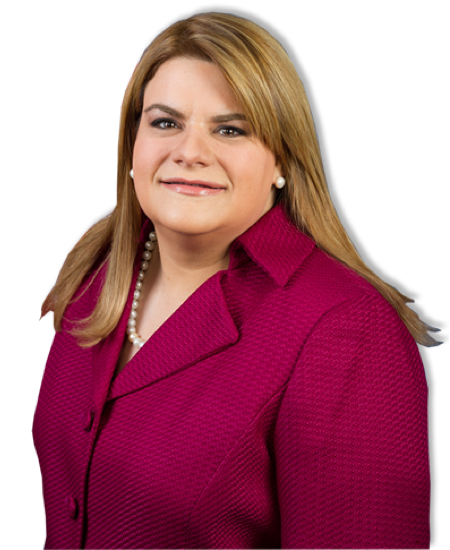
Photo of Jenniffer González-Colón
R United States House · District At-Large · Puerto Rico

Rep. Jenniffer González-Colón

Compare
Total votes
552
all sessions
Attendance
33%
822 missed
Among the lowest in the chamber
With party
59%
of cast votes
Among the lowest in the chamber
Bipartisan score
21%
some cross-party votes
Higher than 99% of chamber peers
Sponsored
718
bills & resolutions
Near the chamber average
Committees
0
assignments
718 bills and resolutions

Sponsored bills

Total
718
Primary
85
Co-sponsor
633
This page
718
matching current filters
Co-sponsor HR 2166
In committee · United States House · Co-sponsor
Ensuring Parity in MA and PACE for Audio-Only Telehealth Act of 2021

Ensuring Parity in MA and PACE for Audio-Only Telehealth Act of 2021 This bill allows audio-only diagnoses that are made via telehealth to be used for purposes of determining risk adjustments to payments under Medicare Advantage. Additionally, the bill requires payments for Medicare telehealth services that are furnished during the public health emergency relating to COVID-19 (i.e., coronavirus disease 2019) to be made in the same amounts as those for in-person services.

In committee Mar 24, 2021 1 co-sponsor
Co-sponsor HR 2146
In committee · United States House · Co-sponsor
Military Family Violence Prevention Act

Military Family Violence Prevention Act This bill requires the Department of Defense (DOD) to take various actions and implement programs related to the prevention of and response to domestic violence and child abuse and neglect among military families. Specifically, the bill requires DOD to report on current and recommended staffing levels for the Family Advocacy Programs (FAPs) of the Armed Forces at each installation, ensure that appropriate statistical data on incidents report to the FAPs is shared among and across the Armed Forces, establish a pilot program to assess the feasibility and advisability of various mechanisms to inform families about the FAPs and resiliency training of the Armed Forces during their enrollment in the Defense Enrollment Eligibility Reporting System, report on the results of the study conducted by the Defense Department Advisory Committee on Women in the Services that includes information on initial entry points for use by members of military families seeking support for domestic abuse or child abuse and neglect, and modify internal policy related to FAPs to enhance collaboration among the specified DOD programs (e.g., the Defense Suicide Prevention Office). Each military department must improve the information available to military families on the services available in connection with domestic abuse or child abuse and neglect. Finally, the bill requires the Inspector General of DOD to report on best practices among military installations in prevention and response to domestic abuse and child abuse and neglect among military families.

In committee Mar 23, 2021 1 co-sponsor
Co-sponsor HR 2163
In committee · United States House · Co-sponsor
Safe Step Act

Safe Step Act This bill requires a group health plan to establish an exception to medication step-therapy protocol in specified cases. A medication step-therapy protocol establishes a specific sequence in which prescription drugs are covered by a group health plan or a health insurance issuer.  A request for such an exception to the protocol must be granted if (1) an otherwise required treatment has been ineffective, (2) such treatment is expected to be ineffective and delaying effective treatment would lead to irreversible consequences, (3) such treatment will cause or is likely to cause an adverse reaction to the individual, (4) such treatment is expected to prevent the individual from performing daily activities or occupational responsibilities, (5) the individual is stable based on the prescription drugs already selected, or (6) there are other circumstances as determined by the Employee Benefits Security Administration. The bill requires a group health plan to implement and make readily available a clear process for an individual to request an exception to the protocol, including required information and criteria for granting an exception. The bill further specifies timelines under which plans must respond to such requests.

In committee Mar 23, 2021 1 co-sponsor
Co-sponsor HR 2151
In committee · United States House · Co-sponsor
Hire Veteran Health Heroes Act of 2021

Hire Veteran Health Heroes Act of 2021 This bill requires the Department of Veterans Affairs (VA) to consult with the Department of Defense to identify members of the Armed Forces in health care occupations who are separating from the Armed Forces. The VA must refer interested members to a recruiter for consideration of open positions in the member's specialty and geography of interest.

In committee Mar 23, 2021 1 co-sponsor
Co-sponsor HR 1603
Passed · United States House · Co-sponsor
Farm Workforce Modernization Act of 2021

Farm Workforce Modernization Act of 2021 This bill contains provisions related to alien farmworkers, including provisions establishing a certified agricultural worker (CAW) status and changing the H-2A temporary worker program. The Department of Homeland Security (DHS) may grant CAW status to an applying alien who (1) performed at least 1,035 hours of agricultural labor during the two-year period prior to March 8, 2021; (2) on that date was inadmissible, deportable, or under a grant of deferred enforced departure or temporary protected status; and (3) has been continuously present in the United States from that date until receiving CAW status. The bill imposes additional crime-related inadmissibility grounds on CAW applicants and makes some other grounds inapplicable. CAW status shall be valid for 5.5 years and may be extended. DHS may grant dependent status to the spouse or children of a principal alien. An alien with a pending application may not be detained or removed by DHS and shall be authorized for employment until DHS makes a final decision on the application. A CAW alien (and dependents) may apply for lawful permanent resident status after meeting various requirements, including performing a certain amount of agricultural labor for a number of years. DHS shall create an electronic platform for (1) filing H-2A petitions, (2) facilitating the processing of H-2A cases, and (3) providing agencies a single tool for obtaining H-2A-related case information. The bill makes various changes to the H-2A program, such as (1) modifying the method for calculating and making adjustments to the H-2A worker minimum wage, (2) specifying how an employer may satisfy requirements that it attempted to recruit U.S. workers, (3) requiring H-2A employers to guarantee certain minimum work hours, (4) making the program available for agricultural work that is not temporary or seasonal, and (5) reserving a visa allocation for the dairy industry. DHS shall establish a pilot program allowing certain H-2A workers to apply for portable status, which gives the worker 60 days after leaving a position to secure new employment with a registered H-2A employer. DHS shall establish an electronic system patterned on the E-Verify Program for employers to verify an individual's identity and employment authorization. Employers hiring individuals for agricultural employment must use the system. This bill permanently establishes the Housing Preservation and Revitalization Program, which provides financing assistance for rural rental housing and off-farm labor housing and rental assistance for qualified tenants of such housing. It also authorizes the Department of Agriculture to provide various assistance, including funding for insuring loans and grants for new farmworker housing.


Passed Mar 22, 2021 1 co-sponsor
Primary HR 1125
In committee Mar 22, 2021 0 co-sponsors
Primary HR 1124
In committee · United States House · Lead sponsor
Veterans Serving Veterans Act of 2021

Veterans Serving Veterans Act of 2021 This bill updates the Department of Veterans Affairs (VA) current recruiting database by requiring the VA to maintain a single searchable database to be known as the Departments of Defense and Veterans Affairs Recruitment Database . With respect to vacant positions for critical jobs or mental health professionals, the database must list (1) the military occupational specialty or skill that corresponds to the position, and (2) each qualified member of the Armed Forces who may be recruited to fill the position before such qualified member has been discharged and released from active duty. Qualified members of the Armed Forces are those service members who (1) are being separated or recently separated from active duty, (2) elect to be listed in the database, and (3) have been determined by the VA to have a military occupational specialty. The database must list the following for each qualified member of the Armed Forces: name, contact information, expected discharge date, and military occupational specialty. The VA must implement direct hiring and appointment procedures for vacant database positions and may authorize relocation bonuses. The bill also requires the VA to train and certify veterans who served as basic health care technicians in the Armed Forces to work as VA intermediate care technicians.

In committee Mar 22, 2021 0 co-sponsors
Co-sponsor HR 1022
In committee · United States House · Co-sponsor
PAWS Act of 2021

Puppies Assisting Wounded Servicemembers Act of 2021 or the PAWS Act of 2021 This bill requires the Department of Veterans Affairs (VA) to implement a grant program for the purpose of pairing service dogs with eligible veterans. Organizations that receive grants must provide veterinary health insurance coverage, hardware, and travel expenses for each service dog and veteran participating in the program. Eligible veterans are those who (1) are enrolled in the VA health care system, (2) have been evaluated and treated for post-traumatic stress disorder (PTSD) but remain diagnosed with PTSD, (3) may benefit from a service dog, and (4) agree to successfully complete training provided by an eligible organization. Veterans are required to see a VA health care provider at least once every six months to determine whether the veteran continues to benefit from a service dog. Eligible organizations are nonprofit organizations that provide service dogs to veterans with PTSD, meet publicly available standards set forth by the Association of Service Dog Providers for Military Veterans, have expertise in the needs of veterans with PTSD, agree to cover all costs in excess of the grant amount to guarantee the benefits of the program, agree to reaccept or replace a service dog provided to a veteran, and submit an application to the VA. Any improvement in PTSD symptoms as a result of the provision of a service dog shall not affect the veteran's eligibility for any other VA benefits. The Government Accountability Office must report on the grant program.

In committee Mar 22, 2021 1 co-sponsor
Co-sponsor HR 750
In committee · United States House · Co-sponsor
Luke and Alex School Safety Act of 2021

Luke and Alex School Safety Act of 2021 This bill requires the Department of Homeland Security (DHS) to establish a Federal Clearinghouse on School Safety Best Practices for use by state and local educational and law-enforcement agencies, institutions of higher education, health professionals, and the public. The bill requires DHS to collect clearinghouse data analytics, user feedback on the implementation of best practices and recommendations identified by the clearinghouse, and any evaluations conducted on these best practices and recommendations. In addition, DHS must coordinate with the Departments of Education, Health and Human Services, and Justice to assess and identify best practices and recommendations and establish an advisory board to provide feedback and propose additional recommendations. Further, the bill specifies the criteria for best practices and recommendations of the clearinghouse, including evidence that the best practice or recommendation has had a significant effect on improving the health, safety, and welfare of individuals in school settings. Finally, the bill provides for grant program review.

In committee Mar 22, 2021 1 co-sponsor
Co-sponsor HR 677
In committee · United States House · Co-sponsor
JUSTICE Act

Just and Unifying Solutions To Invigorate Communities Everywhere Act of 2021 or the JUSTICE Act This bill addresses policies and issues regarding policing practices and law enforcement accountability. The bill funds state and local grants, incentivizes state and local reporting on the use of certain policing practices, creates new federal offenses for certain misconduct, and establishes best practices and training requirements. The bill funds state and local grants, including to support the use of body-worn cameras, to implement information sharing systems for disciplinary records of law enforcement officers, and to prohibit officers from engaging in sexual acts under color of the law. Further, it requires state and local governments that receive grants under the Edward Byrne Memorial Justice Assistance Grant program to report information related to use-of-force incidents and the use of no-knock warrants. At the federal level, the bill establishes new criminal offenses related to falsifying police reports and engaging in sexual acts under color of law. The bill directs the Department of Justice to develop training on de-escalation tactics, behavioral health crises, alternatives to the use of force, and the duty to intervene when another officer uses excessive force. Finally, the bill establishes and funds the National Criminal Justice Commission. Among other tasks, the commission must develop best practices for policing tactics and procedures.

In committee Mar 22, 2021 1 co-sponsor
Showing 641 to 650 of 718 bills
Previous 1 … 64 65 66 … 72 Next