

This bill waives Buy American requirements (requirements for the use of goods mined, produced, or manufactured in the United States) in the case of an emergency declaration, with respect to purchases made or contracts issued by Puerto Rico, the District of Columbia, American Samoa, or the U.S. Virgin Islands.
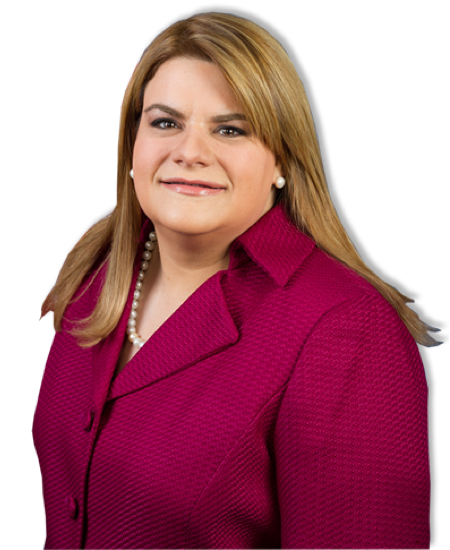
Rep. Jenniffer González-Colón
Sponsored bills
Puerto Rico Air Cargo Industry Empowerment Act This bill modifies foreign civil aircraft regulation with respect to air cargo in Puerto Rico. Current law prohibits foreign civil aircraft from exchanging cargo in the United States unless the aircraft is specifically authorized to do so or the exchange occurs in Alaska. This bill applies air cargo regulation to Puerto Rico in the same way that it applies to Alaska. Thus, the bill allows foreign civil aircraft to stop in Puerto Rico and exchange cargo with other air carriers.
Maddy summaryThis bill would allow the Drug Enforcement Administration (DEA) to provide cash awards of up to 10% of an employee's base pay to staff who maintain proficiency in languages critical to the DEA's mission or use foreign languages in official duties. It directly affects DEA employees with relevant language skills, incentivizing retention and recruitment for language-dependent operations. The award program would operate under regulations set by the DEA Administrator, with no requirement for employee performance evaluations. The policy change aims to support the agency's law enforcement capabilities through language expertise.
Maddy summaryThis bill updates securities regulations to include rural-area small businesses in existing capital access provisions. Specifically, it amends the Securities Exchange Act of 1934 to add "rural-area small businesses" as a qualifying category alongside women-owned small businesses in two key sections. The change directly affects rural small businesses seeking capital by expanding their eligibility for certain regulatory exemptions. This is a procedural adjustment to current law, not a new funding program.
Maddy summaryThe HEAL Act (HR 603) requires the U.S. Holocaust Memorial Museum Director to study how public elementary and secondary schools teach about the Holocaust and related antisemitism. The study will examine curriculum requirements, teaching methods (like project-based learning), instructional materials, and assessment approaches across states and school districts. It specifically analyzes whether Holocaust education is mandatory, optional, or integrated across subjects, and how schools address antisemitism and genocide prevention. The resulting report, due within 180 days of the study or three years after enactment, will inform Congress but does not change current school policies. This is a data-gathering measure, not a policy mandate.
Maddy summaryHRES 61 is a symbolic resolution introduced in the U.S. House of Representatives on January 26, 2023, to support the recognition of Dominican Heritage Month. It formally endorses observing a national month from January 21 to February 27 - marking key Dominican cultural and historical dates - to celebrate Dominican American contributions to U.S. society. The resolution encourages public observance through ceremonies and activities but does not create new policies or alter existing laws. It specifically recognizes the cultural, economic, and social impact of the approximately 2.4 million people of Dominican origin in the United States. As a non-binding resolution, it directly affects no individuals or entities but serves as a formal expression of support.
Maddy summaryThis resolution (HRES 62) is a symbolic gesture supporting the establishment of a national day to honor Juan Pablo Duarte, the founding father of the Dominican Republic, and to recognize Dominican American contributions. It urges the U.S. public to observe a day of recognition for Dominican Americans through ceremonies and activities, commemorating Duarte’s 210th birthday (January 2023) and the Dominican Republic’s independence (February 2023). The resolution does not create new laws or directly affect any group; it is a non-binding expression of support for cultural recognition.
Maddy summaryHR 259, the Post-Disaster Assistance Online Accountability Act, requires federal agencies providing disaster aid (like FEMA, SBA, and HUD) to publicly report detailed spending information online. Covered agencies must publish quarterly, machine-readable data on all disaster assistance disbursed, including total amounts, project-specific expenditures, and project details (location, status, and funding sources). This information will be posted on a new subpage of the federal spending website, making it accessible to the public for transparency. The bill directly affects how federal agencies report disaster funds, ensuring greater accountability for how taxpayer dollars are used in recovery efforts following declared disasters.
Maddy summaryHR 496, the PELL Act, creates "Workforce Pell Grants" to support short-term workforce training programs instead of traditional college degrees. It directly affects students enrolled in qualifying short programs (150-600 hours, 8-15 weeks) that align with in-demand jobs. To qualify, programs must meet strict standards: 70%+ completion rates, 70%+ job placement rates, and demonstrate graduates earn at least 150% above the poverty line within three years. The bill also requires annual public reporting of program outcomes like completion rates, job placement, and graduate earnings to ensure accountability.
Real Estate Exchange Fairness Act of 2023 This bill requires Puerto Rico to be treated as part of the United States for the purpose of determining if an exchange of real property qualifies as a like-kind exchange for tax purposes. (Under current law, real property located in the United States and real property located outside of the United States are not property of a like kind.)