

Maddy summaryThis resolution (HRES 120) supports designating February 2023 as "National Teen Dating Violence Awareness and Prevention Month." It urges schools, communities, and families to use this month for educational activities promoting healthy relationships and preventing teen dating violence, which affects many young people (e.g., 44.3% of teens experienced violence per CDC data). As a symbolic resolution, it does not create new laws or funding but aims to raise public awareness about a public health issue impacting teens nationwide.
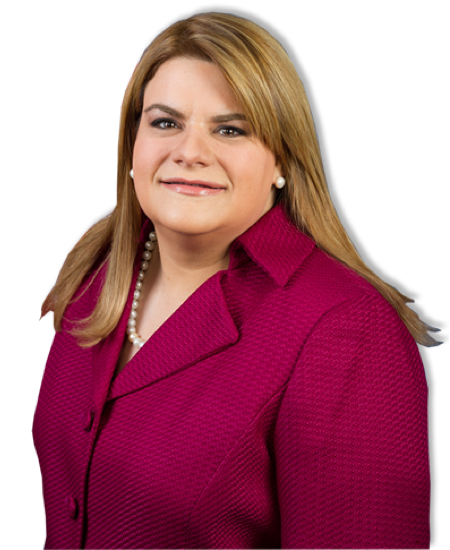
Rep. Jenniffer González-Colón
Sponsored bills
Maddy summaryThis bill mandates the federal government to develop a comprehensive strategy specifically targeting drug trafficking routes through the Caribbean into the United States, including ports of entry, maritime corridors, and air routes. The strategy must define agency roles, detail required resources, and ensure legitimate trade and travel are not hindered. It specifically requires plans to reduce drug-related violent crime in Puerto Rico and the U.S. Virgin Islands, along with recommendations for additional federal assistance or authorities needed by local law enforcement. The bill creates a procedural requirement for this planning document but does not allocate new funding or change existing laws.
Maddy summaryThe REEF Act requires the Secretary of the Navy to notify Congress 90 days before retiring any naval vessel that is a viable candidate for artificial reefing. It also states that Congress believes the Navy should actively seek opportunities to repurpose such vessels for environmental benefits through artificial reefs. This bill does not change retirement procedures but mandates a formal notification process to inform Congress about potential reefing options for eligible vessels.
Maddy summaryHCONRES 9 is a symbolic resolution passed by the U.S. House of Representatives that formally denounces socialism as incompatible with American values, citing historical examples of socialist regimes causing widespread suffering and authoritarian rule. It states Congress opposes the implementation of socialist policies in the United States. This resolution has no legal effect, does not change any laws, and serves solely as a non-binding statement of congressional opinion. It directly affects no individuals or policies, as it is purely a declarative position.
This resolution reaffirms the Senate's commitment to strengthening the historic partnership between the United States and the Dominican Republic based on shared democratic values and efforts to advance economic prosperity and national security. The resolution also encourages continued actions by the government of the Dominican Republic to assume a regional leadership role in promoting human rights, democratic values, and humanitarian assistance.
This resolution condemns Iranian state-sponsored terrorist attacks against U.S. citizens and officials and Iranian dissidents. The resolution also expresses support for the people of Iran who are legitimately defending their rights for freedom against repression and condemns the killing of Iranian protesters by the Iranian regime.
Maddy summaryHCONRES 13 is a concurrent resolution expressing Congress's support for maintaining the current policy that prohibits imposing new fees on local radio stations for playing music. It states that Congress should not impose any performance fee, tax, royalty, or charge on local radio stations for broadcasting sound recordings over the air, or on businesses like bars and restaurants that play music publicly. The resolution argues that such fees would harm local radio stations - critical sources for emergency information and community programming - and jeopardize the economic model that has supported both radio and the music industry for decades. This resolution does not create new law but formally opposes potential legislative changes to the existing fee structure.
Maddy summaryHR 787, the Empowering Nonprofits Act, reduces the non-governmental cost-sharing requirement for direct federal grants to eligible nonprofits by 25% for five years after the law takes effect. It directly affects 501(c)(3) nonprofit organizations located in states where over 20% of residents live below the federal poverty line. The bill requires executive agencies to lower the portion nonprofits must contribute toward grant costs, making federal funding more accessible for organizations serving high-poverty communities. This change applies to grants awarded directly to qualifying nonprofits, with no additional requirements for recipients.
This bill expands the definition of critical services in the Robert T. Stafford Disaster Relief and Emergency Assistance Act to include solid waste management, stormwater management, public housing, transportation infrastructure, and medical care.
This bill modifies certain requirements to assist Puerto Rico and the U.S. Virgin Islands in recovering from specified incidents relating to Hurricanes Irma and Maria. Specifically, the bill directs the Federal Emergency Management Agency (FEMA), in providing assistance for critical services for the duration of the recovery for such incidents, to revise specified guidance definitions to provide explicitly that multicomponent systems or facilities be inspected, evaluated, and estimated as a single project rather than requiring every component of the system to be inspected, evaluated, and estimated; put into effect, at the request of a disaster assistance applicant, a procedure for evaluation and authorization of projects through professionally licensed engineers; and extend the deadline for the presentation of cost estimates and project worksheets until October 31, 2021. The bill requires (currently, authorizes) FEMA to provide specified assistance for critical services for the duration of the recovery. Public assistance program alternative procedures adopted by FEMA must ensure that work performed by providers, suppliers, and contractors to the federal, state, local, or tribal governments or nonprofit facilities is paid for and reimbursed in a timely manner. A local government or nongovernmental organization, in meeting any federal cost-sharing requirement, may use funds from any disaster recovery program or source to meet federal cost-sharing requirements with respect to such incidents.