

Plantain and Banana Plant Health Initiative Act This bill establishes a research and extension grant program for a plantain and banana plant health initiative. Specifically, the bill authorizes the Department of Agriculture to provide competitive grants for studying potential resistance and tolerance to nonnative diseases and insect pests; increasing research for treatment of pests that affect plantains and bananas; conducting field studies to evaluate plantain and banana cultivars with enhanced resistance to diseases and pests, and adaptability to tropical soils; educating growers on best practices to promote safe production of plantains and bananas; and establishing area-wide integrated pest management programs in areas affected by, or at risk of being affected by, specified pests.
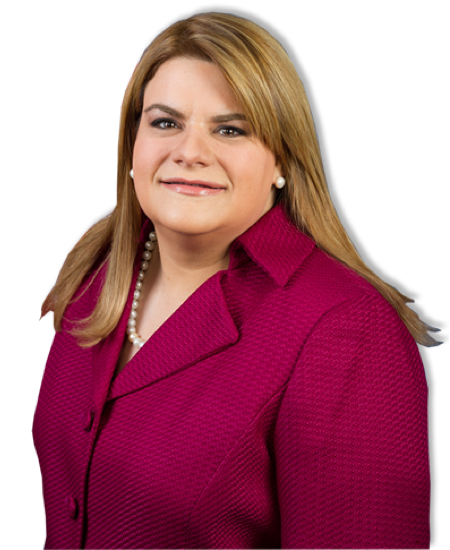
Rep. Jenniffer González-Colón
Sponsored bills
Cacao Tree Health Initiative Act of 202 3 This bill establishes a research and extension grant program for a cacao tree health initiative. Specifically, the bill authorizes the Department of Agriculture to provide competitive grants for developing and disseminating science-based tools and treatments to combat plant pests that affect cacao trees; establishing an integrated pest management programs for cacao trees in areas affected by or at risk of being affected by such pests; surveying and collecting data on cacao tree production, health, and markets; investigating cacao tree biology, ecology, genomics, and production systems; conducting research on factors that may contribute to, or be associated with, resilient cacao production systems; and conducting research on factors that may contribute to, or be associated with, serious threats to cacao trees, including the sublethal effects of insecticides, herbicides, and fungicides on beneficial insects and cacao tree growth.
Maddy summaryHR 1711, the Rural America Health Corps Act, creates a new loan repayment program for health professionals working in rural areas. It provides up to $200,000 in repayment for eligible loans (covering principal and interest) in exchange for five years of full-time service in a rural health professional shortage area (HPSA). Participants must meet existing Loan Repayment Program requirements but serve in rural HPSAs instead of the standard locations, with the program not affecting HPSA designations through 2028. The program requires $50 million annually from 2024-2028 and mandates a final report evaluating its impact on rural healthcare access.
This bill expands the Department of Veterans Affairs medical education pilot program, which currently provides funding for the medical education of two eligible veterans at each of the nine covered medical schools. The bill adds five schools to the list of covered medical schools, increasing the number of veterans covered from 18 to 28.
Maddy summaryHR 1818, the Aviation Workforce Development Act, expands tax-advantaged savings plans (529 plans) to cover costs for specific aviation training programs. It allows funds from these plans to pay for tuition, fees, and required materials at FAA-certified aviation maintenance technician schools (Part 147) or commercial pilot training programs (Part 61 or 141). This directly affects students pursuing careers as aircraft maintenance technicians or commercial pilots by making these training costs more affordable through existing tax-advantaged savings. The bill amends the tax code to include these programs under "qualified higher education expenses" for 529 plan distributions.
Maddy summaryHR 1831 would award Billie Jean King a Congressional Gold Medal to honor her lifelong advocacy for equal rights in sports and society. The bill directs the Secretary of the Treasury to strike the medal and have it presented by congressional leaders, recognizing her pivotal role in advancing women's equality through tennis (including founding the Women’s Tennis Association and securing equal prize money) and her broader impact on society through initiatives like Title IX advocacy.
Maddy summaryHR 314, the FORCE Act, prohibits the President or Secretary of State from removing Cuba from the U.S. list of state sponsors of terrorism. It requires the President to first make a specific determination under the 1996 LIBERTAD Act before Cuba can be removed. The bill directly affects Cuba (by maintaining its current designation) and the executive branch (by restricting their authority to remove the designation). This is a procedural bill focused on preserving Cuba's current status on the terrorism list until the specified conditions are met.
Maddy summaryHR 1782, the International Port Security Enforcement Act, requires the Secretary of Homeland Security to certify that foreign governments conducting port security assessments meet specific standards before those assessments can be accepted. The bill mandates that the foreign government must have followed proper assessment procedures, provided sufficient information, and not be a state sponsor of terrorism (as defined in law). If a foreign government is a state sponsor of terrorism, the Secretary must automatically treat its ports as lacking effective security measures and apply sanctions under existing law. This directly affects foreign governments operating ports, particularly those designated as state sponsors of terrorism, by imposing new certification requirements and automatic sanctions. The bill clarifies that these rules do not limit the Secretary's discretion to conduct independent assessments or request security measures.
Let Experienced Pilots Fly Act of 2023 This bill raises the mandatory retirement age for pilots engaged in commercial aviation operations from 65 to 67 years of age, unless the operation takes place in (1) the territorial airspace of a foreign county where such operations are prohibited by the foreign country, or (2) international airspace where such operations are not in compliance with the Annexes to the Convention on International Civil Aviation. The Federal Aviation Administration must also submit a report to Congress on further increasing the age limitation for pilots engaged in commercial aviation operations.
Maddy summaryThis bill allows federally recognized tribes to lease, sell, or transfer real property they own outright (fee title) without needing federal government approval. It directly affects tribes holding land in fee simple, removing a historical requirement from the 1834 Act. The bill explicitly excludes trust lands (property held by the U.S. for tribes) and does not change existing rules for those properties. Key provisions clarify that tribes retain full control over their fee-owned land transactions while maintaining federal oversight for trust assets.