

Maddy summaryH.J.Res. 66 disapproves a specific rule issued by the Consumer Financial Protection Bureau (CFPB) regarding small business lending under the Equal Credit Opportunity Act (Regulation B). The resolution, if passed, would prevent this CFPB rule from taking effect by declaring it "have no force or effect." The rule in question (88 Fed. Reg. 35150) aimed to clarify how lenders must evaluate small business loan applications under existing equal credit laws. This disapproval directly affects the CFPB's regulatory authority and would block the rule's implementation for small business lenders and financial institutions.
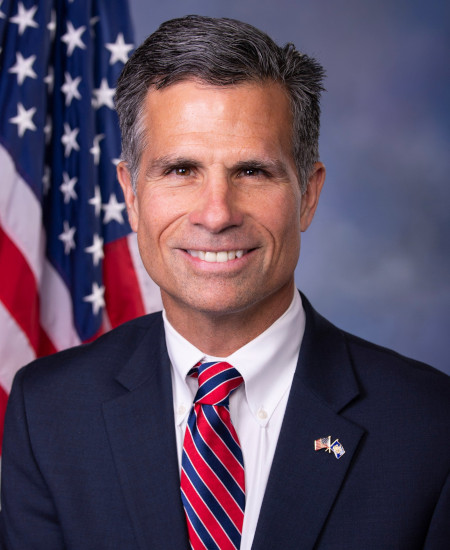
Rep. Daniel Meuser
Sponsored bills
Maddy summaryHRES 683 is a non-binding resolution expressing the House's support for diplomatic efforts to encourage Mexico to fulfill annual water delivery commitments under the 1944 U.S.-Mexico treaty. The treaty requires Mexico to deliver an average of 350,000 acre-feet of water annually (over a 5-year cycle) to the U.S., but Mexico has historically delayed deliveries until the cycle ends. The resolution specifically acknowledges water shortages faced by South Texas farmers and urges Mexico to meet its annual obligations, while supporting negotiations for more reliable water agreements. It does not create new legal requirements but formally encourages diplomatic action to address the delivery delays.
Maddy summaryThe UNLEADED Act requires the FAA to create an education program about unleaded aviation gasoline for pilots, flight schools, airport operators, maintenance technicians, and fixed-base operators. The program must publish online information on fuel compatibility, availability, required certifications, safety, and federal incentives, plus maintain a real-time tracking system for authorized unleaded fuels. The FAA must also coordinate annual training for fixed-base operator staff on fuel handling and safety. The program runs until December 31, 2030, with annual updates provided to Congress on progress. This directly affects general aviation users transitioning from leaded 100LL fuel to new unleaded alternatives.
Maddy summaryThe Veteran Improvement Commercial Driver License Act of 2023 modifies rules for veterans' educational benefits to streamline approval of commercial driver education programs at branch locations. It allows a branch of an educational institution to be exempt from full approval requirements if it is appropriately licensed and uses the same curriculum as an approved main location. Schools must submit an annual report to the Department of Veterans Affairs verifying curriculum consistency, and the VA may withhold this exemption if needed. The changes will take effect 180 days after the VA establishes reporting rules, which must be finalized within 180 days of the bill's enactment.
Maddy summaryHR 6398 raises asset thresholds for financial institution regulations, directly affecting banks and credit unions with $10 billion to $50 billion in assets. It increases the $10 billion threshold to $50 billion across multiple rules, including consumer protection oversight, payment processing requirements, investment restrictions (Volcker Rule), mortgage standards, and capital rules. This change exempts larger institutions from stricter regulations previously applied to those under the old $10 billion limit. The bill makes regulatory requirements less stringent for a broad range of mid-sized financial firms by expanding the asset size threshold.
Maddy summaryThis bill would authorize the U.S. government to confiscate Russian sovereign assets held in U.S. jurisdiction and use those funds to support Ukraine's reconstruction and humanitarian needs following Russia's invasion. It prohibits releasing these blocked assets until Russia fully compensates Ukraine or agrees to an international compensation mechanism. The bill establishes a "Ukraine Support Fund" to hold confiscated assets and requires regular congressional reporting on how these funds are allocated for Ukraine's recovery. It also includes provisions for international coordination with allies on sanctions and asset management related to Russia's invasion of Ukraine.
Maddy summaryThe SHIP Act imposes sanctions on foreign entities that knowingly handle Iranian petroleum, targeting those involved in port operations, transportation, refining, or ship-to-ship transfers of Iranian oil. Starting 90 days after enactment, the President must block assets, deny visas, and impose penalties on individuals or companies engaging in these activities, including family members or owners of sanctioned entities. It requires annual reports tracking Iran's oil exports, revenues, and key players like shipping companies and ports. The sanctions terminate if the President certifies Iran has stopped supporting terrorism and dismantled weapons programs.
Maddy summaryHR 340, the "Hamas and Other Palestinian Terrorist Groups International Financing Prevention Act," imposes sanctions on foreign individuals, entities, and governments that provide significant financial, material, or transactional support to Hamas, the Palestinian Islamic Jihad, or their affiliates. The bill requires the President to identify those supporting these groups and mandates sanctions including restrictions on exports, defense sales, and financial transactions over $10 million, while exempting humanitarian assistance like medicine and food. It also requires regular reports on foreign countries that host or support these groups' financial networks and mandates actions to disrupt their fundraising and money laundering activities. The legislation terminates after 3 years or if Hamas and Palestinian Islamic Jihad are no longer designated as terrorist organizations under U.S. law.
Maddy summaryHR 6089, the Energy Choice Act, prevents state and local governments from banning or restricting the connection of energy services based on the type of energy used. It prohibits regulations that block connections for natural gas, renewable gas, hydrogen, electricity, or other specified fuels like renewable diesel or petroleum products. The bill directly affects energy providers and end-users by ensuring local rules cannot prevent them from using or connecting to different energy sources. This creates a uniform standard for energy service connections across jurisdictions, without mandating specific energy types.
Maddy summaryThis resolution (HRES 839) condemns antisemitism at U.S. colleges and universities and urges campus leaders to publicly oppose hate speech targeting Jewish students, faculty, and staff. It encourages university presidents, administrators, and faculty to speak out against speech that promotes violence or discrimination based on religion, national origin, or ancestry. The resolution specifically calls on institutions to support Jewish student organizations and ensure Jewish members can study and work without fear. As a non-binding resolution, it does not create new laws but expresses congressional support for addressing antisemitism on campuses.