

Maddy summaryHR 6926, the Safe and Open Streets Act, makes it a federal crime to intentionally block public roads or highways to disrupt the movement of goods or commerce. The bill adds a specific offense under federal law for purposefully obstructing, delaying, or affecting commerce by blocking roads, with penalties including fines or up to five years in prison. It directly affects individuals who block roads to interfere with transportation or delivery of goods, such as during protests or demonstrations. The law updates existing statutes to clarify and strengthen penalties for this specific type of obstruction, without changing broader traffic or protest laws.
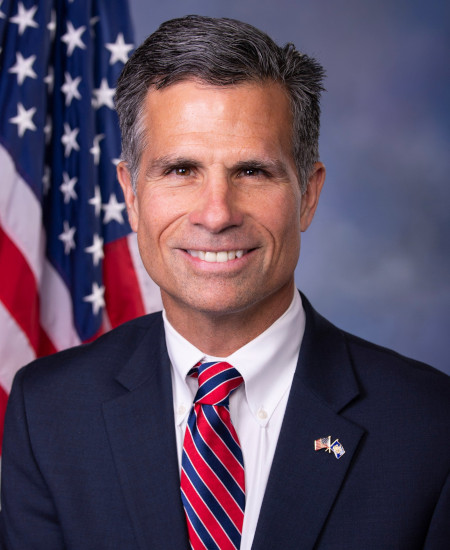
Rep. Daniel Meuser
Sponsored bills
Maddy summaryHRES 946 is a symbolic House resolution recognizing "Gold Shield Families" - defined as the families of fallen police officers, firefighters, EMTs, correction officers, emergency dispatchers, and emergency service providers who died in the line of duty. The resolution formally honors their sacrifices and resilience, affirming that their hardships should not be forgotten. It includes no new funding, regulations, or policy changes; instead, it serves as a commemorative gesture expressing national gratitude. The resolution directs that a copy be sent to the President and made public to publicly recognize these families' contributions.
Maddy summaryHR 1147, the Whole Milk for Healthy Kids Act of 2023, allows schools participating in the National School Lunch Program to offer whole milk as an option during lunch. It amends the school lunch law to explicitly permit schools to serve flavored and unflavored whole milk alongside reduced-fat, low-fat, and fat-free milk choices for students. The bill also requires the Secretary of Agriculture to adjust meal regulations to account for saturated fat from whole milk, ensuring it doesn't count against meal fat limits. This change directly affects participating schools and the students who receive school lunches, expanding their milk beverage options.
Maddy summaryThe ACCESS Act of 2023 amends the Securities Act of 1933 to raise the threshold for requiring a public accountant review of crowdfunding offerings from $100,000 to $250,000. This directly affects small businesses and startups using crowdfunding, as they can now raise up to $250,000 without needing the costly review, reducing administrative burdens. The bill also includes technical corrections to update references in the law to align with the new threshold. The change aims to lower barriers for small business fundraising through crowdfunding.
Maddy summaryThis bill clarifies the Consumer Financial Protection Bureau's (CFPB) authority to enforce rules against "unfair, deceptive, or abusive acts or practices" (UDAAP) affecting consumers. It defines "abusive" acts as those intentionally interfering with consumer understanding or taking unreasonable advantage of consumer vulnerabilities, requiring the CFPB to provide a clear definition within 180 days. Financial institutions must now receive written notice and 180 days to correct potential violations before penalties are imposed, and the CFPB must conduct cost-benefit analyses for new rules. The bill also prohibits the CFPB from treating discrimination as part of UDAAP enforcement and limits penalties for past conduct to the most recent compliance rating period.
Maddy summaryThis bill modifies reporting requirements for small businesses under beneficial ownership rules. It sets a strict 90-day deadline for small businesses to submit ownership information (replacing flexible "timely" or 1-year deadlines) and prohibits the Financial Crimes Enforcement Network (FinCEN) from allowing companies to skip reporting if they cannot obtain required information. The key provision mandates that small businesses must file the report within 90 days of incorporation or when ownership changes, rather than having extended or flexible timelines. This directly affects small businesses required to disclose ownership details to prevent illicit financial activity.
Maddy summaryHR 3063, the Retirement Fairness for Charities and Educational Institutions Act of 2023, modifies securities laws to clarify exemptions for certain retirement plans. It expands the definition of exempt retirement plans under the Investment Company Act, Securities Act of 1933, and Securities Exchange Act of 1934 to include 403(b) plans used by charities and educational institutions. These plans must meet specific conditions, such as being subject to ERISA or having employers act as fiduciaries for investment choices. The bill directly affects eligible organizations by reducing regulatory barriers for offering retirement benefits to their employees. This change simplifies compliance without altering the core structure of retirement plans.
Maddy summaryHR 6589, the "Prevent the Financing of Terrorism Through the Drug Trade Act," requires the Treasury Secretary to submit a detailed report to Congress within 180 days of enactment. The report must analyze Hamas and Hezbollah's money sources, funds held, links to drug trafficking, and U.S. efforts to disrupt their financing in Mexico, Central America, South America, and the Caribbean. It also mandates that the next National Terrorist Financing Risk Assessment report identify Hamas as a "Primary Threat" and describe its financing activities. The bill directly affects U.S. financial intelligence and counterterrorism reporting mechanisms, focusing on terrorist financing in the Americas. This is a procedural requirement for federal reporting, not a direct policy change for the public.
Maddy summaryThis bill reauthorizes the Never Again Education program, which funds Holocaust education initiatives in schools. It extends the program's funding authorization period from ending after four fiscal years to continuing annually through fiscal year 2030. The bill modifies the existing law (Public Law 116-141) by updating the funding timeline without changing program requirements or eligibility. It directly affects the existing grant program supporting educational materials and teacher training on the Holocaust. The change ensures continued federal funding for these specific educational efforts until 2030.
Maddy summaryHR 6514, the Holding Agencies Accountable Act, requires federal agencies to publicly disclose the date they submit a final rule to Congress and the Government Accountability Office (GAO). When an agency submits a final rule, its head must notify the Archivist of the submission date, and the Archivist will then include that date in the rule's entry in the Federal Register. This law uses existing agency funding and does not create new spending. The bill directly affects all federal agencies that issue final rules, increasing transparency about when agencies formally submit regulations for review.