

Maddy summaryThis bill redesignates the existing National Parks and Public Land Legacy Restoration Fund as the America's Legacy Restoration Fund to address deferred maintenance on federal lands. It directs revenue from recreation fees and a portion of energy development income into the fund, which must be used primarily for repairing critical infrastructure like roads, trails, and buildings managed by agencies such as the National Park Service and the Forest Service. The legislation establishes strict rules requiring that most funds go toward non-transportation projects, mandates transparency through public dashboards tracking project status, and sets aside a small percentage for matching private donations. Additionally, the bill increases entrance fees for foreign visitors to ensure they contribute to the fund, while prohibiting the use of these specific funds for land acquisition or employee bonuses.
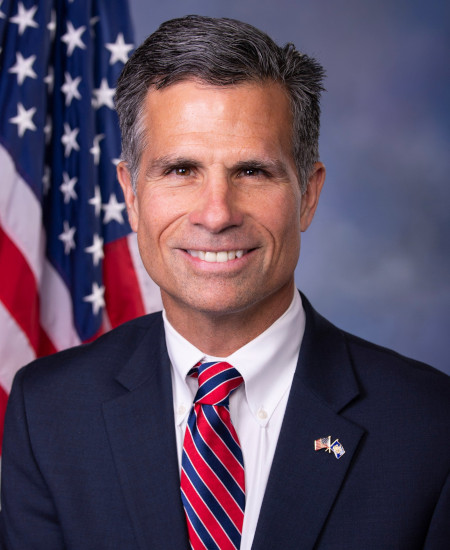
Rep. Daniel Meuser
Sponsored bills
Maddy summaryThis bill, titled the Protecting Americans' Retirement Savings From Politics Act, aims to reform how companies disclose information to investors and how proxy advisory firms operate. It requires companies to only disclose information they determine is material to investment decisions, creates a new advisory committee for public companies, and mandates registration for proxy advisory firms with strict rules on conflicts of interest and voting recommendations. The legislation also requires institutional investors to report how they use proxy advisory firm recommendations and prohibits automated voting without independent review. Additionally, it clarifies that investment advice should prioritize financial returns over non-financial factors unless customers provide informed consent to consider other factors.
Maddy summaryThe Disaster Loan Accountability and Reform Act (DLARA) requires the Small Business Administration (SBA) to improve transparency and accountability for disaster loans. It mandates monthly reports detailing loan funding status, new budget requests with historical cost comparisons, and strict limits on loan obligations when funds fall below 10% of a 10-year average. The bill also requires GAO and SBA Inspector General reviews of funding shortfalls, cost impacts of recent policy changes, and enhanced forecasting for disaster loan budgets. These provisions directly affect the SBA’s operations and its reporting to Congress, aiming to prevent future funding crises through better data and oversight.
Maddy summaryThe Latonya Reeves Freedom Act of 2026 strengthens the Americans with Disabilities Act to ensure individuals with long-term service and support needs have a federally protected right to live in their communities rather than institutions. It requires states and insurance providers to offer community-based services that allow people to maintain independence, control their own care, and access affordable, integrated housing. The bill mandates that public entities and insurers create enforceable transition plans to move people out of institutions, conduct self-evaluations to identify barriers, and establish clear grievance procedures for resolving complaints. Enforcement is handled by the Department of Justice, which can investigate violations, while individuals may also file civil lawsuits to seek damages or court orders preventing institutionalization.
Maddy summaryHR 941, the Small LENDER Act, creates a 3-year compliance period and a subsequent 2-year penalty-free period for small lenders required to report small business lending data under a new rule. It directly affects financial institutions that originated at least 500 small business loans in each of the previous two years (defined as loans to businesses with under $1 million annual revenue). The bill delays full enforcement of new data reporting requirements, giving lenders time to adjust without penalties during the grace periods. This changes how the Consumer Financial Protection Bureau enforces reporting rules for smaller lenders focused on small business loans.
Repealing Big Brother Overreach Act This bill repeals the Corporate Transparency Act. The act requires existing companies and newly created companies to report beneficial ownership information to the Department of the Treasury’s Financial Crimes Enforcement Network for purposes of addressing the financing of terrorism and money laundering.
Maddy summaryThe Local Control Protection Act restricts federal courts from hearing challenges to local zoning decisions that deny permits for large data centers, provided those denials were made by recorded vote with documented findings. It also prohibits federal agencies from approving permits for these facilities if the developer is currently suing to overturn a local government's denial. Additionally, the bill requires developers of covered data centers to receive tax credits only if they sign enforceable agreements with local officials to address infrastructure impacts, monitor environmental effects, and prioritize hiring local workers and contractors.
Maddy summaryHR 1041, the Veterans 2nd Amendment Protection Act, prevents the Department of Veterans Affairs (VA) from automatically sending veterans' personal information to the national background check system (NICS) solely because a court has appointed a fiduciary (like a guardian) to manage their benefits. This directly affects veterans who have a fiduciary appointed due to mental health or cognitive challenges but are not deemed a danger to themselves or others. The bill requires a court order finding the veteran poses a danger before any such information can be shared with the NICS. It changes VA procedures to block unnecessary barriers to firearm ownership for veterans who qualify for fiduciary support without a judicial determination of danger.
Maddy summaryThis bill, the Provider Reimbursement Stability Act of 2026, aims to create more predictable payment adjustments for physicians and other healthcare providers under the Medicare program. It directly affects medical practices and providers who receive reimbursement for services through the physician fee schedule. The legislation increases a threshold for certain budget neutrality calculations from $20 million to $54.3 million in 2027, with automatic increases every five years thereafter. It also requires the government to correct payment estimates when actual service usage differs significantly from projections, mandates regular updates to cost calculations for practice expenses, and limits how much Medicare payment rates can change from year to year to a maximum of 2.5 percent.
Maddy summaryHR 3234, the "Keeping Deposits Local Act," amends the Federal Deposit Insurance Act to adjust how banks calculate reciprocal deposits that don't count as "funds obtained through a deposit broker." It establishes tiered percentage thresholds based on a bank's total liabilities: 50% for banks under $1 billion, decreasing to 40% for $1-10 billion, 30% for $10-250 billion, 20% for $250 billion-$1 trillion, and 2% for banks over $1 trillion. This change directly affects commercial banks, particularly smaller institutions, by allowing them to hold a larger share of deposits without triggering stricter broker-related regulations. The bill aims to simplify compliance for community banks while maintaining oversight for larger financial institutions.