

Maddy summaryHR 705, the Veterans 2nd Amendment Protection Act, prohibits the Department of Veterans Affairs (VA) from automatically sending veterans' personal information to the national background check system solely because a fiduciary (like a guardian) manages their benefits. It specifically blocks the VA from sharing this data with the Justice Department without a court order finding the veteran a danger to themselves or others. This directly affects veterans who have a fiduciary appointed due to incapacity but are not deemed dangerous, preventing automatic barriers to firearm purchases based only on their fiduciary status. The bill amends 38 U.S.C. § 5501B to require judicial authorization before such data can be transmitted.
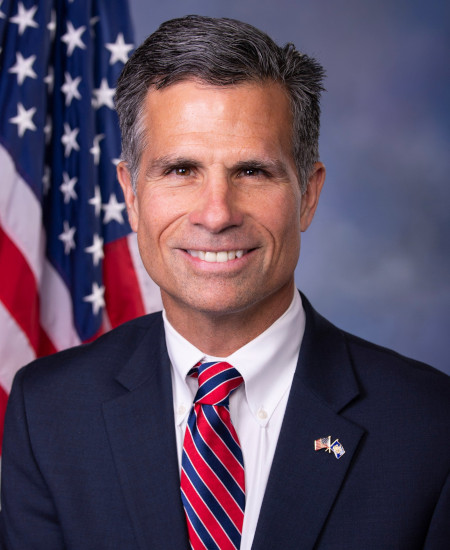
Rep. Daniel Meuser
Sponsored bills
Maddy summaryHJRES 125 is a congressional resolution seeking to block a Federal Reserve rule requiring large financial institutions to manage climate-related financial risks. It targets the rule published in the Federal Register on October 30, 2023 (88 Fed. Reg. 74183), which established "Principles for Climate-Related Financial Risk Management." The resolution would prevent this rule from taking effect by invoking a specific legal process under Title 5 of the U.S. Code. This disapproval resolution directly affects major banks and financial firms subject to the Federal Reserve's oversight.
Maddy summaryThe SEC REVIEW Act of 2024 requires the Securities and Exchange Commission (SEC) to obtain formal approval from the Chairman or a majority of commissioners before certain actions - such as decisions on shareholder proposals or new rules - take effect. It mandates that the SEC provide annual reports to Congress analyzing how these actions protect investors, maintain fair markets, and avoid viewpoint discrimination. The bill directly affects the SEC's internal decision-making processes and increases congressional oversight of its regulatory activities. These changes aim to enhance transparency and accountability in the SEC's handling of key financial regulations.
Maddy summaryThe CORE Act establishes a program for the Secretaries of Energy, Interior, and Defense to conduct offshore geophysical and geological resource mapping and analysis of oil, gas, and critical minerals. It requires a one-time report assessing undiscovered resources in offshore areas, how land withdrawals affect exploration and production, and impacts on national security, revenue, and the Strategic Petroleum Reserve. The bill streamlines geological and geophysical survey licensing by requiring permits within 30 days of application and reduces regulatory burdens by eliminating the need for certain letters of authorization. It also standardizes existing reporting requirements and limits judicial review of survey projects by setting strict deadlines for challenges and restricting courts from requiring new environmental reviews. The law directly affects federal agencies, offshore energy companies, coastal states, and the National Marine Fisheries Service.
Maddy summaryThis bill authorizes border states (adjacent to the U.S. northern or southern border) to place movable, temporary structures on federal land near the border for security purposes without needing a special use permit. States must notify the relevant federal agency (e.g., Bureau of Land Management or Forest Service) at least 45 days before placement, and structures can remain for up to one year, with possible 90-day extensions if U.S. Customs and Border Protection determines "operational control" hasn't been achieved. The bill directly affects border states and federal land management agencies by streamlining temporary border security measures on public lands.
Maddy summaryHR 3161, the CDFI Fund Transparency Act, requires the Treasury Secretary (or their designee) to annually testify before the House Financial Services Committee and Senate Banking Committee about the operations of the Community Development Financial Institutions (CDFI) Fund. This testimony would cover the Fund's activities from the previous year and is requested at the discretion of the committee chairs. The bill does not change how the CDFI Fund provides funding but mandates regular reporting to Congress on its operations. It directly affects the Treasury Department's reporting obligations and the congressional committees overseeing the Fund. This is a procedural transparency measure, not a substantive policy change.
This resolution supports the designation of National FFA Week. It also (1) recognizes the important role of the National FFA Organization (Future Farmers of America) in developing the next generation of globally conscious leaders who will change the world; and (2) celebrates the 10th anniversary of the Give the Gift of Blue program, which has donated more than 17,000 FFA blue jackets to FFA members in need.
Maddy summaryThis bill amends the Older Americans Act to explicitly address loneliness among seniors by adding it to existing provisions about social isolation. It requires the federal government to prepare a report within five years, examining how current programs tackle loneliness's health impacts, geographic prevalence, and preventive services. The report must also analyze multigenerational family connections' role in reducing loneliness and recommend policy improvements. The bill directly affects older individuals served by programs under the Older Americans Act, focusing on health outcomes linked to social isolation. It does not create new funding but directs existing programs to coordinate services addressing loneliness.
Maddy summaryThe SAFER at the Border Act prohibits the U.S. Department of Homeland Security from temporarily admitting (paroling) certain individuals at the border. It defines "known terrorists" (those arrested, charged, or convicted for terrorism), "suspected terrorists" (reasonably suspected of terrorism), and "special interest aliens" (those with potential terrorism links based on travel patterns). The bill explicitly bans parole for these individuals, even for humanitarian reasons or public benefit, and also prohibits parole for refugees. Additionally, it allows states to sue the Department of Homeland Security if they suffer financial harm exceeding $100 from the parole of such individuals.
Maddy summaryThis bill ensures that Khalid Shaikh Mohammad, Walid Muhammad Salih Mubarak Bin ‘Attash, and Mustafa Ahmed Adam al Hawsawi - detainees held at Guantanamo Bay for their alleged roles in the September 11, 2001, attacks - remain subject to military trial under Chapter 47A of Title 10, United States Code, regardless of any plea agreements they may have entered. It explicitly allows the death penalty as a sentencing option in their trials and mandates strict confinement conditions: solitary confinement at Guantanamo Bay, no contact with foreign nationals, no unauthorized psychological treatment, and no transfer to the U.S. mainland or any other country. The bill directly affects only these three individuals and modifies procedural and sentencing rules for their specific cases.