

Maddy summaryHR 7428, the Earned Wage Access Consumer Protection Act, regulates services that let workers access early payments of earned but unpaid wages (e.g., via apps or employer partnerships). It directly affects workers using these services ("consumers") and the companies providing them ("providers"), prohibiting practices like forcing repayment through lawsuits, hiding fees, or charging late fees. Key provisions require clear upfront fee disclosures, ensure tips/gratuities are truly voluntary (with no link to service eligibility), and ban providers from using debt collectors to recover unpaid advances. The bill also clarifies that these advances aren’t considered "consumer credit" under federal law, preventing providers from being treated as lenders.
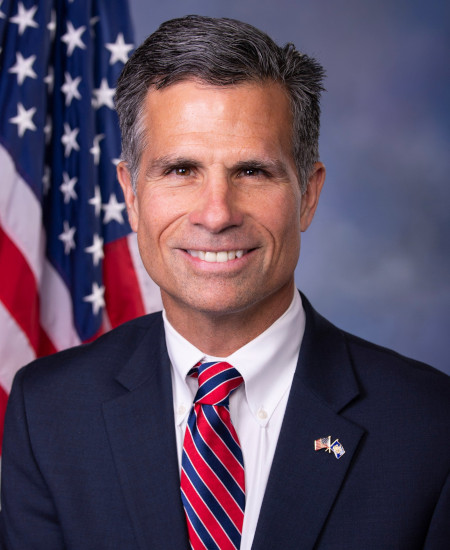
Rep. Daniel Meuser
Sponsored bills
Maddy summaryHR 915 requires businesses that contract with motor carriers (like shippers, brokers, or freight forwarders) to verify three safety and compliance details before shipping goods: 1) the carrier's valid registration, 2) minimum required insurance coverage, and 3) that the carrier is not disqualified for safety reasons by the Federal Motor Carrier Safety Administration (FMCSA) or a state. This verification must occur 45 days before shipment. The bill creates a temporary standard that expires when new FMCSA regulations are issued within 18 months of enactment. It does not change carrier safety rules but sets a new requirement for businesses selecting carriers.
Maddy summaryHR 6073 designates the United States Postal Service facility at 9925 Bustleton Avenue in Philadelphia, Pennsylvania, as the "Sergeant Christopher David Fitzgerald Post Office Building." The bill updates all federal references - such as in laws, maps, regulations, and documents - to use this new name for the building. This is a procedural change that honors Sergeant Christopher David Fitzgerald, with no substantive policy impact beyond renaming the facility. The bill was enacted on November 25, 2024, as Public Law 118-122.
Maddy summaryThis bill (HR 5476) is a ceremonial naming resolution that designates the U.S. Postal Service facility at 1077 River Road, Suite 1, in Washington Crossing, Pennsylvania, as the "Susan C. Barnhart Post Office." It directly affects the physical post office location and all official U.S. government references to it. The bill requires all federal documents, maps, and records to use the new name instead of the previous designation. This is a procedural change with no policy or funding impact, solely honoring Susan C. Barnhart through the facility's name.
Maddy summaryThe Working Dog Commemorative Coin Act (HR 807) directs the U.S. Treasury to mint three types of commemorative coins honoring working dogs' service: $5 gold coins, $1 silver coins, and half-dollar coins with specific weight and composition requirements. Each coin will carry a surcharge ($35 for $5 coins, $10 for $1 coins, $5 for half-dollars) that will be paid directly to America's VetDogs to support their programs providing service dogs for veterans, the disabled, and others. The coins will be issued in 2027 with designs reflecting working dogs' roles in military, detection, therapy, and assistance work. The legislation specifies that all surcharge revenue must fund America's VetDogs' operations without creating new government programs. This is a commemorative measure focused on honoring working dogs' contributions through coin sales, with all surcharge funds going to a specific nonprofit organization.
Maddy summaryHRES 1594 is a symbolic House resolution supporting the designation of "National Rural Health Day," observed annually on the third Thursday of November. It recognizes rural health care providers and the communities they serve, highlighting challenges like hospital closures, workforce shortages, and access barriers in rural areas. The resolution expresses the House's commitment to improving rural health care accessibility and affordability but does not create new laws or allocate funding. It is a non-binding gesture aligning with an existing observance since 2011, organized by the National Rural Health Association.
Maddy summary# Summary of Proposed Higher Education Act Amendments This document outlines significant proposed amendments to the Higher Education Act of 1965, primarily as part of the "College Cost Reduction Act." The key elements include: ## Accreditation Reform - Major overhaul of accreditation standards, requiring accrediting agencies to demonstrate independence from trade associations - New requirements for accrediting agencies to assess student achievement outcomes, including median value-added earnings relative to median total price charged - Introduction of an "Alternative Quality Assurance Experimental Site Initiative" to test non-accredited institutions - Protections for religious institutions, including a new process for appealing accreditation decisions related to religious mission - Removal of "litmus tests" that would require institutions to support specific political viewpoints ## Student Success Initiatives - Establishment of "Postsecondary Student Success Grants" to increase participation, retention, and completion rates for high-need students - Focus on evidence-based practices, with tiered requirements (tier 1, 2, and 3 reforms) - Mandatory inclusion of high-need student populations (low-income, first-generation, military-connected, etc.) - Requirements for institutions to report on completion rates, retention rates, and student demographics ## Regulatory Changes - Repeal of numerous existing regulations including: * Closed school discharges * Borrower defense to repayment * Pre-dispute arbitration * False certification requirements * Ability-to-benefit rules * Financial responsibility regulations - New restrictions on incentive compensation for recruiters - Changes to third-party servicer definitions and regulations ## Transfer and Credit Policies - New requirement that institutions cannot deny transfer credit based solely on the source of accreditation - Requirements for transparent transfer policies - Changes to reverse transfer policies ## Other Key Provisions - Modifications to the National Advisory Committee on Institutional Quality and Integrity (NACIQI) - New definitions for "total price" and "value-added earnings" - Changes to the process for institutions to change accrediting agencies - New requirements for institutions to report on student outcomes The overall focus of these proposed amendments is to reduce regulatory burden on institutions, promote transparency, improve student outcomes (particularly for high-need students), modernize accreditation processes, and protect religious institutions' rights in accreditation decisions.
Maddy summaryHRES 1574 is a non-binding House resolution calling for the immediate removal of Federal Deposit Insurance Corporation (FDIC) Chairman Martin J. Gruenberg. It cites concerns about his leadership, including alleged mistreatment of staff, a "toxic workplace," staffing shortages, and failures in bank supervision that contributed to financial institution failures. The resolution does not change law or remove Gruenberg (as the President appoints FDIC leaders), but formally demands his removal. It was introduced by 25 Republican representatives and referred to the Financial Services Committee.
Maddy summaryThe Sunshine Protection Act of 2023 would end the practice of changing clocks twice a year for daylight saving time (DST) by making DST permanent nationwide, unless a state chooses to remain on standard time. It repeals the requirement to switch clocks back to standard time in the fall, directly affecting all U.S. states and territories that currently observe DST. The bill allows states that previously opted out of DST under the Uniform Time Act (like Arizona and Hawaii) to maintain their current time zone choices without further action. Key provisions include adjusting time zone offset language in existing law and granting states the authority to select either permanent DST or standard time based on their current arrangements. This change would eliminate seasonal time changes for most Americans, though states could still choose to stay on standard time if they prefer.
Maddy summaryHRES 1566 is a symbolic House resolution honoring all U.S. veterans on Veterans Day 2024. It recognizes the service and sacrifice of the estimated 15.8 million veterans living in the U.S. as of 2023, including those who served in conflicts from World War II to post-9/11. The resolution calls on the American public to observe Veterans Day to acknowledge veterans' role in preserving national freedom. As a non-binding resolution, it has no direct policy impact but formally expresses congressional recognition of veterans' contributions.