

Maddy summaryThis bill requires Medicare Advantage plans to implement electronic prior authorization systems by 2027 and publish detailed data on their approval and denial rates for medical services by 2026. It directly affects Medicare Advantage plans (private insurers offering Medicare coverage) and their enrollees (seniors 65+), mandating transparency about prior authorization decisions, processing times, and appeal outcomes. Key provisions include requiring plans to report annual statistics on request approvals/denials, average processing times, and use of technology, with this data published publicly by the Centers for Medicare & Medicaid Services. The bill also sets timelines for plan responses to prior authorization requests and mandates reports to Congress on implementation and impacts.
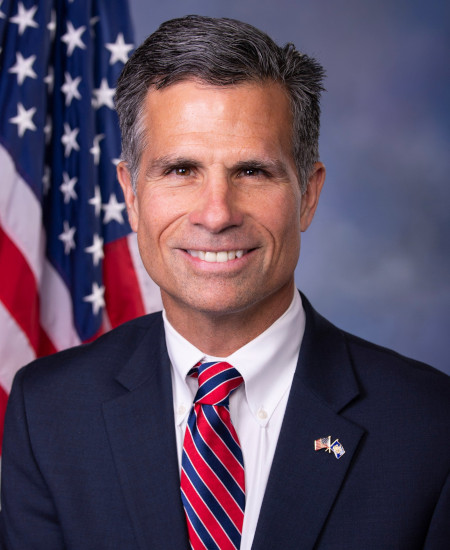
Rep. Daniel Meuser
Sponsored bills
Maddy summaryThis bill prohibits the Department of Homeland Security (DHS) from using federal funds to purchase batteries produced by specific Chinese companies starting October 1, 2027. It directly affects DHS procurement by banning purchases from entities like CATL, BYD, and Envision Energy, and any successors to these companies. The law defines "produced by" to include both final assembly and majority component sourcing, ensuring the restriction covers broader supply chains. Waivers are possible only if DHS certifies no national security risks, no alternatives exist, or purchases are for research - requiring congressional notification. The policy aims to reduce reliance on batteries from entities linked to national security concerns.
Maddy summaryThe Essential Caregivers Act of 2024 requires nursing homes and similar facilities to allow residents to designate essential caregivers who provide emotional support or assistance with daily activities. During emergencies when regular visitation is restricted, facilities must permit at least one essential caregiver access to residents daily and cannot deny access without following specific procedures. Facilities may deny access for a maximum of 7 days during emergencies (or 14 days with state approval), and must provide a written explanation and appeal process if access is denied. The bill establishes a 48-hour appeal process for residents and caregivers to challenge denials, with facilities required to prove violations during appeals. This law applies to Medicare skilled nursing facilities, Medicaid nursing facilities, intermediate care facilities, and certain inpatient rehabilitation facilities.
Maddy summaryHR 7442 directs the Government Accountability Office (GAO) to study whether Medicare could cover medical services provided in the Philippines for beneficiaries already enrolled in Medicare Part B or Part C. The study must analyze potential cost savings compared to U.S. care (2025-2034) and identify required legislative/administrative changes to expand coverage. This bill only authorizes a study and does not change current Medicare benefits or eligibility.
Maddy summaryThis bill adds 1,000 new medical residency positions (500 in 2024 and 500 across 2025-2028) specifically for training in addiction medicine, addiction psychiatry, or pain medicine. It directly affects hospitals that have or will establish approved residency programs in these fields. Hospitals receiving these positions must use them for addiction-related training for five years, with unused positions redistributed if requirements aren't met. The goal is to expand the healthcare workforce addressing the substance use disorder crisis by increasing specialized training opportunities.
Maddy summaryThe Preserving Seniors’ Access to Physicians Act of 2023 increases the Medicare payment adjustment rate for physicians from 1.25% to 4.62%, directly affecting doctors who treat Medicare patients (primarily seniors). It also reduces the funding for the Medicaid improvement fund from $5,796,117,810 to $3,973,117,810. These changes impact Medicare providers and Medicaid programs, with the Medicare adjustment aimed at supporting physicians adjusting to payment changes. The bill does not specify how the Medicaid funding reduction relates to its stated goal of preserving seniors' access to physicians.
Maddy summaryThis bill updates the "competitive need limitation" for duty-free imports from beneficiary developing countries under the Trade Act of 1974. It increases the annual cap for eligible imports from $75 million to $600 million and changes how the limit is calculated to count only duty-free entries during a calendar year. The President must restore duty-free treatment for most eligible articles within 120 days of the bill's enactment, with a one-year review period for sensitive products requiring continued withholding. The bill also requires a report to Congress within one year detailing restored and withheld duty-free treatments. This directly affects importers of goods from designated developing countries eligible for trade benefits.
Maddy summaryThis bill adds audiology services to Medicare's covered benefits under Section 1861(s)(2)(KK), effective January 1, 2025. It allows qualified audiologists to provide hearing and balance assessments and diagnostic/treatment services without requiring a physician referral or supervision, directly affecting Medicare beneficiaries seeking these services and audiologists practicing under state law. Payment will be 80% of the lower of actual charge or the Medicare fee schedule. The bill does not expand the types of audiology services covered but changes how they are accessed and paid for under Medicare.
Maddy summaryThe ARCH Act extends funding for two critical rural hospital payment programs through 2029 (instead of 2024). It directly affects rural hospitals classified as Medicare-dependent hospitals (MDHs) or low-volume hospitals (LVHs), ensuring continued financial support. Key provisions include extending payment methodologies, allowing hospitals to decline reclassification, and requiring a GAO report analyzing rural hospital classification overlaps and recommending improvements. The GAO must report within 180 days on classification criteria, overlaps, and potential changes to improve rural hospital sustainability and patient access.
Maddy summaryThis bill updates Medicare physician payment rules to improve stability and accuracy. It raises the budget neutrality threshold from $20 million (pre-2025) to $53 million in 2025, with annual indexing after 2026, to prevent excessive payment adjustments. The bill requires the Medicare program to correct budget neutrality payments based on actual service utilization data (not estimates) starting in 2025, and mandates updating direct cost inputs (like staff wages and equipment prices) every 5 years. It also caps annual changes to the physician payment conversion factor at 2.5% to limit sudden payment shifts, directly affecting Medicare physicians and healthcare providers receiving these payments.