

Clean Energy and Sustainability Accelerator Act This bill establishes and capitalizes a Clean Energy and Sustainability Accelerator. The independent, nonprofit accelerator must invest in clean energy technologies and infrastructure to reduce greenhouse gas emissions. The accelerator must make capital available to state, territorial, or local green banks. The banks must be public or nonprofit specialized finance entities that use finance tools to mitigate climate change. The accelerator may also provide technical assistance and funding to states and other political subdivisions that do not have green banks to establish such banks. When investing in projects that mitigate greenhouse gas emissions, the accelerator must prioritize investments that serve climate-impacted communities (e.g., communities of color or low-income communities). In addition, the accelerator must explore the establishment of a program to provide low-interest and zero-interest loans, up to 30 years in length, to any school, metropolitan planning organization, or nonprofit organization seeking financing for the acquisition of zero-emissions vehicle fleets or associated infrastructure. Finally, the accelerator must explore the establishment of an accelerated clean energy transition program to (1) expedite the transition within the power sector to zero-emissions power generation facilities or assets, and (2) invest in local economic development in communities affected by this transition away from carbon-intensive facilities or assets.
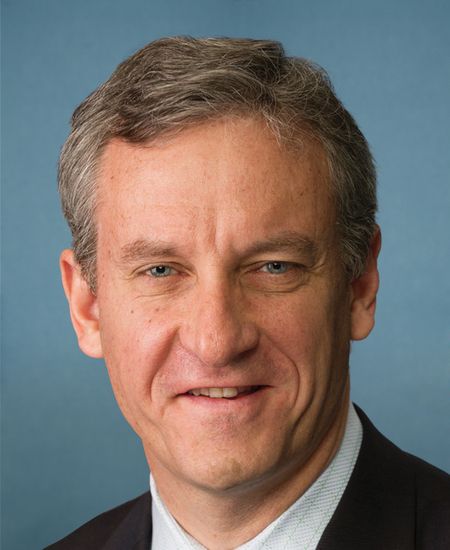
Rep. Matt Cartwright
Sponsored bills
Ultra-Millionaire Tax Act of 2021 This bill imposes a tax on the net value of all taxable assets of the taxpayer on the last day of any calendar year (wealth tax). The amount of such tax shall be equal to the sum of 2% of the amount of taxpayer assets exceeding $50 million but not in excess of $1 billion, plus the applicable percentage (3% or 6% if certain legislation is in effect) of the net value of such taxable assets exceeding $1 billion. There is no tax on the net value of taxable assets not in excess of $50 million. The bill defines net value of all taxable assets as the value of all property of the taxpayer, real or personal, tangible or intangible, wherever situated reduced by any debts (including secured debts) owed by the taxpayer. The definition excludes property with a value of $50,000 or less, tangible personal property, certain property used in a trade or business, and collectibles. The Internal Revenue Service (IRS) must audit annually not less than 30% of taxpayers required to pay the tax imposed by this bill. The bill provides funding to the IRS for FY2022-FY2032 for enforcement of the requirements of this bill, taxpayer services, and for business system modernization.
Arctic Refuge Protection Act This bill repeals the Arctic National Wildlife Refuge oil and gas program. The bill designates approximately 1,559,538 acres of land within Alaska in the Arctic National Wildlife Refuge as a component of the National Wilderness Preservation System.
This bill provides for the presentation of a Congressional Gold Medal to the Freedom Riders, in recognition of their contribution to civil rights by fighting for equality in interstate travel.
Living Donor Protection Act of 2021 This bill prohibits certain insurance carriers from discriminating against, and provides other protections for, living organ donors. Specifically, carriers may not deny, cancel, or otherwise impose conditions on policies for life insurance, disability insurance, or long-term care insurance based on an individual's status as a living organ donor. The bill also expressly specifies that recovery from organ-donation surgery constitutes a serious health condition that entitles eligible employees to job-protected medical leave. In addition, the Department of Health and Human Services must update educational materials on live organ donation to include information about the benefits of live organ donation and about access to insurance for living organ donors.
Electric Vehicles for Underserved Communities Act of 2021 This bill requires the Department of Energy (DOE) to support the deployment of electric vehicle charging infrastructure in underserved or disadvantaged communities. Specifically, DOE must establish an EV Charging Equity Program. Under the program, DOE must provide technical assistance and award grants to increase the deployment and accessibility of electric vehicle charging infrastructure in such communities. If practicable, DOE must ensure that relevant programs promote electric vehicle charging infrastructure, support clean and multimodal transportation, provide improved air quality and emissions reductions, and prioritize the needs of such communities.
ABLE Age Adjustment Act This bill increases from 26 to 46 the age threshold for tax-favored ABLE (Achieving a Better Life Experience) accounts. (ABLE accounts are designed to enable individuals with disabilities to save for and pay for disability-related expenses. To establish an account, an individual must have a qualifying impairment that began before the individual attained the age threshold.)
Electric Credit Access Ready at Sale Act of 2021 or the Electric CARS Act of 2021 This bill modifies and extends tax credits for electric cars and alternative motor vehicles. The bill extends the tax credit for new qualified plug-in electric drive motor vehicles through 2031. In addition, the bill modifies the credit to remove the limitation on the number of vehicles per manufacturer that are eligible for the credit, allow a taxpayer to assign the credit to a financing entity, and allow an unused credit to be carried forward for five years. The bill also extends through 2031 the tax credits for (1) alternative fuel vehicle refueling property, and (2) alternative motor vehicles.
Food Allergy Safety, Treatment, Education, and Research Act of 2021 or the FASTER Act of 2021 This bill expands the definition of major food allergen for purposes of certain food-labeling requirements to specifically include sesame. In addition, the Department of Health and Human Services must report on certain information related to food allergy research and data collection activities.
Fort Pillow National Battlefield Park Study Act This bill directs the Department of the Interior to determine the suitability and feasibility of designating the Fort Pillow Historic State Park in Henning, Tennessee, which was the site of the Battle of Fort Pillow during the Civil War, as a unit of the National Park System.