

Environmental Health Workforce Act of 2021 This bill requires the Department of Health and Human Services (HHS) to carry out certain activities related to the environmental-health workforce. It also requires the Government Accountability Office to report on state-based practices for training and credentialing environmental-health workers. Specifically, HHS must develop model standards and guidelines for credentialing environmental-health workers and a plan to ensure its programs and activities meet the future needs of the environmental-health workforce. The bill also specifies that environmental-health workers are eligible for public-service loan forgiveness.
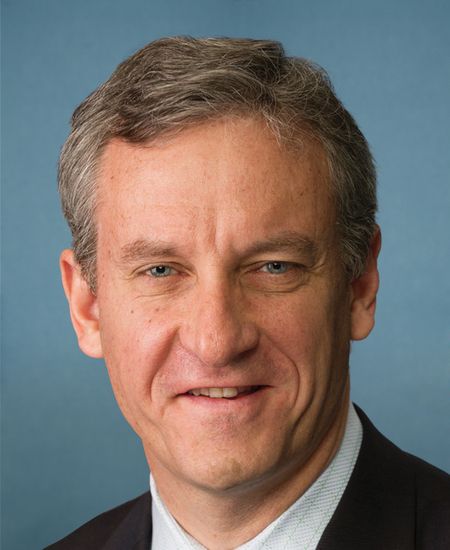
Rep. Matt Cartwright
Sponsored bills
Secure and Fair Enforcement Banking Act of 2021 or the SAFE Banking Act of 2021 This bill generally prohibits a federal banking regulator from penalizing a depository institution for providing banking services to a legitimate cannabis-related business. Prohibited penalties include terminating or limiting the deposit insurance or share insurance of a depository institution solely because the institution provides financial services to a legitimate cannabis-related business and prohibiting or otherwise discouraging a depository institution from offering financial services to such a business. Additionally, proceeds from a transaction involving activities of a legitimate cannabis-related business are not considered proceeds from unlawful activity. Proceeds from unlawful activity are subject to anti-money laundering laws. Furthermore, a depository institution is not, under federal law, liable or subject to asset forfeiture for providing a loan or other financial services to a legitimate cannabis-related business. The bill also provides that a federal banking agency may not request or order a depository institution to terminate a customer account unless (1) the agency has a valid reason for doing so, and (2) that reason is not based solely on reputation risk. Valid reasons for terminating an account include threats to national security and involvement in terrorist financing, including state sponsorship of terrorism. Finally, the bill decreases the cap on the surplus funds of the Federal Reserve banks. (Amounts exceeding this cap are deposited in the general fund of the Treasury.)
This bill designates the U.S. courthouse at 1501 North 6th Street in Harrisburg, Pennsylvania, as the Judge Sylvia H. Rambo United States Courthouse.
Tax Fairness for Workers Act This bill allows an above-the-line tax deduction for union dues and expenses. (An above-the-line deduction is subtracted from gross income and is available whether or not a taxpayer itemizes other deductions.) The bill also reinstates the miscellaneous itemized tax deduction for unreimbursed expenses attributable to the performance of services as an employee (Under current law, all miscellaneous itemized deductions are suspended through 2025).
Comprehensive Care for Alzheimer's Act This bill allows the Center for Medicare and Medicaid Innovation (CMMI) to test a Dementia Care Management Model that provides comprehensive care to Medicare beneficiaries with Alzheimer's disease or a related dementia. Under the model, participating health care providers receive payment under Medicare for comprehensive care management services that are provided to individuals with diagnosed dementia, excluding Medicare Advantage enrollees, hospice care recipients, and nursing home residents. Required services include medication management, care coordination, and health, financial, and environmental monitoring, as well as trainings and other support services for unpaid caregivers. Providers must furnish services through interdisciplinary teams and must ensure access to a team member or primary care provider 24-7. The CMMI must set payments and determine quality measures for the model in accordance with specified requirements. The bill also allows the CMMI to design a similar model under Medicaid.
Providing Responsible Emergency Plans for Animals at Risk of E merging Disasters Act or the PREPARED Act This bill establishes requirements governing the care of animals by entities, such as zoos, in emergencies or disasters. Specifically, the bill requires each research facility, dealer, exhibitor, intermediate handler, and carrier to develop and follow a contingency plan to provide for the humane handling, treatment, transportation, housing, and care of their animals in the event of an emergency or disaster.
Voluntary Protection Program Act This bill provides statutory authority for the voluntary protection program within the Occupational Safety and Health Administration. Under the program, workplaces that implement comprehensive safety and health management systems are exempt from certain paperwork and inspection requirements.
Water Affordability, Transparency, Equity, and Reliability Act of 2021 This bill increases funding for water infrastructure, including funding for several programs related to controlling water pollution or protecting drinking water. Specifically, it establishes a Water Affordability, Transparency, Equity, and Reliability Trust Fund. The fund may be used for specified grant programs. The bill increases the corporate income tax rate to 24.5% to provide revenues for the fund. In addition, the bill revises requirements concerning the clean water state revolving fund (SRF) and the drinking water SRF. It also creates or reauthorizes several grant programs for water infrastructure.
This resolution condemns Iranian state-sponsored terrorist attacks against U.S. citizens and officials and Iranian dissidents and expresses support for the people of Iran who are engaged in legitimate and peaceful protests against the Iranian regime.
Closing Loopholes for Oil and other Sources of Emissions Act or the CLOSE Act This bill repeals exemptions from the Clean Air Act under which (1) emissions from oil and gas wells and pipeline facilities are excluded from aggregation with emissions from other similar units for purposes of determining major sources, and (2) the Environmental Protection Agency (EPA) excludes oil and gas production wells from being listed as area sources. Additionally, the bill requires the EPA to issue a final rule adding hydrogen sulfide to the list of hazardous air pollutants under the Clean Air Act and revising such list to include categories and subcategories of major sources and area sources of hydrogen sulfide, including oil and gas wells.