This resolution condemns acts of violence against Afghan women and girls and any effort to limit the ability of women and girls to participate in the civic affairs of Afghanistan. It also urges the President to ensure that Afghan women, youth, and other marginalized groups are meaningfully participating and engaging in all peace talks.
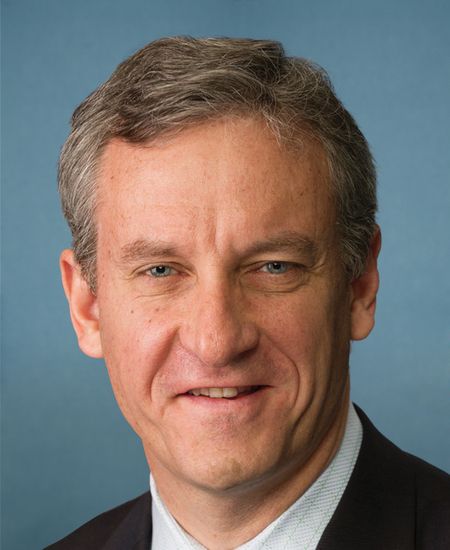
Rep. Matt Cartwright
Sponsored bills
Provider Relief Fund Deadline Extension Act This bill extends the period during which health care providers may use payments received from the Provider Relief Fund to cover a variety of costs related to COVID-19.
Captive Primate Safety Act This bill limits the trade and possession of nonhuman primates. For example, the bill prohibits most individuals from owning a nonhuman primate as a pet.
Bear Protection Act of 2021 This bill prohibits the import, export, and commerce of bear viscera or related products except for limited acts carried out solely to enforce wildlife protection laws.
Performing Artist Tax Parity Act of 2021 This bill modifies the tax deduction for the expenses of performing artists (including commissions paid to managers or agents) to provide for a phaseout of such deduction for taxpayers whose adjusted gross income exceeds $100,000 ($200,000 for joint return filers). The $100,000 phaseout threshold is adjusted for inflation annually for taxable years beginning after 2021.
Grace Hopper Code for Us Act This bill establishes a program through which the Department of Education must award grants to institutions of higher education (IHEs) to develop and implement courses of instruction related to critical legacy computer languages (e.g., COBOL, Assembly, and PL/I). In addition, the Government Accountability Office must report on the critical legacy computer languages that (1) are used by the federal government, and (2) are not commonly taught in a course at an IHE.
Recognizing the Role of Direct Support Professionals Act This bill requires the Office of Management and Budget to establish a separate category within the Standard Occupational Classification system for direct support professionals (i.e., individuals who provide services to promote independence in individuals with a disability) for data reporting purposes.
Commerce, Justice, Science, and Related Agencies Appropriations Act, 2022 This bill provides FY2022 appropriations to the Department of Commerce, the Department of Justice (DOJ), the science agencies, and several related agencies. The bill provides appropriations to the Department of Commerce for the International Trade Administration, the Bureau of Industry and Security, the Economic Development Administration, the Minority Business Development Agency, Economic and Statistical Analysis, the Bureau of the Census, the National Telecommunications and Information Administration, the U.S. Patent and Trademark Office, the National Institute of Standards and Technology, the National Oceanic and Atmospheric Administration, and Departmental Management. The bill provides appropriations to DOJ for General Administration; the Executive Office for Immigration Review; the Office of Inspector General; the U.S. Parole Commission; Legal Activities; the U.S. Marshals Service; the National Security Division; Interagency Law Enforcement; the Federal Bureau of Investigation; the Drug Enforcement Administration; the Bureau of Alcohol, Tobacco, Firearms and Explosives; and the Federal Prison System. The bill also provides appropriations to DOJ for state and local justice activities, including the Office on Violence Against Women, the Office of Justice Programs, and Community Oriented Policing Services (COPS). The bill provides appropriations for science agencies, including the Office of Science and Technology Policy, the National Space Council, National Aeronautics and Space Administration (NASA), and the National Science Foundation. The bill provides appropriations to related agencies, including the Commission on Civil Rights, the Equal Employment Opportunity Commission, the U.S. International Trade Commission, the Legal Services Corporation, the Marine Mammal Commission, the Office of the U.S. Trade Representative, and the State Justice Institute. The bill also sets forth requirements and restrictions for using funds provided by this and other appropriations acts.

Saving America's Pollinators Act of 2021 This bill addresses the use of certain pesticides and the health and status of native bees and other pollinators. First, the bill requires the Environmental Protection Agency (EPA) to establish a Pollinator Protection Board to develop an independent review process for pesticides that pose a threat to pollinators and their habitats. All active ingredients and pesticide products that contain one or more specified neonicotinoid pesticides must be deemed to generally cause unreasonable adverse effects to the environment. Under the bill, the registration of all uses of neonicotinoid pesticides must be immediately and permanently canceled. The EPA must revoke any tolerance or exemption that allows the presence of a neonicotinoid pesticide, or any pesticide chemical residue that results from neonicotinoid pesticide use, in or on food. The continued sale or use of existing stocks of neonicotinoid pesticides is prohibited, and the EPA may not register any such pesticides under the Federal Insecticide, Fungicide and Rodenticide Act. The bill requires the Department of the Interior, the EPA, and the Department of Agriculture to coordinate monitoring activities and report on the health and population status of native bees and other pollinators. Finally, a state or federal agency may be granted an exemption to use neonicotinoid pesticides if the board votes that use of the pesticide is warranted (1) in an emergency situation to avert significant risk to threatened or endangered species, (2) to quarantine invasive species, or (3) to protect public health.
Close the Medigap Act of 2021 This bill (1) expands guaranteed issue rights with respect to Medigap policies (Medicare supplemental health insurance policies), (2) eliminates certain limitations on Medigap policies for newly eligible Medicare beneficiaries, and (3) modifies other provisions related to Medigap policies. (Guaranteed issue rights require that a policy be offered to any eligible applicant without regard to health status.)