

United States Innovation and Competition Act of 2021 This bill addresses U.S. technology and communications, foreign relations and national security, domestic manufacturing, education, trade, and other matters. Among other provisions, the bill provides funding for FY2022-FY2026 to support U.S. semiconductor manufacturing, research and development, and supply chain security; provides funding for wireless supply chain innovation; establishes a Directorate for Technology and Innovation in the National Science Foundation; extends through 2025 the authority of the National Aeronautics and Space Administration (NASA) to lease its non-excess real property and related personal property; authorizes various programs and policies related to space exploration; authorizes various international affairs programs and activities, including foreign assistance for the Indo-Pacific region; requires federal infrastructure programs to provide for the use of materials produced in the United States; imposes sanctions on China for cybersecurity and human rights abuses; requires the Department of Health and Human Services to consider national security risks associated with sensitive genetic information; includes initiatives related to elementary and secondary education, including those to increase computer science education; contains provisions related to higher education, including those reauthorizing through FY2027 international education programs and addressing China's influence on institutions of higher education; modifies and expands the schedule for graduated merger filing fees; prohibits federal funding for the Wuhan Institute of Virology; requires the U.S. Trade Representative to take certain actions related to digital trade and censorship practices; and extends through 2027 the Generalized System of Preferences.
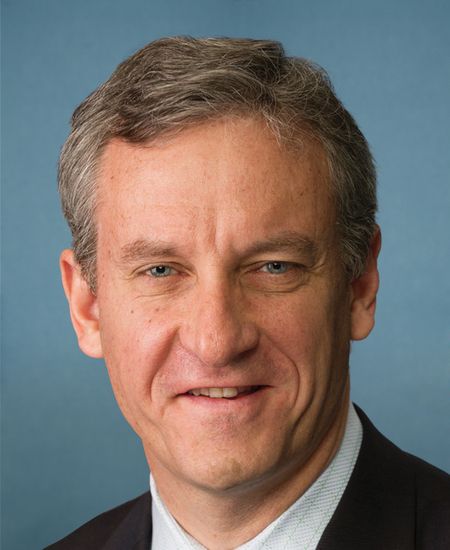
Rep. Matt Cartwright
Sponsored bills
This resolution urges (1) the President to issue a proclamation recognizing Earth Day; and (2) governments and people to continue building upon the Paris Agreement and other efforts to ensure that future generations inherit a livable, sustainable, and ecologically rich planet. The resolution reaffirms that immediate action is needed to reduce greenhouse gas emissions and ameliorate environmental injustices in order to protect our planet, public health, and overall well-being of all people and wildlife. In addition, it encourages the American people to mark Earth Day by working to address environmental challenges, uplift indigenous environmental knowledge and stewardship practices, educate others about the need for year-round action, and honor the stewardship ethic for which Senator Gaylord Nelson stood.
See UNdisclosed Legal Interpretations and Get Honest Transparency Act of 2022 or the SUNLIGHT Act of 2022 This bill generally requires that each final opinion issued by the Office of Legal Counsel be made publicly available within a specified time frame.
Highlands Conservation Reauthorization Act of 2022 This bill extends through FY2029 the Highlands Conservation Act, which provides for land conservation in Highlands states (i.e., Connecticut, New Jersey, New York, and Pennsylvania). The bill authorizes the Fish and Wildlife Service to add a municipality to the Highlands region upon the request of a Highlands state, with the concurrence of the municipality. The bill revises the way in which land is identified for conservation to require using the best available science and geographic information systems. The bill allows political subdivisions of states to enter into agreements with the Department of the Interior for land conservation projects. A Highland state that receives funds for a land conservation partnership project may not use more than 5% of the funds to administer that project. The bill extends through FY2029 Forest Service and other Department of Agriculture programs to conserve land and natural resources in the Highlands region. With respect to an appraisal related to a land acquisition carried out under this bill, a Highlands state shall use an appraisal methodology approved by the Department of the Interior.
Time Off to Vote Act This bill requires an employer, upon the request of an employee, to provide the employee with a minimum of two consecutive hours of paid leave in order to vote in a federal election. The employer may determine the two-hour period, excluding any lunch break or other break. Taking such leave shall not result in the employee losing accrued employment benefits. The bill makes it unlawful for an employer to interfere with the right to take such leave or for an employer to discriminate against an employee for taking such leave. Further, the bill makes it unlawful for any employer to retaliate against an employee for (1) opposing any practice made unlawful by this bill; (2) filing a charge, or instituting or causing to be instituted any proceeding, under or related to this bill; or (3) testifying or preparing to testify in an inquiry or proceeding relating to such leave. The bill specifies penalties for employers who violate these provisions.
Ensuring Lasting Smiles Act This bill requires private health insurance plans to cover diagnosis and treatment of congenital anomalies and birth defects, such as reconstructive services and items. Coverage must include services and items that functionally improve, repair, or restore any body part that is medically necessary for normal bodily functions or appearance, as determined by the treating physician. Coverage limits and cost-sharing requirements for such services and items may not be more restrictive than those applicable to all medical and surgical benefits under the plan.
Supply Chain Disruptions Relief Act This bill modifies the treatment of liquidations of new motor vehicle inventory as qualified LIFO (last in first out accounting method) inventory. It allows new motor vehicle dealers to elect to wait until the end of 2025 to replace their inventory for purposes of determining income attributable to the sale of such inventory during 2020 and 2021.
This resolution expresses support for the designation of Dr. John E. Fryer Day and encourages governmental support for the teaching of lesbian, gay, bisexual, transgender, and queer history.
Emmett Till Antilynching Act This bill makes lynching a federal hate crime offense. Specifically, the bill imposes criminal penalties—a fine, a prison term of up to 30 years, or both—on an individual who conspires to commit a hate crime offense that results in death or serious bodily injury or that includes kidnapping or an attempt to kidnap, aggravated sexual abuse or an attempt to commit aggravated sexual abuse, or an attempt to kill.
National Flood Insurance Program Affordability Act This bill requires the Federal Emergency Management Agency (FEMA) to provide discounts on National Flood Insurance Program coverage to low-income households and other entities. Specifically, the chargeable premium rate for an eligible primary residential dwelling must not exceed 1% of the median income of the area in which the property is located.