

Military Spouse Hiring Act This bill expands the Work Opportunity Tax Credit (WOTC) to include the hiring of a qualified military spouse. (The WOTC permits employers who hire individuals who are members of a targeted group such as qualified veterans, ex-felons, or long-term unemployment recipients to claim a tax credit equal to a portion of the wages paid to those individuals.) A qualified military spouse is any individual who is certified by the designated local agency as being (as of the hiring date) a spouse of a member of the Armed Forces.
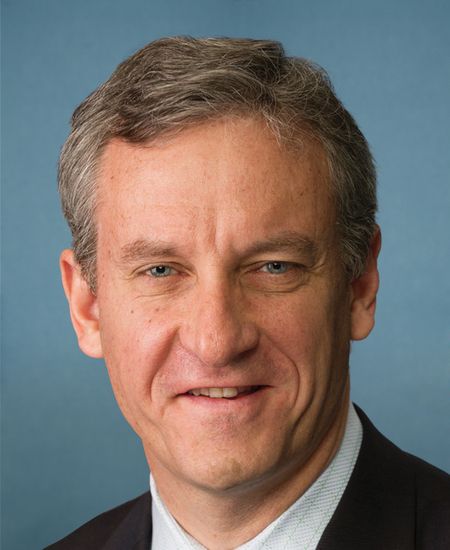
Rep. Matt Cartwright
Sponsored bills
Coal Royalty Fairness and Communities Investment Act of 2021 This bill addresses coal royalties and the economic vitality of coal communities, including by (1)requiring the coal lease royalty to be at least 12.5% of the assessment value of federal coal (currently, 12.5% of the value as defined by regulation); (2)establishing the Coal Area Economic Revitalization Fund; (3)providing grant assistance to impacted communities for economic and workforce development programs; (4)providing financial assistance for the design, construction, and operation of large-scale projects to capture and store carbon dioxide emissions from industrial sources; and (5)providing technical assistance and educational outreach to impacted communities.
Coal Cleanup Taxpayer Protection Act of 2021 This bill prohibits self-bonding practices for coal reclamation, establishes limits on bonding practices associated with surface coal mining operations, and establishes requirements for coal mining operations to provide sufficient financial resources to complete mine reclamation. Currently, self-bonding practices allow coal mining operations to demonstrate that they have sufficient corporate assets to complete reclamation, without requiring cash or collateral up-front as in the case of surety or collateral bonds. The bill prohibits the Office of Surface Mining and Reclamation Enforcement (OSMRE) and state regulatory authorities from accepting new self-bonds for coal reclamation. In addition, the bill requires any existing self-bonds or corporate bonds utilized for coal reclamation to be converted to surety or collateral bonds. The OSMRE must issue rules establishing limitations on surety bonds to minimize the financial liability to the federal or state government. The OSMRE may approve state or federal alternative coal mining bond programs that result in no greater risk of financial liability to the federal government than a surety or collateral bond program.
Appalachian Communities Health Emergency Act or the ACHE Act This bill places restrictions and requirements on certain mining projects until the Department of Health and Human Services (HHS) determines whether such projects pose risks to human health. The bill applies to mountaintop-removal coal mining projects that use blasting with explosives in the steep slope regions of Kentucky, Tennessee, Virginia, and West Virginia. Specifically, the bill requires the National Institute of Environmental Health Sciences to conduct or support studies on the health impacts of mountaintop-removal coal mining projects on individuals in the surrounding communities. HHS must use these studies when making its determination on whether such mining presents any health risks to those individuals. Until HHS makes its determination, entities carrying out such mining must monitor levels of soil, water, air, and noise pollution. HHS must make the results of this monitoring publicly available. In addition, specified agencies may not issue permits for any mountaintop-removal coal mining project or expansion unless HHS determines that such mining does not present any health risk to individuals in the surrounding communities. The Office of Surface Mining Reclamation and Enforcement of the Department of the Interior must assess a one-time fee upon existing mining projects. The fee must cover the federal cost of the studies and pollution monitoring required by the bill.
Military Family Leave Act of 2022 This bill entitles an employed family member of a member of the Armed Forces who receives notification of a call or order to active duty in support of a contingency operation, or who is deployed in connection with a contingency operation, to two workweeks of leave per year for each family member who is so called or deployed. Such leave may (1) be taken intermittently or on a reduced leave schedule; and (2) consist of paid or unpaid leave, as the employer considers appropriate. Additionally, the bill (1) allows an employer to require certification of entitlement to such leave within a leave request, (2) provides employment and benefits protection for employees upon their return from such leave, and (3) prohibits an employer from interfering with or otherwise denying the exercise of such leave rights.
Military Spouse Entrepreneur Reimbursement Act This bill authorizes the military department concerned to reimburse certain business costs (e.g., equipment removal or relocation) incurred by the spouse of a member of the Armed Forces when the member is reassigned or moved to a new duty station.
Military Access to Reproductive Care and Health for Military Servicemembers Act or the MARCH for Military Servicemembers Act This bill repeals the restriction on utilizing Department of Defense funds and facilities for performing abortions. The restriction only allows such funds and facilities to be used for abortions in cases of rape, incest, or where the mother's life is endangered.
Complete America's Great Trails Act This bill allows a tax credit for the fair market value of any National Scenic Trail conservation contribution. The Department of the Interior must study and report on the efficacy of the tax credit in completing, extending, and increasing the number of National Scenic Trails and the feasibility and cost of making the credit refundable and transferable.
Affordability is Access Act This bill establishes several requirements relating to health insurance coverage of, and access to, over-the-counter contraceptives. Specifically, the bill requires the Department of Health and Human Services, the Department of Labor, and the Department of the Treasury to specify that private health insurance plans must cover over-the-counter contraceptives that are approved by the Food and Drug Administration (FDA), even without a prescription. Under current law, private health insurance plans (with some exceptions) must cover FDA-approved prescription contraceptives, without cost-sharing requirements. The bill also prohibits retailers from interfering with an individual's access to oral contraceptives that are meant for routine, daily use and are FDA-approved for use without a prescription.
Domestic Terrorism Prevention Act of 2022 This bill establishes new requirements to expand the availability of information on domestic terrorism, as well as the relationship between domestic terrorism and hate crimes. It authorizes domestic terrorism components within the Department of Homeland Security (DHS), the Department of Justice (DOJ), and the Federal Bureau of Investigation (FBI) to monitor, analyze, investigate, and prosecute domestic terrorism. The domestic terrorism components of DHS, DOJ, and the FBI must jointly report on domestic terrorism, including white-supremacist-related incidents or attempted incidents. DHS, DOJ, and the FBI must review the anti-terrorism training and resource programs of their agencies that are provided to federal, state, local, and tribal law enforcement agencies. Additionally, DOJ must make training on prosecuting domestic terrorism available to its prosecutors and to assistant U.S. attorneys. It creates an interagency task force to analyze and combat white supremacist and neo-Nazi infiltration of the uniformed services and federal law enforcement agencies. Finally, it directs the FBI to assign a special agent or hate crimes liaison to each field office to investigate hate crimes incidents with a nexus to domestic terrorism.