Chesapeake Bay Science, Education, and Ecosystem Enhancement Act of 2021 This bill reauthorizes through FY2025 the National Oceanic and Atmospheric Administration's Chesapeake Bay Office and revises requirements concerning the office and its activities. It also authorizes the office to establish a Chesapeake Bay watershed education and training program as well as a program to support coordinated management, protection, characterization, and restoration of priority habitats and living resources.
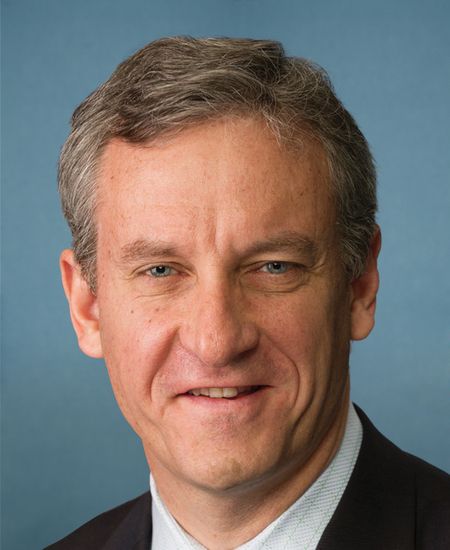
Rep. Matt Cartwright
Sponsored bills
Safeguarding America's Future and Environment Act or the SAFE Act The bill requires the development of an integrated national approach to help fish, wildlife, and plants adapt to extreme weather changes and climate change. Specifically, the bill requires the President to establish an interagency National Fish, Wildlife, and Plants Climate Adaptation Strategy Joint Implementation Working Group. The working group must adopt the 2013 National Fish, Wildlife, and Plants Climate Adaptation Strategy, which addresses the effects of extreme weather and climate change on fish, wildlife, and plants. After the Committee on Earth and Environmental Sciences releases a periodic scientific assessment required under the U.S. Global Change Research Program, the working group must use sound science to review and revise the strategy to incorporate new information and advances in the development of strategies to help fish, wildlife, and plants adapt. Each federal agency must integrate the strategy into agency plans, environmental reviews, and programs. The Department of the Interior must establish a National Climate Change and Wildlife Science Center to assess and develop scientific information, tools, strategies, and techniques to support the working group and other interested parties in addressing the effects of extreme weather and climate change. Interior must establish an Advisory Committee on Climate Change and Natural Resource Sciences to advise the working group.

Revitalizing the Economy of Coal Communities by Leveraging Local Activities and Investing More Act of 2021 or the RECLAIM Act of 2021 This bill revises requirements concerning the Abandoned Mine Reclamation Fund, including by expanding the eligible uses of the fund. Specifically, the bill allows the fund to be used to provide support for economic revitalization, diversification, and development in economically distressed mining communities through the reclamation and restoration of land and water resources adversely affected by abandoned coal mines. In addition, it requires specified amounts to be annually distributed from the fund through FY2026 to states and Indian tribes for reclaiming and restoring lands and waters so affected.
Surface Mining Control and Reclamation Act Amendments of 2021 This bill reauthorizes the Department of the Interior to collect fees on the production of coal through FY2036, expands the eligible uses of the Abandoned Mine Reclamation Fund, and revises requirements concerning the fund. Under current law, operators of active coal mines must pay such fees through FY2021. Revenue from the fees are deposited into the Abandoned Mine Reclamation Fund, which is used for the reclamation of abandoned coal mines. The bill authorizes Interior to reimburse states and tribal governments from the fund for the emergency restoration, reclamation, abatement, control, or prevention of adverse effects of coal mining practices. It also increases the minimum amount of funds from $3 million to $5 million that Interior must award to states and Indian tribes that have approved abandoned mine reclamation programs.
Prevent All Soring Tactics Act of 2022 or the PAST Act of 2022 This bill addresses the practice of soring horses. The soring of horses includes various actions taken on horses' limbs to produce higher gaits that may cause pain, distress, inflammation, or lameness. Specifically, the bill expands soring regulation and enforcement at horse shows, exhibitions, sales, and auctions, including by establishing a new system for inspecting horses for soring. In addition, the bill increases penalties for violations.
This concurrent resolution expresses opposition to the application of criminal laws to pregnancy outcomes and affirms that people deserve access to high-quality health care without fear of reprisal or punishment.
Maddy summaryHJRES 53 proposes a constitutional amendment to ban slavery and involuntary servitude as a criminal punishment. Currently, the 13th Amendment to the U.S. Constitution permits such punishments for crimes, creating a legal loophole. If ratified by 3/4 of state legislatures, this amendment would eliminate that exception nationwide, making it unconstitutional to impose forced labor or slavery as part of criminal sentences. The change would directly affect all states' criminal justice systems, particularly prison labor practices, by prohibiting these punishments for any offense.
This joint resolution proposes a constitutional amendment providing that the rights protected by the Constitution are the rights of natural persons only. Artificial entities, such as corporations, shall have no rights under the Constitution and are subject to regulation. The amendment requires federal, state, and local government to (1) regulate, limit, or prohibit election contributions and expenditures, including a candidate's own contributions and expenditures; and (2) require that any permissible contributions and expenditures be publicly disclosed. The judiciary is prohibited from construing the spending of money to influence elections to be speech under the First Amendment, and the amendment shall not be construed to abridge the freedom of the press.
This resolution expresses the sense of the House of Representatives that the proposed constitutional amendment known as the Equal Rights Amendment has been duly proposed by Congress and ratified by the states and is therefore valid as the Twenty-Eighth Amendment to the Constitution. (The proposed amendment prohibits the United States or any state from denying or abridging equal rights under the law on account of sex.)
This resolution expresses support for (1) equal rights and protections for all people, regardless of actual or perceived sexual orientation or gender identity; and (2) the designation of LGBTQ Equality Day on June 26 to commemorate Supreme Court decisions handed down on that day in 2003, 2013, and 2015. The resolution also acknowledges the need for further legislation to ensure that people in the United States are free from all forms of discrimination on the basis of actual or perceived sexual orientation or gender identity.