

Maddy summaryThis bill directs the Health and Human Services Secretary to fund research on early detection and treatment of uterine fibroids, with a focus on reducing health disparities. It authorizes grants to states for screening programs (including advanced imaging), patient navigation services, and public education campaigns - prioritizing areas with socially vulnerable populations at higher risk. States receiving funds must implement evidence-based strategies to improve access to early intervention. The bill also requires regular reports to Congress on grant outcomes and research findings related to fibroid treatment disparities and related conditions like Asherman’s Syndrome.
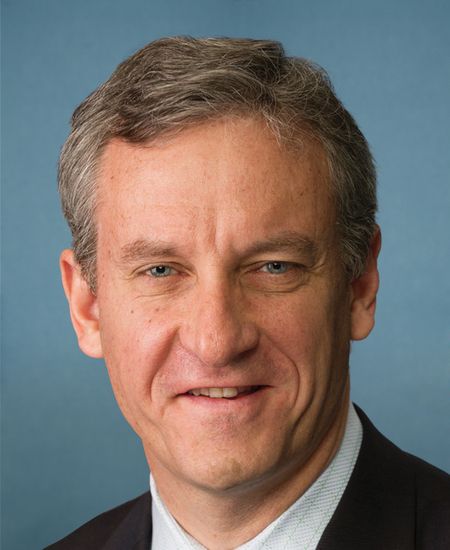
Rep. Matt Cartwright
Sponsored bills
Maddy summaryThis bill authorizes the placement of a memorial honoring women who contributed to World War II efforts on the National Mall or adjacent federal land in Washington, D.C. It specifically removes a location restriction (under 40 U.S.C. § 8908) to allow the memorial - previously authorized by the 2023 Consolidated Appropriations Act - to be situated within Area I of the National Mall or the National Mall Reserve. The memorial would commemorate over 18 million women who worked as pilots, engineers, mechanics, and codebreakers during the war. The bill directly affects the Women Who Worked on the Home Front Foundation, which is tasked with establishing the memorial.
Maddy summaryThis bill designates the U.S. Postal Service facility at 101 South 8th Street in Lebanon, Pennsylvania, as the "Lieutenant William D. Lebo Post Office Building." It requires all federal references - including laws, maps, and documents - to use this new name for the location. The bill has no policy provisions or financial impact; it solely changes the facility's official name. It was passed by Congress and signed into law on May 7, 2024.
Maddy summaryThe Wounded Warrior Workforce Enhancement Act creates federal grants to expand training programs for orthotics and prosthetics specialists. It provides $1-1.5 million per grant to eligible colleges to establish or grow master's programs, with priority given to institutions partnering with VA or military medical facilities. Covered veterans (those with limb loss or mobility impairments) receive admission and financial aid preference in these programs. A separate $5 million grant funds a Center of Excellence to research and improve orthotics/prosthetics education for veterans, service members, and civilians. The bill authorizes $15 million for program grants and $5 million for the Center in fiscal year 2025.
Maddy summaryThe Captive Primate Safety Act prohibits the import, export, sale, transport, breeding, or possession of certain nonhuman primates - including chimpanzees, gorillas, monkeys, and their hybrids - in interstate or foreign commerce. It directly affects private owners, breeders, and commercial traders of these animals, with limited exceptions for pre-enactment animals (requiring registration with the U.S. Fish and Wildlife Service and restrictions on breeding/sale) and registered research facilities. The law amends the Lacey Act to add these primates to prohibited species lists, effective upon enactment, with regulations to be issued within 180 days. Enforcement remains active even if regulations are delayed, ensuring immediate prohibitions on commercial trade and possession.
Maddy summaryHR 8167, the Wounded Warrior Research Enhancement Act, authorizes $30 million in fiscal year 2025 funding to improve limb replacement devices and care for military personnel, veterans, and civilians who have experienced combat-related amputations, traumatic brain injuries, or other serious physical injuries. The bill directs the Defense and Veterans Affairs Secretaries to award competitive, peer-reviewed research grants focused on preventing amputations, determining optimal treatment timing, developing better materials and technologies, and addressing aging-related challenges with prosthetics. These grants aim to enhance clinical care and quality of life for individuals with limb loss by advancing evidence-based solutions. The law requires annual reports to Congress detailing research progress and priorities.
Maddy summaryThe Stream Protection and Vegetation Restoration Act amends the Surface Mining Control and Reclamation Act to strengthen reclamation requirements for coal mining operations. It sets specific deadlines for completing backfilling and grading after coal removal (e.g., 60 days for contour mining, 180 days for area mining) and requires coal operators to submit production recovery plans if operations halt for over six months within a three-year period. The bill mandates quarterly water quality monitoring during mining, annual assessments of stream health to measure restoration progress, and inspections of runoff controls after major storms. These provisions directly affect coal mining companies and state/federal agencies overseeing mining permits and reclamation compliance.
Maddy summaryThe Love Lives On Act of 2023 modifies benefits for surviving spouses of military veterans and service members. It removes an expiration date on the Marine Gunnery Sergeant John David Fry Scholarship for surviving spouses, ensures remarriage doesn't automatically end eligibility for veterans' dependency and indemnity compensation, and expands access to commissary and exchange privileges for remarried surviving spouses. The bill also clarifies that remarried widows or widowers whose subsequent marriage ended (due to death, divorce, or annulment) can still be considered dependents under TRICARE. These changes directly affect surviving spouses of veterans and military members who have remarried or are considering remarriage, providing more consistent benefits regardless of marital status.
Maddy summaryHR 3303, the Maternal Health for Veterans Act, requires the Department of Veterans Affairs (VA) to annually report on maternity care coordination programs and maternal health outcomes for veterans receiving care through VA facilities or VA-contracted providers. The bill mandates the VA to collect data on maternal outcomes - including disparities affecting high-risk demographic groups - and submit recommendations to Congress by September 2028. It authorizes $15 million annually (2024-2028) for VA maternity care coordination programs, supplementing existing funding without reducing current resources. The law directly affects veterans using VA maternity services, aiming to improve care through data-driven strategies.
Maddy summaryHR 1083, the Caring for Survivors Act of 2023, increases financial support for surviving spouses of veterans. It amends Title 38 to raise dependency and indemnity compensation from a fixed $1,154 to 55% of the monthly compensation rate under section 1114(j), effective six months after enactment. The bill also modifies eligibility for survivors of veterans who died before 1993, ensuring they receive the greater of their current benefit or the new calculation. Additionally, it reduces the required continuous service rating period for survivors from 10 years to five years when a veteran was totally disabled at death. These changes directly affect surviving spouses, particularly those with veterans who died prior to 1993.