Senior Legal Hotline Act of 2021 This bill permits the Administration on Aging to award competitive grants to certain nonprofit organizations or partnerships to establish or maintain statewide senior legal hotlines to provide free services to older individuals.
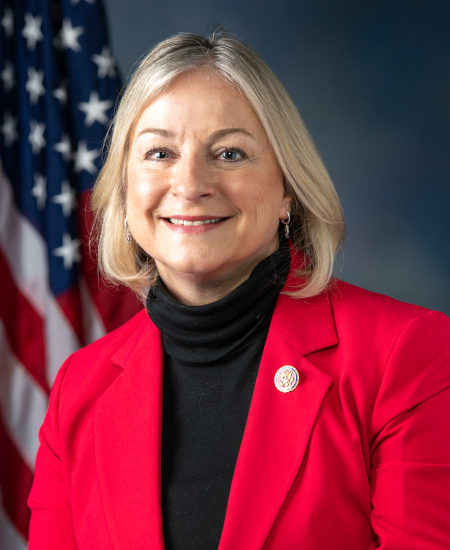
Rep. Susan Wild
Sponsored bills
Metropolitan Statistical Area Preservation Act This bill prohibits the Office of Management and Budget (OMB) from establishing, for purposes of designating areas as metropolitan statistical areas (MSAs), a minimum population for the urban area of such MSA that is more than 50,000. The OMB may, for statistical purposes only, establish other statistical area designations with higher minimum population requirements for such urban areas.
This bill repeals the Authorization for Use of Military Force Against Iraq Resolution of 2002.
Support UNFPA Funding Act This bill authorizes annual contributions to support the core functions and programs of the United Nations Population Fund for the five fiscal years following the bill's enactment.
Coordination, Accountability, Research, and Equity for All Kidneys Act of 2021 or the CARE for All Kidneys Act of 2021 This bill requires multiple agencies to address kidney disease, with a focus on minority, rural, and other underserved populations that are disproportionately affected by the disease. First, the Department of Health and Human Services (HHS) must study patterns of care for kidney disease provided through certain health insurance providers. Second, HHS's Office of the Assistant Secretary for Health must (1) create a plan to address kidney disease, (2) develop a pilot program for best practices to diagnose and manage the disease, and (3) report annually on the impact of a Medicare model that encourages greater use of home dialysis and kidney transplants. Third, the National Institutes of Health must expand research on kidney disease. This includes research on the causes of lower rates of, and interventions to increase, kidney transplants among underserved populations. Fourth, the National Institute of Diabetes and Digestive and Kidney Diseases must conduct an awareness campaign and work with the Centers for Disease Control and Prevention (CDC) to evaluate data collection concerning kidney disease. Fifth, the CDC must award grants for public health interventions to reduce the burden of kidney disease and undertake activities to identify and address environmental and occupational causes of kidney disease. Last, the bill makes kidney disease specialists eligible for the National Health Service Corps (NHSC). The NHSC provides scholarships and student loan repayment awards to health care providers who agree to work in areas with shortages of primary care, mental health, and dental providers.

Shark Fin Sales Elimination Act of 20 21 This bill addresses the sale of shark fins and the inclusion of rays and skates in the Seafood Traceability Program. The Seafood Traceability Program has data reporting and recordkeeping requirements at the time of entry for imported fish or fish products entered into U.S. commerce. The bill makes it illegal to possess, buy, or sell shark fins or any product containing shark fins, except for certain dogfish fins. A person may possess a shark fin that was lawfully taken consistent with a license or permit under certain circumstances. Penalties are imposed for violations under the Magnuson-Stevens Fishery Conservation and Management Act. The Department of Commerce must revise its regulations to include rays and skates as species that are subject to the Seafood Traceability Program.
Toxic Exposure in the American Military Act or the TEAM Act This bill requires the Department of Veterans Affairs (VA) to expand health care, benefits, and resources for veterans with conditions related to exposure to toxic substances. Specifically, the bill expands eligibility for VA hospital care, medical services, and nursing home care to include veterans who (1) were exposed to toxic substances, radiation, or other conditions, and were awarded certain medals (e.g., the Armed Forces Service Medal); (2) are eligible for inclusion in the Airborne Hazards and Open Burn Pit Registry; or (3) have been identified by the Department of Defense to have been possibly exposed during service to an open burn pit, toxic substance, or specified hazardous sites. (A burn pit is an area used for burning solid waste in open air without equipment.) The bill establishes a presumption of service-connection for diseases associated with exposure to certain toxic substances and that become manifest within a certain time period; the VA must specify such diseases and requirements through regulations. Under a presumption of service-connection, specific conditions diagnosed in certain veterans are presumed to have been caused by the circumstances of their military service. Health care benefits and disability compensation may then be awarded. The bill also requires the VA to take specified actions to (1) evaluate scientific evidence regarding associations between diseases and exposure to toxic substances; (2) train its health care personnel on identifying, treating, and assessing illnesses related to such exposure; and (3) provide resources to veterans exposed to toxic substances.
Michael Lecik Military Firefighters Protection Act This bill establishes a presumption of service-connection for specified diseases becoming manifest in certain veterans to a degree of disability of 10% or more within 15 years of the veteran's separation from active military, naval, or air service. Under a presumption of service-connection, specific diseases or disabilities diagnosed in certain veterans are presumed to have been caused by the circumstances of their military service. Health care benefits and disability compensation may then be awarded. Veterans addressed by this bill are those who (1) are trained in fire suppression, and (2) served on active duty in a military occupational specialty or career field with a primary responsibility of firefighting or damage control for at least five years in the aggregate.
Puerto Rico Self-Determination Act of 2021 This bill establishes a process for the people of Puerto Rico to vote on the political status (e.g., statehood) of the territory. Congress may ratify the decision through a joint resolution. The bill declares that the legislature of Puerto Rico has the authority to call a status convention regarding the political status of the territory. The bill provides for public financing of delegate elections to the status convention and establishes a Congressional Bilateral Negotiating Commission to provide advice and consultation to delegates of the status convention. The status convention must provide self-determination options for a referendum of the people of Puerto Rico. Ranked-choice voting is a permitted format for the referendum. Delegates shall carry out an educational campaign through traditional paid media related to the referendum. The bill provides for congressional consideration of a joint resolution to ratify the self-determination option selected through the referendum.
Puerto Rico Statehood Admission Act This bill establishes a process for the admission of Puerto Rico into the union as a state, on an equal footing with all other states, based on a majority vote of the people of Puerto Rico.