

Maddy summaryHR 6751 authorizes the U.S. Mint to produce commemorative coins honoring Roberto Clemente, a Hall of Fame baseball player and humanitarian, including 50,000 $5 gold coins, 400,000 $1 silver coins, and 750,000 half-dollar coins. The coins must feature Clemente's image and inscriptions like "Roberto Clemente" and "2027," with all sales including a surcharge ($5-$35 per coin) paid to the Roberto Clemente Foundation. The foundation, which supports youth sports, education, and disaster relief programs, will use these funds for its mission, while the U.S. Treasury must recover all production costs. The coins will be sold exclusively in 2027, with no net cost to the government.
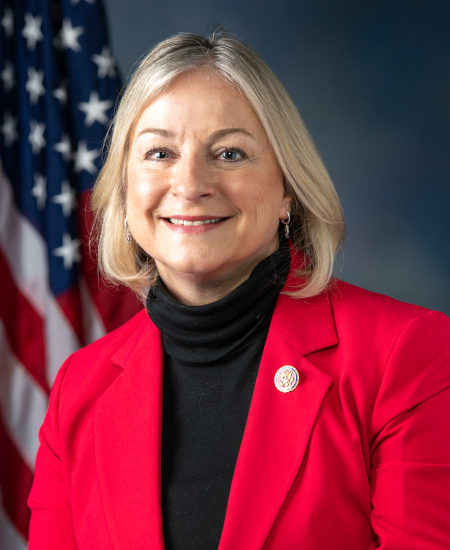
Rep. Susan Wild
Sponsored bills
Maddy summaryHR 1505, the "No Stolen Trademarks Honored in America Act of 2023," modifies a law to prevent U.S. courts from recognizing trademark, trade name, or commercial name rights tied to business assets that were confiscated. It specifically affects individuals or entities claiming such rights who knew or should have known the mark was connected to confiscated assets, unless the original owner or successor gave consent. The bill requires courts to deny recognition of these claims unless the claimant had no knowledge of the confiscation at the time of acquisition. This change applies to all U.S. courts and executive branch entities handling such cases.
Maddy summaryHR 7233, the Jenna Quinn Law of 2024, creates new federal grants to fund innovative child sexual abuse awareness and prevention programs. The bill authorizes the Secretary to award up to 5-year grants to schools, child-serving organizations, and other entities for projects that: (1) teach students age-appropriate abuse recognition and reporting, (2) train teachers and mandatory reporters, and (3) provide parents with prevention resources. Grantees must submit annual reports detailing participants, services, and outcomes. Additionally, the Comptroller General must evaluate the program's effectiveness and check for duplication with other federal efforts within five years, reporting findings to relevant congressional committees.
Maddy summaryHR 6073 designates the United States Postal Service facility at 9925 Bustleton Avenue in Philadelphia, Pennsylvania, as the "Sergeant Christopher David Fitzgerald Post Office Building." The bill updates all federal references - such as in laws, maps, regulations, and documents - to use this new name for the building. This is a procedural change that honors Sergeant Christopher David Fitzgerald, with no substantive policy impact beyond renaming the facility. The bill was enacted on November 25, 2024, as Public Law 118-122.
Maddy summaryThis bill (HR 5476) is a ceremonial naming resolution that designates the U.S. Postal Service facility at 1077 River Road, Suite 1, in Washington Crossing, Pennsylvania, as the "Susan C. Barnhart Post Office." It directly affects the physical post office location and all official U.S. government references to it. The bill requires all federal documents, maps, and records to use the new name instead of the previous designation. This is a procedural change with no policy or funding impact, solely honoring Susan C. Barnhart through the facility's name.
Maddy summaryThe Working Dog Commemorative Coin Act (HR 807) directs the U.S. Treasury to mint three types of commemorative coins honoring working dogs' service: $5 gold coins, $1 silver coins, and half-dollar coins with specific weight and composition requirements. Each coin will carry a surcharge ($35 for $5 coins, $10 for $1 coins, $5 for half-dollars) that will be paid directly to America's VetDogs to support their programs providing service dogs for veterans, the disabled, and others. The coins will be issued in 2027 with designs reflecting working dogs' roles in military, detection, therapy, and assistance work. The legislation specifies that all surcharge revenue must fund America's VetDogs' operations without creating new government programs. This is a commemorative measure focused on honoring working dogs' contributions through coin sales, with all surcharge funds going to a specific nonprofit organization.
Maddy summaryThis bill establishes a Truth and Healing Commission to investigate the history and impacts of U.S. Indian Boarding School policies on Native American communities, including cultural, emotional, and physical effects on survivors, descendants, and tribal communities. The Commission will document these impacts through research, public meetings, and testimony, working with two advisory committees focused on Native American perspectives and Federal agency coordination. The Commission will operate for six years, with annual reports to Congress and a final report containing recommendations for Federal action. The bill also includes provisions for managing burial sites related to boarding schools and ensures the Native American Graves Protection and Repatriation Act applies to remains found on Federal lands related to these schools.
Maddy summaryHRES 1594 is a symbolic House resolution supporting the designation of "National Rural Health Day," observed annually on the third Thursday of November. It recognizes rural health care providers and the communities they serve, highlighting challenges like hospital closures, workforce shortages, and access barriers in rural areas. The resolution expresses the House's commitment to improving rural health care accessibility and affordability but does not create new laws or allocate funding. It is a non-binding gesture aligning with an existing observance since 2011, organized by the National Rural Health Association.
Maddy summaryThis bill enhances the existing American Battlefield Protection Program by expanding eligibility for grants to include Tribes, nonprofit organizations, and educational institutions, alongside States and local governments. It clarifies that eligible sites must be identified in the 1993 Civil War battlefield report or 2007 Revolutionary War/War of 1812 report, excluding sites already within National Park boundaries. The bill also requires the Secretary to submit updated battlefield condition reports to Congress every 10 years, starting two years after enactment, tracking preservation efforts and battlefield changes. These changes streamline program administration and ensure ongoing assessment of historic battlefield sites.
Maddy summaryThis resolution condemns the global rise of antisemitism and urges all countries and international organizations to adopt the Global Guidelines for Countering Antisemitism, which were developed by the U.S. and partners in Buenos Aires. The guidelines include specific policies for protecting Jewish communities, collecting data on antisemitism, and promoting Holocaust education. As a non-binding resolution, it does not create new laws but calls for formal endorsement of these international standards. The House emphasizes strengthening global cooperation to counter antisemitism, referencing the U.S. National Strategy to Counter Antisemitism and over 40 nations that have already supported the guidelines.