This resolution expresses support for the 2021 National Recovery Month theme (Recovery is for Everyone: Every Person, Every Family, Every Community). National Recovery Month is an annual observance held in September to support the community of individuals in recovery from substance use, promote treatments and practices, and recognize service providers.
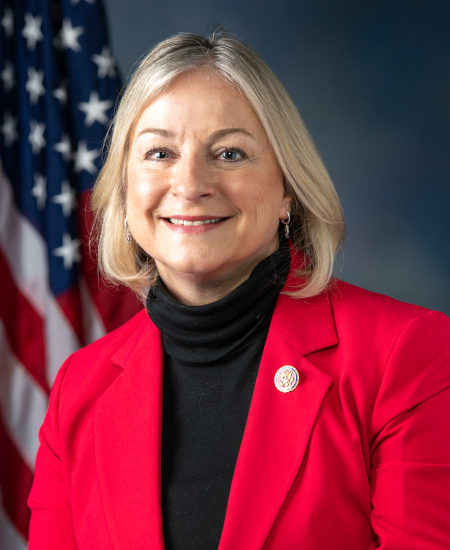
Rep. Susan Wild
Sponsored bills
Safe Disposal of Opioids Act of 2021 This bill directs the Department of Justice to award grants to establish or maintain disposal sites for unwanted prescription medications. Additionally, the bill imposes a fee on the sale of an active opioid by the manufacturer, producer, or importer. The Department of Health and Human Services must establish a mechanism to provide discounts to patients to ensure that they do not pay the fee.
Harlem Hellfighters Congressional Gold Medal Act This bill provides for the award of a Congressional Gold Medal to the 369th Infantry Regiment, commonly known as the Harlem Hellfighters, in recognition of their bravery and outstanding service during World War I.
Puppies Assisting Wounded Servicemembers for Veterans Therapy Act or the PAWS for Veterans Therapy Act This bill implements a program and a policy related to service dog therapy for veterans. Specifically, the bill requires the Department of Veterans Affairs (VA) to implement a five-year pilot program to provide canine training to eligible veterans diagnosed with post-traumatic stress disorder as an element of a complementary and integrative health program. Eligible veterans are those who are enrolled in the VA health care system and have been recommended for participation by a qualified mental health care provider or clinical team. The VA must seek to enter agreements containing specified elements with accredited nongovernmental entities that have demonstrated ability to provide canine training. Veterans who participate in the program are authorized to adopt the dog they assisted in training if their health provider determines it is in the best interest of the veteran. The VA must establish processes to document and track the progress of participating veterans with respect to health benefits and improvements. The Government Accountability Office must brief Congress and submit a report on the program. The bill also authorizes the VA to provide service dogs to veterans with mental illnesses, regardless of whether they have a mobility impairment.
Preserving Patient Access to Home Infusion Act This bill specifically includes pharmacy services as part of covered home infusion therapy under Medicare, and specifies that certain payment components still apply regardless of whether or not a qualified supplier is physically present in the beneficiary's home. The bill also allows nurses and physician assistants to establish and review the plan of care for home infusion therapy.
Migratory Bird Protection Act of 2021 This bill prohibits the incidental taking (e.g., capturing or killing) of migratory birds by commercial activities unless the activity is authorized under a permit or is identified as posing de minimis risk to migratory birds. The U.S. Fish and Wildlife Service (USFWS) must regulate such incidental taking, including by (1) issuing general permits for certain industries, (2) creating a mitigation fee for any incidental taking of migratory birds, and (3) identifying categories of de minimis risk activities that are exempt from liability for the taking of migratory birds. In addition, the USFWS must establish and maintain a research program (1) to evaluate the impacts of commercial activities on birds, (2) to evaluate the effectiveness of best management practices and technologies to avoid or minimize such impacts, and (3) to develop new or improved best management practices and technologies.
9/11 Responder and Survivor Health Funding Correction Act This bill increases funding for and otherwise modifies a federal program that provides medical monitoring and treatment to responders and survivors who suffer from health conditions related to the September 11, 2001, attacks on the World Trade Center. Among the changes, the bill allows certain health care providers other than physicians to determine whether an individual's health condition is related to the attacks, and it establishes a research program to study the impacts of the attacks on health and educational outcomes of individuals who were 21 years of age or younger when the attacks occurred.
Children's Mental Health Infrastructure Act of 2021 This bill provides funding through FY2026 to the Health Resources and Services Administration for grants to improve the capacity of children's hospitals to provide pediatric behavioral health services, including by modernizing sites of care and enhancing telehealth capabilities.
Helping Kids Cope Act of 2021 This bill provides funding through FY2026 to the Health Resources and Services Administration (HRSA) for grants to enhance access to and provider training in pediatric behavioral health care. Specifically, HRSA must award grants to pediatricians, children's hospitals, and other providers to support pediatric behavioral health integration and coordination within communities. Grant-funded activities may include hiring community navigators to assist families in accessing appropriate services, incorporating behavioral health services in pediatric practices, and delivering services via telehealth. In addition, HRSA must award grants to children's hospitals to expand training for providers in the pediatric behavioral health workforce.
Food Labeling Modernization Act of 2021 This bill imposes additional labeling requirements for food and addresses related issues. A food intended for human consumption must include on its principal display panel a summary of nutritional information using a system that (1) clearly distinguishes between products of greater or lesser nutritional value; and (2) uses standardized symbols to provide warning about products that are high in certain substances, such as trans fats. The Food and Drug Administration (FDA) must promulgate regulations establishing the requirements for such a system. Labels that use certain terms, such as whole wheat , fruit , or vegetable , must include additional information, such as the amount or quantity of that item in the food. The FDA must promulgate certain regulations relating to the use of the terms natural or healthy on food labels. The bill also imposes labeling requirements for certain foods that contain added coloring, added flavoring, phosphorus, caffeine, gluten, allulose, polydextrose, sugar alcohols, or isolated fibers. The FDA may, by regulation, deem a food ingredient to be a major food allergen. The FDA must also impose certain restrictions on the types of beverages that may be identified as infant formula or formula. The FDA must require food manufacturers to submit all information on the label of a food offered for sale in package form and update such submissions as necessary. The information must be made available in a public database on the FDA's website.