

Brycen Gray and Ben Price COVID-19 Cognitive Research Act This bill directs the National Science Foundation (NSF) to award competitive, merit-reviewed grants to eligible entities, including through the RAPID funding mechanism, to support interdisciplinary research on the disruption of regular cognitive processes associated with both short-term and long-term COVID-19 infections, including with respect to children and adolescents. No later than 45 days after the enactment of this bill, the NSF shall enter into an agreement with the National Academies of Sciences, Engineering, and Medicine to study and produce a report on the disruption of cognitive processes associated with COVID-19 infection.
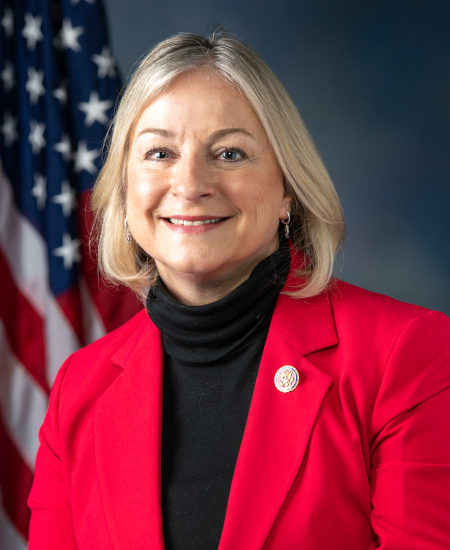
Rep. Susan Wild
Sponsored bills
Maddy summaryHRES 1282 is a non-binding House resolution expressing support for designating July as "Disability Pride Month." It recognizes that over 61 million U.S. adults live with disabilities and connects the designation to the anniversary of the Americans with Disabilities Act (signed July 26, 1990). The resolution urges Americans to observe the month with celebrations and actively work to prevent discrimination against people with disabilities. It does not create new laws or funding but formally endorses public recognition of disability pride.
Euro-Atlantic Solidarity and Major Democratic Ally Act of 2022 This bill establishes a new category under the Foreign Assistance Act of 1961, major democratic allies , giving certain countries a priority status in U.S. transfers of defense articles. The bill also requires the State Department to appoint a Special Advisor for Major Non-NATO Allies and Major Democratic Allies and requires U.S. representatives to NATO to advocate for the accession of Ukraine and Georgia to NATO.
No Shame at School Act of 20 22 This bill establishes requirements for the treatment of a child who is participating in the National School Lunch Program or the School Breakfast Program and owes unpaid school meal fees. It also requires local educational agencies to certify certain children (e.g., homeless children) as categorically eligible for free lunches or breakfasts without an application.
Right to Contraception Act This bill sets out statutory protections for an individual's right to access and a health care provider's right to provide contraception and related information. Contraception refers to an action taken to prevent pregnancy, including the use of contraceptives (i.e., a device or medication used to prevent pregnancy), fertility-awareness based methods, and sterilization procedures. Generally, the bill prohibits measures that single out and impede access to contraception and related information. However, a party may defend against a claim that a measure violates the bill's prohibitions by demonstrating, through clear and convincing evidence, that the measure significantly advances access to contraception and cannot be achieved through less restrictive means. The Department of Justice, individuals, or health care providers may bring a lawsuit to enforce this bill, and states are not immune from suits for violations.
No Tax Breaks for Union Busting (NTBUB) Act This bill denies employers a tax deduction for any expenditures incurred for attempting to influence their employees with respect to labor organizations or labor organization activities, such as elections, labor disputes, and collective actions. The bill requires employers to report on their attempts to influence their employees with respect to labor organizations and their activities.
Elizabeth Dole Home and Community Based Services for Veterans and Caregivers Act of 2022 or the Elizabeth Dole Home Care Act This bill addresses home care and caregiver programs for veterans.
Return Home to Housing Act This bill increases the maximum rate of per diem payments provided by the Department of Veterans Affairs to entities (i.e., grant recipients or authorized entities) that furnish services and transitional housing to homeless veterans.
Ensuring Women's Right to Reproductive Freedom Act This bill prohibits anyone acting under state law from interfering with a person's ability to access out-of-state abortion services. ( Abortion services includes the use of any drugs that are approved to terminate pregnancies and any health care services related to an abortion, whether or not provided at the same time or on the same day.) Specifically, the bill prohibits any person acting under state law from preventing, restricting, impeding, or retaliating against health care providers who provide legal abortion services to out-of-state residents, any person or entity who helps health care providers to provide such services, any person who travels to another state to obtain such services, any person or entity who helps another person travel to another state to obtain such services, or the movement in interstate commerce of drugs that are approved to terminate pregnancies. The Department of Justice may enforce this bill through civil actions; the bill also establishes a private right of action for violations.
This resolution calls on the government of Rwanda to immediately release Paul Rusesabagina on humanitarian grounds and permit him to return safely to the United States. The resolution calls on the government of Rwanda to ensure Paul Rusesabagina receives access to appropriate, qualified medical professionals and all medical care necessary to guarantee his physical integrity and psychological well-being. The resolution also urges the U.S. government in all interactions with the government of Rwanda to raise the case of Paul Rusesabagina and to press for his immediate release on humanitarian grounds. Finally, the resolution expresses support to the family of Paul Rusesabagina and their commitment to bringing him home.