

Maddy summaryHR 4550 creates a federal grant program to help public elementary, secondary, and preschool schools recruit and retain paraprofessionals (school support staff like teaching assistants). The bill directs the Secretary of Education to fund state education agencies, which then distribute subgrants to schools - prioritizing those serving high numbers of low-income students - to support activities like mentoring programs, professional development, and wage increases or certification assistance (e.g., for special education or English learner support). States must report annually on wage baselines, paraprofessional numbers, and program outcomes. This bill directly affects schools and paraprofessionals, with funding authorized for fiscal years 2024-2028.
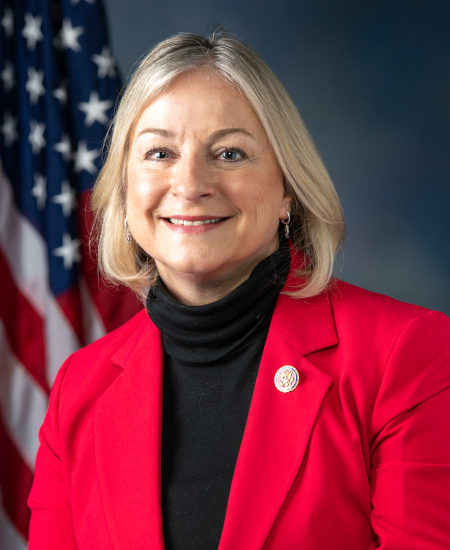
Rep. Susan Wild
Sponsored bills
Maddy summaryThe DISCLOSE Act of 2023 would increase transparency in political spending by requiring organizations making campaign-related disbursements over $10,000 to disclose the names and addresses of their major donors, including the top five funders for political communications. It would close loopholes allowing foreign nationals to secretly fund election activities through corporations or other entities by expanding the definition of prohibited foreign contributions. The bill would mandate "stand by every ad" disclosure requirements for political communications across all media, including audio, video, and internet ads, requiring clear identification of funders. It would also require reporting of disbursements related to Federal judicial nominations, which currently aren't subject to disclosure requirements. These provisions would apply to corporations, labor organizations, and certain nonprofits that engage in political activity.
Maddy summaryThe IDEA Full Funding Act (HR 4519) mandates specific annual increases in federal funding for special education programs under the Individuals with Disabilities Education Act (IDEA). It requires Congress to appropriate increasing amounts each fiscal year - from $5.87 billion for 2024 up to $55.53 billion for 2033 - to reach 40% of the national average per-pupil expenditure for public schools by 2033. This directly affects all public school districts serving students with disabilities, as federal IDEA funding supports their special education services. The bill sets fixed dollar amounts or percentage targets (whichever is greater) for each fiscal year, aiming to gradually close the long-standing gap between promised and actual federal funding. It does not alter eligibility for services but mandates higher, phased funding levels to meet the 40% target.
Maddy summaryHR 4426 extends the Radiation Exposure Compensation Act (RECA) fund for 19 years (up from 2 years) and expands eligibility for compensation to individuals exposed to radiation from nuclear testing and uranium mining. The bill updates eligibility criteria for claims related to leukemia and other specified diseases, including adding chronic lymphocytic leukemia to the list of covered conditions. It creates new provisions for uranium mining workers, including combined work histories and allows the use of affidavits to substantiate claims. The bill also expands medical benefits eligibility and establishes a $3 million annual grant program to study the epidemiological impacts of uranium mining on non-occupationally exposed individuals, including family members of miners.
Maddy summaryHR 4412, the Tick Identification Pilot Program Act of 2023, creates a federal pilot program allowing states to apply for grants to establish tick identification services. Residents would submit photos of ticks online with location and date details, and tick experts would identify species, assess disease risk, and provide prevention advice within 72 hours. States implementing the program must maintain a database of encounters, including location, tick identification, and educational materials provided. The pilot prioritizes states with high Lyme disease cases and runs through 2027, with annual CDC reports to Congress on collected data.
Maddy summaryHR 4413, the Stamp Out Lyme Disease Act, authorizes the U.S. Postal Service to sell a special semipostal stamp (where the price exceeds regular postage) to fund Lyme disease research. The extra revenue from stamp sales will be sent directly to the National Institute of Allergy and Infectious Diseases (NIAID) for tick-borne illness research, with funds specifically protected from being used to offset NIAID's regular budget. The stamp would be available for at least six years, beginning one year after the bill becomes law, and the proceeds cannot reduce other federal funding for NIAID. This bill creates a new public funding mechanism for research, directly affecting those who purchase the stamp and the NIAID research programs.
Maddy summaryHRES 566 is a non-binding resolution introduced by Representative Correa in 2023 that expresses the House of Representatives' support for recognizing and encouraging everyday acts of kindness as a means to strengthen community bonds and societal resilience. It does not create new laws or policies but symbolically affirms that kindness - defined as selfless actions without expectation of return - can improve social connections, health, and conflict resolution. The resolution serves as a statement of shared values rather than a concrete policy change.
Maddy summaryThis bill establishes a federal grant program to fund high-impact tutoring in K-12 schools, primarily targeting students in schools with high poverty (Title I schools) and those experiencing significant academic declines since the pandemic. It requires tutoring to meet specific standards: at least 30 minutes per student, three days per week, with a 3:1 student-to-tutor ratio, and alignment with classroom instruction. States receive 80% of funds to award subgrants to local schools, which must submit detailed plans, provide monthly progress reports, and partner with research organizations to evaluate program effectiveness. The program prioritizes schools with the greatest academic need and mandates accountability through annual reviews of student outcomes by state agencies and an independent Advisory Board.
Maddy summaryHR 4422 (Global Respect Act) requires the President to publicly identify foreign officials responsible for violence, torture, or arbitrary detention against LGBTQI individuals and block their entry to the U.S., including revoking visas for them and their immediate families. It mandates annual reporting to Congress on the list of sanctioned individuals, the reasons for additions/removals, and efforts to coordinate with other countries on similar sanctions. The bill also updates U.S. human rights reporting requirements to explicitly include data on violence and discrimination against LGBTQI people worldwide. These measures aim to increase accountability for human rights violations against LGBTQI individuals without advocating for specific policy outcomes.
Maddy summaryHR 4340, the Therapeutic Fraud Prevention Act of 2023, prohibits paid providers from offering conversion therapy - defined as any commercial service attempting to change a person's sexual orientation or gender identity - and bans advertising that claims such therapy is effective or harmless. It directly affects therapists, counselors, or organizations offering paid conversion therapy services, including those advertising such services. Key provisions make it unlawful to provide, advertise, or facilitate paid conversion therapy, with enforcement led by the Federal Trade Commission (FTC) under consumer protection laws and allowing states to pursue civil actions. The bill explicitly excludes supportive care for gender transition or identity exploration from its definition of prohibited therapy.