Federal Firefighter Pay Equity Act This bill modifies certain pay calculations that are used to determine retirement and annuity benefits for federal firefighters. Specifically, the bill adjusts the method of determining the average pay of a federal firefighter by adding one-half of a firefighter's basic hourly rate multiplied by the number of overtime hours included as part of such firefighter's regular tour of duty.
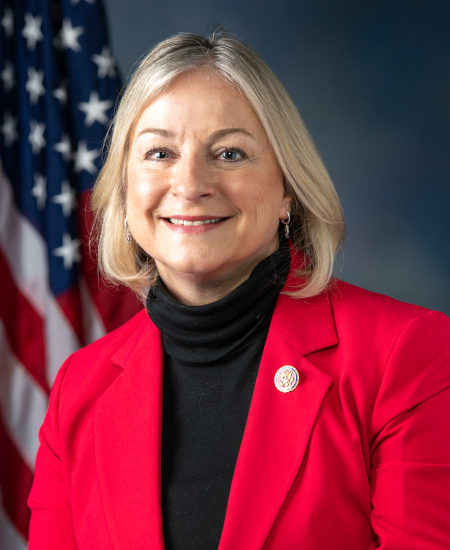
Rep. Susan Wild
Sponsored bills
COVID-19 Student Loan Relief Extension Act This bill extends certain temporary relief related to federal student loans and expands eligibility for such relief to additional types of loans. Specifically, the bill extends the current suspension of payments due on federal student loans to 30 days after the end of the COVID-19 (i.e., coronavirus disease 2019) public health emergency. It also extends the suspension of interest due on these loans until the economy shows specified initial signs of recovery. Further, the bill expands eligibility for temporary relief on federal student loans to include Federal Family Education Loans (FFELs) and Federal Perkins Loans that are not held by the Department of Education (ED) and certain health profession and nursing loans. (Currently, these temporary relief provisions are only applicable to certain Federal Direct Loans and FFELs that are held by ED.) Additionally, the bill makes this eligibility retroactive to March 13, 2020. Finally, ED and the Department of Health and Human Services must carry out a program, beginning on August 1, 2021, to provide at least six notices to borrowers that normal payment obligations will resume.

Civics Learning Act of 2021 This bill expands the use of American History and Civics Education—National Activities grants to prioritize innovative civics learning and teaching. Specifically, the bill expands the allowable uses of these grants to include before-, during-, and after-school activities and extracurricular activities; activities that include service learning and community service projects that are linked to school curriculum; activities that encourage and support student participation in school governance; and online and video game-based learning. Further, the Department of Education must ensure that specified percentages of grant funds are awarded on a diverse basis to eligible entities (e.g., institutions of higher education) that serve students and teachers at elementary schools, middle schools, and high schools.
Excluding Pandemic Unemployment Compensation from Income Act This bill excludes from gross income, for income tax purposes, unemployment compensation paid under provisions of the Coronavirus Aid, Relief, and Economic Security Act or the CARES Act relating to the COVID-19 (i.e., coronavirus disease 2019) pandemic. It also disregards such compensation for purposes of determining eligibility for federally-assisted programs.
Incentivizing Medicaid Expansion Act of 2021 This bill provides an enhanced federal matching rate to every state that expands Medicaid coverage for individuals who are newly eligible under the Patient Protection and Affordable Care Act, regardless of when such expansion takes place. Under current law, the enhanced Federal Medical Assistance Percentage (FMAP) is equivalent to 100% in 2014 through 2016, 95% in 2017, 94% in 2018, 93% in 2019, and 90% thereafter. The bill retains this enhanced FMAP, but bases it on a term of years rather than on specific dates. The bill applies retroactively.
Nurses Certification And Recognition of Experience Act of 2021 or the Nurses CARE Act of 2021 This bill expands qualifying training and competency requirements for nurse aides in Medicare skilled nursing facilities (SNFs) and Medicaid nursing facilities (NFs) for nurse aides who initially train and work during the public health emergency relating to COVID-19 (i.e., coronavirus disease 2019). Currently, SNFs and NFs may not hire nurse aides for longer than four months unless they meet certain training and certification requirements. The Centers for Medicare & Medicaid Services has waived some of these requirements during the emergency period so as to allow facilities to maintain adequate staffing levels. The bill allows individuals who complete a training program, competency assessment, and at least 80 hours of supervised work experience as a temporary nurse aide during the emergency period, and who meet other specified competency requirements, to qualify for prolonged work as nurse aides in SNFs and NFs beyond the emergency period.
Transparent Representation Upholding Service and Trust in Congress Act or the TRUST in Congress Act This bill requires a Member of Congress, as well as any spouse or dependent child of a Member, to place specified investments into a qualified blind trust (i.e., an arrangement in which certain financial holdings are placed in someone else's control to avoid a possible conflict of interest) until 180 days after the end of their tenure as a Member of Congress.
This resolution expresses the sense of the House of Representatives that Congress should ensure that the U.S. Postal Service is not privatized and remains an independent establishment of the federal government.
SAFE Workers Act or the Secure And Fair Elections for Workers Act This bill requires the National Labor Relations Board (NLRB) to provide employees with the ability to vote remotely by telephone or the internet in union representation elections during the COVID-19 (i.e., coronavirus disease 2019) public health emergency. The bill further permits the NLRB's use of appropriations to issue directives or regulations providing for electronic voting methods.
Officer Eugene Goodman Congressional Gold Medal Act This bill directs the Speaker of the House of Representatives and the President pro tempore of the Senate to arrange for the presentation of a Congressional Gold Medal to U.S. Capitol Police Officer Eugene Goodman for his actions to protect the Senate chamber during the security breach at the U.S. Capitol on January 6, 2021.