Ghost Army Congressional Gold Medal Act This bill directs the Speaker of the House of Representatives and the President pro tempore of the Senate to award a Congressional Gold Medal to the 23rd Headquarters Special Troops and the 3133d Signal Service Company, known as the Ghost Army , collectively, in recognition of its service during World War II.
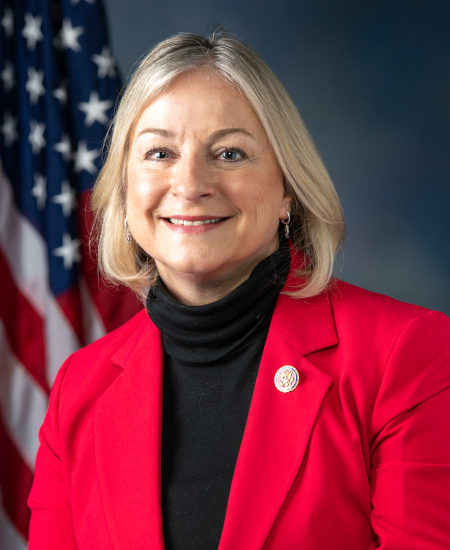
Rep. Susan Wild
Sponsored bills
Supporting Early-Career Researchers Act This bill authorizes the National Science Foundation to establish a two-year pilot program to award grants to highly qualified early-career investigators to carry out an independent research program at the institution of higher education chosen by such investigator, to last for a period not greater than two years. The NSF shall select grantees from among citizens, nationals, and lawfully admitted permanent resident aliens of the United States. The NSF shall conduct program outreach to recruit fellowship applicants (1) from all regions of the country; (2) from historically underrepresented populations in the fields of science, technology, engineering, and mathematics (STEM); and (3) who graduate from or intend to carry out research at a variety of types of institutions of higher education, including Historically Black Colleges and Universities.
This resolution expresses support for the designation of DIPG Awareness Day. DIPG is diffuse intrinsic pontine glioma, a terminal childhood brain cancer.
Credit for Caring Act of 2021 This bill allows an eligible caregiver a tax credit of up to $5,000 for 30% of the cost of long-term care expenses that exceed $2,000 in a taxable year. The bill defines eligible caregiver as an individual who has earned income for the taxable year in excess of $7,500 and pays or incurs expenses for providing care to a spouse or other dependent relative with long-term care needs.
Institutional Grants for New Infrastructure, Technology, and Education for HBCU Excellence Act or the IGNITE HBCU Excellence Act This bill establishes a grant program to support long-term improvements of historically Black colleges and universities (HBCUs) and graduate programs at HBCUs. Specifically, the bill requires the Department of Education (ED) to award grants to HBCUs to improve campus facilities. A recipient must use grant funds for certain activities, such as constructing or renovating facilities, carrying out major repairs, and strengthening the safety and security of a campus. Any new construction, modernization, or renovation projects must meet building code and energy and water conservation requirements. Further, HBCUs must seek to procure contracts from certain small businesses, including those owned and controlled by veterans and service-disabled veterans. The bill prohibits the use of grant funds for specified activities, including for the payment of routine and predictable maintenance costs, minor repairs, and utility bills. The Government Accountability Office must study the implementation of the grant program. The bill also requires ED to repay the outstanding balance of principal, interest, fees, and costs and any related reimbursements for certain capital financing loans.
Medicare for All Act of 2021 This bill establishes a national health insurance program that is administered by the Department of Health and Human Services (HHS). Among other requirements, the program must (1) cover all U.S. residents; (2) provide for automatic enrollment of individuals upon birth or residency in the United States; and (3) cover items and services that are medically necessary or appropriate to maintain health or to diagnose, treat, or rehabilitate a health condition, including hospital services, prescription drugs, mental health and substance abuse treatment, dental and vision services, and long-term care. The bill prohibits cost-sharing (e.g., deductibles, coinsurance, and copayments) and other charges for covered services. Additionally, private health insurers and employers may only offer coverage that is supplemental to, and not duplicative of, benefits provided under the program. Health insurance exchanges and specified federal health programs terminate upon program implementation. However, the program does not affect coverage provided through the Department of Veterans Affairs or the Indian Health Service. The bill also establishes a series of implementing provisions relating to (1) health care provider participation; (2) HHS administration; and (3) payments and costs, including the requirement that HHS negotiate prices for prescription drugs. Individuals who are age 18 or younger, age 55 or older, or already enrolled in Medicare may enroll in the program starting one year after enactment of this bill; other individuals may buy into the program at this time. The program must be fully implemented two years after enactment.

Journalism Competition and Preservation Act of 2021 This bill creates a four-year safe harbor from antitrust laws for print, broadcast, or digital news companies to collectively negotiate with online content distributors (e.g., social media companies) regarding the terms on which the news companies' content may be distributed by online content distributors.
National Child Identification Act of 2021 This bill authorizes the Department of Justice to award grants for state attorneys general to distribute in-home fingerprint and DNA identification kits to parents of children who attend kindergarten or elementary school. The kits may be turned over to law enforcement to assist in locating missing or trafficked children.
Resources for Victims of Gun Violence Act of 2021 This bill establishes the Advisory Council to Support Victims of Gun Violence. Among other things, the advisory council must assess the needs of victims of gun violence and disseminate information about helpful resources.
Lobbyist Loophole Closure Act This bill broadens the scope of lobbying activities that trigger lobbyist registration and disclosure requirements. Specifically, it expands lobbying activities to include legislative, political, and strategic counseling services.