

Maddy summaryThis bill amends veterans' burial benefit rules to include veterans who die at home while receiving hospice care through the Department of Veterans Affairs (VA). It directly affects veterans who were in VA hospice care at home and had previously received VA hospital or nursing home care. The key change adds a new eligibility category, allowing burial allowances for these veterans if their hospice care followed VA hospital or nursing home care. This expands existing benefits without changing benefit amounts or creating new costs. The amendment retroactively applies to the 2020 law that originally created the related provisions.
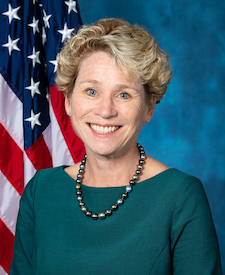
Rep. Chrissy Houlahan
Sponsored bills
Maddy summaryHR 2665 delays Medicaid payment reductions for safety net hospitals by two years, changing the effective date from 2024 to 2026 under Section 1923(f)(7)(A) of the Social Security Act. This bill directly affects hospitals that serve high numbers of low-income and uninsured patients, providing them with additional time before facing reduced federal Medicaid payments. The key mechanism is a technical amendment to existing law, postponing an already scheduled payment adjustment without altering funding levels or eligibility. As a procedural bill, it does not create new programs or change hospital requirements.
Maddy summaryThe VA Same-Day Scheduling Act of 2023 requires the Department of Veterans Affairs to schedule appointments for enrolled veterans during the same phone call when they request care. This applies to veterans enrolled in the VA healthcare system who contact the VA by phone to request appointments. The law mandates that the VA must complete the scheduling during the call - without delay or future scheduling - regardless of the appointment date. The requirement takes effect 120 days after the bill is enacted.
Maddy summaryHR 2584, the SAVE Act, creates a new federal criminal offense for assaulting or intimidating hospital employees while they're performing their duties, punishable by up to 10 years in prison, with enhanced penalties for using weapons, causing injury, or during public emergencies. The bill authorizes $25 million annually in federal grants to hospitals for violence prevention programs, including staff training, security technologies like panic buttons and video surveillance, and coordination with law enforcement. It defines "hospital" broadly to include various medical facilities such as long-term care hospitals, rehabilitation facilities, and critical access hospitals. The legislation directly affects hospital workers and medical facilities by establishing federal criminal penalties for violence against employees and providing funding to improve workplace safety. The law aims to address the rising problem of workplace violence against healthcare workers, which the bill states has increased since 2011.
Maddy summaryHR 2630, the Safe Step Act, requires group health plans and health insurance issuers to establish a clear, transparent process for patients or their doctors to request exceptions to medication step therapy protocols. These protocols typically force patients to try cheaper drugs first before covering more expensive alternatives. The bill mandates that plans must approve exceptions when prior treatments failed, delay would cause serious harm, a treatment is unsafe, or a patient is stable on a previously approved drug, with strict 72-hour (or 24-hour in emergencies) decision timelines. It also requires plans to publish the exception process online and limit documentation requests to only necessary medical information. This law directly affects health insurers, employers offering health plans, and patients using step therapy for prescription drugs.
Maddy summaryHR 2597, the Reserve Component Parental Leave Parity Act, extends paid parental leave for part-time military reservists to match active-duty standards. It increases reserve members' paid leave from six days to twelve days for birth, adoption, or placement of a child, and allows unused leave to be taken after the initial one-year period under specific circumstances like operational demands. The bill also updates retirement credit rules to include parental leave (replacing "maternity leave") for calculating retired pay. These changes apply to parental leave beginning on or after the law's enactment date.
Maddy summaryThis bill requires the Census Bureau to create a new separate category in the Current Population Survey for "Postsecondary Nondegree Awardees" within one year of enactment. It directly affects individuals who hold a high school diploma plus a recognized non-degree credential (like a trade certificate), but not an associate or bachelor's degree, by changing how their educational attainment is tracked. The key mechanism is mandating this specific data category to better measure vocational education outcomes. This change impacts how workforce data is collected and reported, not the vocational programs themselves.
Helping Kids Cope Act This bill establishes programs within the Health Resources and Services Administration (HRSA) to support pediatric behavioral health care. Specifically, HRSA must award grants, contracts, or cooperative agreements to eligible health care providers for (1) integrating and coordinating pediatric behavioral health care within communities, and (2) pediatric mental health and substance use disorder workforce training. Additionally, HRSA must award grants, contracts, or cooperative agreements to hospitals or rural health clinics that predominately treat individuals under age 21 for expanding their capacity to provide pediatric behavioral health services. Recipients may use awards for constructing or modernizing sites of care and enhancing digital infrastructure, telehealth capabilities, or other improvements to patient care infrastructure.
Maddy summaryThis bill requires the Department of Homeland Security (DHS) to assess how transnational criminal organizations use social media platforms and related services to recruit individuals in the U.S., particularly near borders, for illicit activities like drug trafficking and human smuggling. DHS must submit a national strategy within one year to improve coordination between federal agencies, state/local law enforcement, and major social media platforms (defined as "covered operators") to counter this recruitment. The strategy mandates a voluntary reporting system for platforms to share information about cartel activity, with DHS designating a point of contact in U.S. Customs and Border Protection to disseminate intelligence for prevention and law enforcement. It directly affects social media companies, border communities, and federal agencies involved in counter-narcotics and border security efforts.
Resident Physician Shortage Reduction Act of 2023 This bill increases the number of residency positions eligible for graduate medical education payments under Medicare for qualifying hospitals, including hospitals in rural areas and health professional shortage areas. Current law provides for an increase of up to 200 positions per fiscal year beginning in FY2023, with a total increase of 1,000 positions; each hospital may receive up to 25 additional positions. Current law also provides for an additional increase of up to 200 positions for FY2026, with at least 100 of these positions for psychiatry or related specialties; each hospital may receive up to 10 additional positions. The bill provides for an additional increase of 2,000 positions per fiscal year from FY2025-FY2031; during this period, each hospital may receive up to 75 additional positions in total under the bill and current law. Additionally, one-third of the positions that are made available under the bill must be allocated to hospitals that are already operating above applicable resident limits. The bill also requires the Government Accountability Office to report on strategies to increase the diversity of the health professional workforce, including with respect to representation from rural, low-income, and minority communities.