

Maddy summaryHouse Resolution 1208 expresses the House of Representatives' support for honoring Earth Day and its historical role in promoting environmental protection and action. It encourages American citizens to engage in environmental stewardship and urges the President and the U.S. Government to take immediate action to address climate change, environmental injustices, and rejoin international climate agreements.
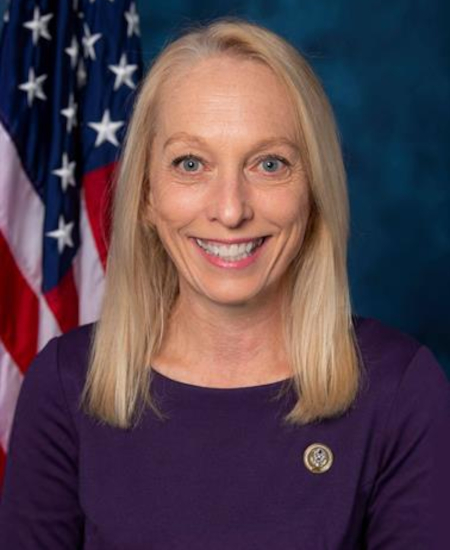
Rep. Mary Gay Scanlon
Sponsored bills
Maddy summaryThe Civics Learning Act of 2026 amends the Elementary and Secondary Education Act to expand federal funding and support for civics education in K-12 schools. The bill directs the Department of Education to distribute $70 million in grants to schools, with at least 60 percent reserved for elementary and middle schools and a preference for programs that include hands-on civic engagement, constitutional history, and civil rights education. It also requires grant recipients to submit annual reports detailing how they meet civics education goals and ensures geographic diversity in funding distribution across urban, suburban, and rural areas.
Maddy summaryThis bill establishes a grant program to help vulnerable mothers and babies in areas with high climate-related health risks, such as extreme heat and air pollution. It directs the Department of Health and Human Services to award up to $105 million over four years to community groups, healthcare providers, and local organizations for initiatives that provide cooling resources, health education, and support services. The program prioritizes areas with high rates of maternal and infant health disparities and requires grantees to address racial and ethnic inequities. Additionally, the bill creates a research consortium at the National Institutes of Health to study climate impacts on birth outcomes and funds training programs for health profession schools to better prepare providers for these risks.
Maddy summaryThis bill amends Federal Rule 48(a) of the Federal Rules of Criminal Procedure to clarify when prosecutors can request a dismissal of criminal charges. It allows the government to move to dismiss an indictment, information, or complaint based on the court's assessment of justice, but prohibits dismissing a case during trial unless the defendant agrees. The change directly affects federal prosecutors, judges, and criminal defendants by restricting the timing of government-led dismissals. The legislation aims to prevent prosecutors from withdrawing charges mid-trial without the accused's consent, ensuring greater procedural stability in federal criminal cases.
Maddy summaryThe Momnibus Act is a comprehensive legislative bill designed to improve maternal health outcomes across the United States by addressing social determinants of health, expanding access to care, and reducing disparities among pregnant and postpartum individuals. The bill establishes a federal task force to coordinate efforts between agencies and stakeholders to eliminate preventable maternal mortality and severe morbidity, while providing sustained funding to community-based organizations to address nonclinical factors like housing, nutrition, and transportation. Key provisions include extending WIC eligibility to 24 months postpartum, creating grants to grow and diversify the perinatal workforce, implementing respectful maternity care training for all healthcare employees, and establishing compliance programs to track and address bias in maternity care settings. The legislation also includes specific measures for incarcerated mothers, veterans, and vulnerable populations affected by climate change, alongside funding for maternal mental health services and technology-enabled care models to expand access in underserved areas.
Maddy summaryThis resolution expresses the sense of the House of Representatives that former President Donald Trump, his Special Envoy Steven Witkoff, and all federal officials must comply with the Constitution's Foreign Emoluments Clause. It specifically calls for them to immediately turn over to the Department of the Treasury any payments received from the United Arab Emirates or other foreign states. Furthermore, the resolution urges them to divest from all business interests linked to foreign governments, including those tied to United Arab Emirates officials.
Maddy summaryThis resolution expresses the House of Representatives' opinion that the Department of Justice and other federal agencies should not administratively settle legal claims for money filed against the United States by a sitting President, specifically referencing President Donald Trump. The House believes that such settlements would violate the Domestic Emoluments Clause of the Constitution, which prevents a President from receiving payments from the government beyond their official salary. Therefore, the resolution advises the Department of Justice to refuse any administrative settlement of these claims, while clarifying that a President can still pursue lawsuits in independent courts. This position directly affects how the Department of Justice would handle such claims from a President.
Maddy summaryThis House Resolution supports designating the week of April 11 through April 17, 2026, as "Black Maternal Health Week." The resolution aims to bring national attention to the maternal and reproductive health crisis in the United States, specifically highlighting the importance of reducing maternal mortality and morbidity among Black women and birthing people.
Maddy summaryThe Patient Safety and Whistleblower Protections Act aims to protect healthcare practitioners from retaliation by healthcare facilities when they report patient safety concerns. The bill prohibits facilities from taking adverse employment actions against practitioners who communicate issues such as quality of care, staffing, or equipment sufficiency to supervisors, state authorities, government officials, or, after 90 days, the news media. It allows practitioners to file individual or class action lawsuits for retaliation, seeking actual damages, attorney's fees, and punitive damages. Additionally, the bill voids contractual provisions that restrict reporting patient safety concerns and requires Medicare-participating facilities to establish anonymous reporting mechanisms and investigation processes.
Maddy summaryThe SSI Savings and Efficiency Act of 2026 proposes to change how income is calculated for recipients of Supplemental Security Income (SSI). The bill amends the Social Security Act to exclude "support or maintenance furnished in kind," such as free rent or food, from being counted as income for SSI purposes. This means that individuals receiving SSI would no longer have their benefits reduced because they receive non-cash assistance from others. The legislation directly affects low-income individuals who depend on SSI and receive such in-kind support, ensuring their benefit amounts are not decreased as a result.