

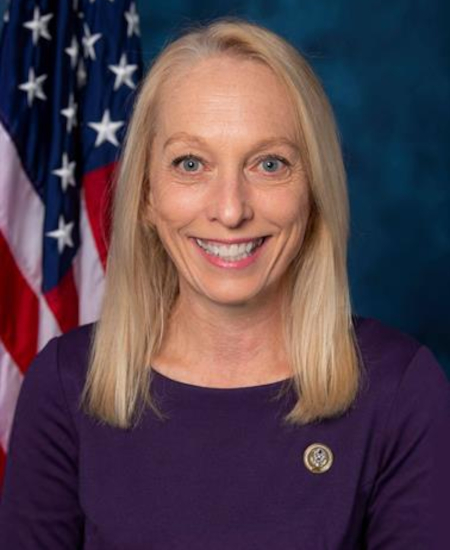
Photo of Mary Gay Scanlon
D United States House · District 5 · Pennsylvania On the 2026 ballot

Rep. Mary Gay Scanlon

Compare
Total votes
2,837
all sessions
Attendance
97%
73 missed
Near the chamber average
With party
98%
of cast votes
Higher than 82% of chamber peers
Bipartisan score
1%
crosses aisle rarely
Lower than 82% of chamber peers
Sponsored
1,739
bills & resolutions
Higher than 79% of chamber peers
Committees
5
assignments
1,739 bills and resolutions

Sponsored bills

Total
1,739
Primary
81
Co-sponsor
1,658
This page
1,739
matching current filters
Primary HRES 689
In committee · United States House · Lead sponsor
Expressing the support of the House of Representatives for the designation of "Public Radio Music Day" and its deep appreciation for the role of public radio music stations in serving listeners, musicians, and hundreds of communities in the United States.

Maddy summaryHRES 689 is a symbolic resolution designating October 25, 2023, as "Public Radio Music Day" and expressing the House's appreciation for public radio music stations. It directly recognizes the role of over 697 noncommercial stations serving 25.5 million weekly listeners across all 50 states, Washington D.C., Puerto Rico, and Guam. The resolution highlights how these stations support local music scenes, preserve diverse genres (like jazz, classical, and folk), and serve as community cultural hubs through programming, artist support, and educational outreach. This is a non-binding gesture of recognition, not a policy change affecting laws or funding.

In committee Sep 14, 2023 0 co-sponsors
Co-sponsor HR 5456
In committee · United States House · Co-sponsor
No Tax Breaks for Union Busting (NTBUB) Act

Maddy summaryThe No Tax Breaks for Union Busting Act would deny tax deductions for employers who attempt to influence employees' decisions about union activities, including unfair labor practices like firing workers for organizing or using captive audience meetings. It targets expenses related to union-busting tactics, such as consulting fees and other costs used to sway workers' opinions about collective bargaining. Employers would need to report these expenses on tax returns and would no longer be able to deduct them from taxable income. The bill aims to prevent employers from using tax-deductible expenses to influence union elections, aligning with existing rules that deny tax deductions for political spending. It would apply to expenses incurred in taxable years beginning 240 days after enactment.

In committee Sep 14, 2023 1 co-sponsor
Co-sponsor HR 5433
In committee · United States House · Co-sponsor
Child Care Stabilization Act

Maddy summaryHR 5433, the Child Care Stabilization Act, provides $16 billion annually from 2024 to 2028 to stabilize the child care sector through grants administered by the Health and Human Services Secretary. It directly affects licensed child care providers by offering stable funding to cover operating costs, while supporting higher wages for early educators without raising family fees. Key provisions include expanding access to high-quality, affordable care - especially for infants/toddlers, rural communities, and children with disabilities - and addressing shortages in underserved areas. The funding builds on existing American Rescue Plan resources, aiming to strengthen the child care workforce and increase available options for working families.

In committee Sep 13, 2023 1 co-sponsor
Primary HR 5449
In committee · United States House · Lead sponsor
Stopping the Fraudulent Sales of Firearms Act

Maddy summaryHR 5449, the "Stopping the Fraudulent Sales of Firearms Act," amends federal law to specifically prohibit fraudulent firearm transactions. It adds a new provision (922(a)(10)) making it illegal to import, manufacture, or sell firearms using false claims or promises, and also bans transmitting communications about such fraudulent deals via wire, radio, or TV. This directly affects firearm dealers, sellers, and others involved in transactions who use deceptive practices. The bill increases penalties for these specific fraudulent acts by adding them to the list of violations under existing enforcement provisions (924(a)(1)(B)).

In committee Sep 13, 2023 0 co-sponsors
Co-sponsor HR 5428
In committee · United States House · Co-sponsor
No Tax Breaks for Union Busting (NTBUB) Act

Maddy summaryHR 5428, the No Tax Breaks for Union Busting (NTBUB) Act, prevents employers from deducting certain expenses related to influencing workers' decisions about union representation. It targets spending on tactics like anti-union meetings, workplace surveillance, or consultants during organizing campaigns, making these costs non-deductible for tax purposes. Employers must report such expenses on their tax returns, including details about the activities and amounts spent. The bill aims to remove tax incentives for employer interference in union elections, aligning with federal labor law protections for workers' collective bargaining rights.

In committee Sep 13, 2023 1 co-sponsor
Co-sponsor HR 5322
In committee · United States House · Co-sponsor
Time Off to Vote Act

Maddy summaryHR 5322, the Time Off to Vote Act, requires most private employers (with 25+ employees) to provide two consecutive hours of paid leave for employees to vote in federal elections. Employers must grant this leave upon request, can schedule it during early voting periods if permitted by state law, and cannot include lunch breaks in the leave period. The bill prohibits retaliation against employees who take this leave and ensures it does not affect accrued employment benefits. Violations could result in civil penalties up to $10,000 per offense, enforced by the Department of Labor.

In committee Sep 1, 2023 1 co-sponsor
Co-sponsor HR 4576
In committee · United States House · Co-sponsor
Safeguarding Domestic Energy Production and Independence Act of 2023

Maddy summaryThis bill creates a new $0.20 per credit system (adjustable for inflation) for conventional biofuel waivers under the Clean Air Act, directly affecting refiners and fuel producers with renewable fuel obligations. Credits must be used immediately for that year's compliance and cannot be resold or applied toward other biofuel requirements. Revenue from credit sales is split equally: one-third funds advanced biofuel investments, one-third supports agricultural diversification programs, and one-third flows into the Habitat and Wildlife Restoration Fund. This fund targets conservation in areas impacted by corn/soy expansion since 2007, managed with the National Fish and Wildlife Foundation.

In committee Aug 28, 2023 1 co-sponsor
Co-sponsor HR 5290
In committee · United States House · Co-sponsor
Voters on the Move Registration Act of 2023

Voters on the Move Registration Act of 2023 This bill requires the Consumer Financial Protection Bureau to develop, and specified agencies to distribute, a statement providing individuals with information on how to register to vote and their voting rights. This information must be provided to individuals upon their participation in certain rental assistance programs or application for certain residential mortgages.

In committee Aug 25, 2023 1 co-sponsor
Co-sponsor HR 5291
In committee · United States House · Co-sponsor
People Over Long Lines Act

Maddy summaryThe People Over Long Lines Act (POLL Act) requires states to develop public plans ensuring voting wait times don't exceed 30 minutes at polling places for federal elections, particularly addressing documented disparities where voters in communities of color wait significantly longer than others. It establishes standards for minimum voting systems, poll workers, and resources based on factors like population demographics, voter turnout, and needs of disabled or limited English proficiency voters. The bill provides $500 million annually in federal funding to help states implement these changes, creates a private right of action allowing voters to sue states for violations with penalties including $50 per hour of wait time, and mandates remedial plans for states with excessive wait times. The law applies to federal elections starting in 2025, with states required to comply by January 1, 2025.

In committee Aug 25, 2023 1 co-sponsor
Co-sponsor HR 5293
In committee · United States House · Co-sponsor
Youth Voting Rights Act

Maddy summaryHR 5293, the Youth Voting Rights Act, would improve voting access for young people aged 18-29 through several concrete changes. The bill requires public colleges and universities to serve as voter registration agencies, establishes pre-registration for 16-year-olds, mandates on-campus polling locations for all institutions of higher education, and prohibits age-based restrictions on voting by mail. It also requires states to accept student ID cards as valid voter identification and provides grants to states for youth voter engagement programs. The bill would collect data on voting trends by age to help identify barriers to youth participation. These changes aim to address systemic barriers that have led to lower youth voter turnout and higher ballot rejection rates among young voters.

In committee Aug 25, 2023 1 co-sponsor
Showing 701 to 710 of 1,739 bills
Previous 1 … 70 71 72 … 174 Next