

Maddy summaryHRES 793 is a resolution passed by the U.S. House of Representatives calling on Hamas to immediately release all 199 hostages taken during Hamas' October 7, 2023 attack on Israel. The resolution condemns Hamas for the attack, the taking of hostages, and threats against hostages, while stating that holding hostages violates international humanitarian law under the Geneva Conventions. It demands the immediate release of all hostages and expresses sympathy for victims and their families. As a symbolic resolution, it does not create legal obligations but formally expresses the House's position.
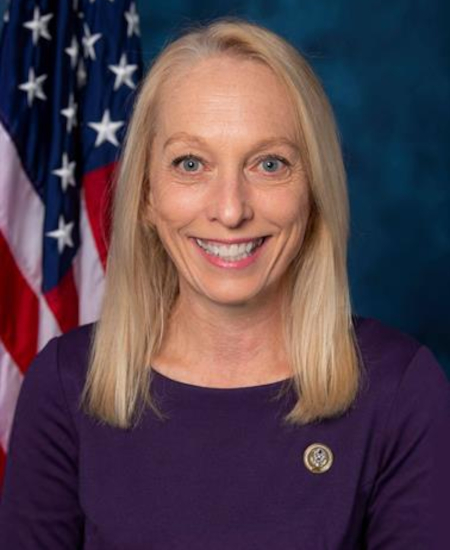
Rep. Mary Gay Scanlon
Sponsored bills
Maddy summaryHR 6451, the Mental Health Justice Act of 2023, provides $250 million in federal grants to states, tribes, and localities to hire mental health professionals as first responders for specific emergencies. It directs these professionals to replace police in situations involving mental health crises, substance use, or intellectual/developmental disabilities - such as when a 911 caller describes a mental health emergency or a first responder identifies someone needing mental health support. The bill requires grantees to train responders in de-escalation techniques, link individuals to community-based services (not incarceration), and report on outcomes like reduced arrests or use of force. It also mandates data collection on demographics and prevents funneling people into institutional settings, with annual reports to Congress on program effectiveness.
Maddy summaryHRES 881 is a symbolic House resolution commemorating the 50th anniversary of the Endangered Species Act of 1973. It honors the Act's role in preventing the extinction of species like the bald eagle and humpback whale, citing its success in protecting 99% of listed species. The resolution does not create new legal requirements or affect any specific group, as it serves solely as a ceremonial recognition of the Act's conservation achievements.
Maddy summaryThis symbolic resolution (HRES 879) expresses the U.S. House of Representatives' support for designating November 20-December 20, 2023, as "National Survivors of Homicide Victims Awareness Month." It aims to raise public awareness about the needs of individuals who have lost loved ones to homicide, particularly highlighting impacts on Black and Latinx communities and survivors of intimate partner violence. The resolution calls for supporting survivors through services, research, and community-based responses, while encouraging the public to promote healing and address gun violence. It does not create new laws or allocate funding, but serves as a formal recognition of survivors' experiences.
Maddy summaryHR 3601, the Student Veteran Work Study Modernization Act, expands eligibility for a Veterans Affairs work-study allowance to veterans enrolled at least half-time in rehabilitation, education, or training programs - lowering the previous requirement from three-quarter-time. The bill establishes a five-year pilot program to test this change, requiring the VA to apply the same allowance rules to these veterans as to other participants, except for the enrollment threshold. It also mandates annual reports to Congress tracking participation numbers, four-year degree completion rates, and full-time VA employment outcomes for participants. The policy directly affects veterans seeking education benefits while balancing academic and personal responsibilities.
Maddy summaryThe TREES Act of 2023 establishes a federal grant program to fund tree planting projects that reduce residential energy use. It provides 90% federal funding (up to $50 million annually) for projects in neighborhoods with high energy burdens, low tree canopy, or vulnerable populations like seniors and low-income households. Eligible applicants - including state/local governments, tribes, nonprofits, and power companies - must demonstrate how planting specific tree species will cut cooling and heating costs through shade and wind protection. The program aims to plant at least 300,000 trees yearly, prioritizing projects that maximize energy savings for households spending a high percentage of income on energy bills.
Maddy summaryThe Inaugural Fund Integrity Act regulates donations to presidential inaugural committees. It bans donations from organizations, foreign nationals, and prohibits using funds for personal expenses unrelated to committee duties. The bill sets a $50,000 annual donation limit per individual (adjusted for inflation), requires 24-hour disclosure of donations over $1,000, and mandates a detailed final report within 90 days of the inauguration listing all large donations and disbursements. This directly affects inaugural committees and donors by increasing transparency and limiting contribution sources for future presidential inaugurations starting in 2025.
Maddy summaryHR 6204, the "See the Board Act," establishes a federal grant program to provide free eye care services to students in public elementary and secondary schools. The bill directs the Health and Human Services Secretary to fund nonprofit organizations that operate mobile eye clinics using portable equipment to deliver screenings, exams, and glasses directly at schools. This program covers costs for equipment, personnel, and operational expenses, targeting students in schools defined under the Elementary and Secondary Education Act. The initiative is authorized for fiscal years 2024 through 2029.
Maddy summaryHR 5976, the Youth Mental Health Research Act, establishes a new NIH research initiative led by the National Institute of Mental Health. The bill directs collaboration between three NIH institutes to coordinate research on youth mental health, focusing specifically on building community resilience for at-risk youth and improving how mental health services reach young people in schools, communities, and other settings where they live and work. It authorizes $100 million annually for fiscal years 2024 through 2028 to fund this research. The bill does not create direct services but aims to generate evidence to inform future mental health support strategies for young people.
Maddy summaryHR 6145 creates a specialized "Children's Court" within U.S. immigration courts to handle cases involving unaccompanied children under 18. The bill requires immigration judges assigned to this court to complete mandatory training on child development, trauma-informed practices, and child-appropriate procedures - including explaining court processes in simple terms, providing breaks during testimony, and ensuring access to legal counsel. It also prohibits sharing sensitive personal information about children without their consent, protecting privacy during proceedings. Annual reports will track case processing, appearance rates, and the court's effectiveness in upholding due process for these children.