

Maddy summaryThe ACCESS Act of 2024 creates a federal grant program to help clinics and health care providers expand abortion and reproductive health services in states where abortion is legal (outside of life or health exceptions). It authorizes $200 million annually for fiscal years 2024-2028 to fund specific capacity-building activities, including facility expansions, hiring clinical staff, telehealth services, and culturally appropriate patient resources. Priority is given to providers in states experiencing the highest increases in out-of-state patients seeking abortion care. The bill directly supports health care entities serving patients who travel across state lines for services, aiming to reduce wait times and improve access for vulnerable communities.
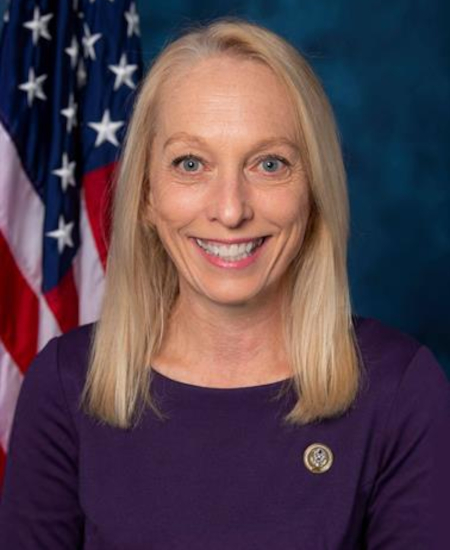
Rep. Mary Gay Scanlon
Sponsored bills
Maddy summary# Summary of the Clean Electricity and Transmission Acceleration Act of 2023 This comprehensive legislation establishes significant reforms across environmental policy, energy infrastructure, and community engagement frameworks. Key provisions include: 1. **Environmental Justice Framework**: - Creates an Office of Environmental Justice and External Civil Rights at EPA - Establishes a White House Environmental Justice Interagency Council - Prohibits disparate impact discrimination under Title VI of the Civil Rights Act - Requires community impact reports for Federal actions affecting environmental justice communities 2. **NEPA Reforms**: - Mandates 90-day public comment periods for environmental justice communities - Requires translation of documents into languages spoken by 5%+ of affected communities - Requires assessment of cumulative impacts, including historical pollution - Requires climate change impact assessments using social cost of carbon - Establishes searchable digital archives of NEPA documents 3. **Community Engagement Requirements**: - Creates "Senior Community Engagement Officers" and "Tribal Community Engagement Officers" at all federal agencies - Requires community benefits agreements for major projects - Establishes grants for capacity building in environmental justice communities - Creates an E-NEPA permitting portal for public access to documents 4. **Energy Policy Provisions**: - Includes reforms for FERC (Federal Energy Regulatory Commission) environmental justice liaison - Establishes requirements for intervenor funding at FERC - Contains provisions for transmission planning and infrastructure 5. **Tribal Consultation**: - Strengthens tribal consultation requirements for projects affecting tribal lands - Requires government-to-government relationships with tribal nations The legislation represents a significant shift toward integrating environmental justice considerations throughout the federal permitting and review process, with specific requirements for meaningful community engagement, transparency, and consideration of cumulative impacts on vulnerable populations. It also establishes new funding mechanisms and administrative structures to support these environmental justice goals.
Maddy summaryHRES 976 is a resolution recognizing Certified Registered Nurse Anesthetists (CRNAs) for their 150+ year contributions to healthcare. It highlights CRNAs as essential providers of anesthesia and pain management, especially in rural areas and military/veterans' healthcare settings, where they administer over 50 million anesthetics annually. The resolution encourages public and professional recognition of CRNAs during National CRNA Week (January 21-27, 2024) and urges stakeholders to utilize CRNAs' full potential. As a non-binding commemorative resolution, it does not create new policies or directly affect healthcare delivery.
Maddy summaryHR 7056, the Access to Family Building Act, establishes federal rights for individuals to access assisted reproductive technology (ART) like IVF without unreasonable restrictions, directly affecting patients seeking fertility treatments and health care providers offering ART services. The bill prohibits states from imposing limitations on ART that are more burdensome than those for comparable medical procedures, fail to advance safety, or unduly restrict access, while allowing health and safety regulations that are necessary and least restrictive. It creates federal enforcement mechanisms, including lawsuits by the Attorney General or affected individuals to challenge violating state laws, and preempts conflicting state regulations. The bill explicitly preserves state authority over health/safety regulations and does not alter existing state insurance coverage laws for ART.
Maddy summaryThe Stronger Communities through Better Transit Act establishes a new federal grant program to improve public transportation service. It provides funding to urban areas, states, and Indian tribes to cover up to 50% of public transit operating costs (up to 80% in persistent poverty areas and 100% for Indian tribes), with requirements to report on service frequency, access to jobs, and conduct community surveys. The program mandates that a majority of funds must benefit underserved communities and areas of persistent poverty, defined as census tracts with high poverty rates or minority populations. Recipients must maintain their transit funding levels and report on improvements in access to essential services. The bill authorizes $20 billion annually for fiscal years 2024-2027.
Maddy summaryHRES 967 would amend House rules to allow Members who have recently given birth to vote by proxy for up to six weeks after childbirth. Specifically, a new rule permits a Member to designate another Member as their proxy during this period to cast votes on their behalf. The proxy cannot be used to count the Member's presence for quorum purposes in the House or its committees. This change directly affects female Members during their postpartum leave, with no other proxy voting allowed under the amendment.
Maddy summaryHRES 963 is a symbolic resolution honoring Korean American Day, which commemorates the January 13, 1903 arrival of the first large wave of Korean immigrants to the U.S. It recognizes Korean Americans' contributions to U.S. society, including their economic, cultural, and military impacts, and marks the 121st anniversary of this historic migration. The resolution urges all Americans to observe Korean American Day to appreciate these contributions. As a commemorative measure, it does not create new policies or affect specific groups beyond this ceremonial recognition.
Maddy summaryHR 6981, the Preventing Private Paramilitary Activity Act of 2024, makes it a federal crime for unauthorized armed groups (defined as 3+ people with a command structure for public combat, security, or law enforcement-like activities) to engage in specific actions like patrolling, interfering with government operations, or intimidating people. It directly affects private paramilitary organizations not covered by exceptions, such as the National Guard, historical reenactment groups, or authorized training programs. Key provisions prohibit armed activities across state lines or using interstate commerce, with penalties including fines, up to 5 years in prison for causing bodily injury, and life imprisonment if death results. The law also allows the government or affected individuals to seek court orders to stop violations and seize related property.
Maddy summaryThe BOP Release Card ID Act of 2024 requires the Bureau of Prisons to issue a photo identification card meeting federal standards to U.S. citizen prisoners released from federal custody. The card must be valid for at least 18 months and accepted by federal programs like Social Security, Medicaid, Medicare, and SNAP, as well as for entry into federal buildings. The bill also directs the Attorney General to provide guidance to states on issuing similar cards for state prisoners, with annual reports to Congress on progress.
Maddy summaryThe Affordable Connectivity Program Extension Act of 2024 allocates $7 billion in funding for the Affordable Connectivity Program (ACP) during fiscal year 2024. The ACP provides subsidies to low-income households to help cover the cost of internet service and connected devices like laptops or tablets. This funding ensures the program can continue supporting eligible households throughout the year, with the money remaining available until fully spent. The bill extends existing program funding without changing eligibility criteria or service requirements.